

Well that’s disappointing —
We don’t need new gadgets; we need to use antibiotics more sparingly.
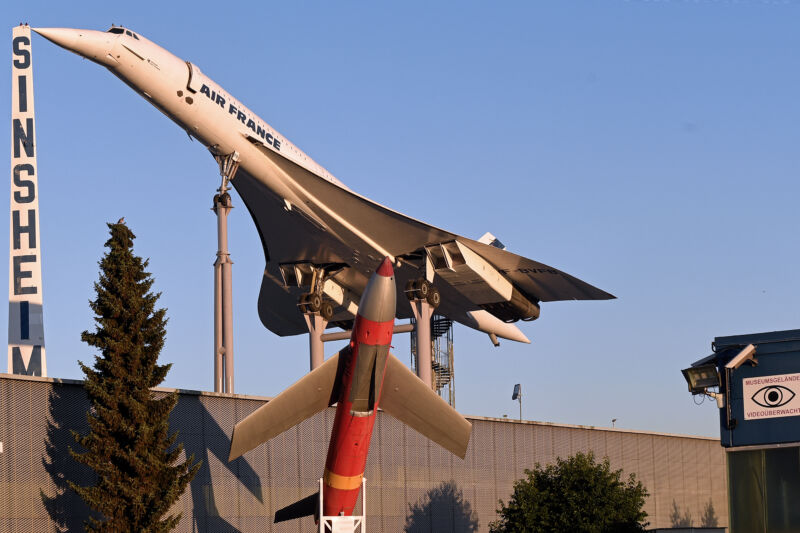
Enlarge / Once the future of travel, now a museum piece.

Vaclav Smil reminds us that despite the onslaught of popular techno-pundits claiming otherwise, immense and rapid progress in one realm does not mean immense and rapid progress in all realms.
Let’s just get this out of the way at the start: Smil is Bill Gates’ favorite author. He’s written 40 books, all of them about some combination of energy, China, or the combination of food, agriculture, and ecology. His newest book, Invention and Innovation: A Brief History of Hype and Failure, is somewhat of a departure, although it does touch on all of these. Primarily, it is a tale of thwarted promise.
Smil is very intentional about the types of flops he highlights. He is not interested in embarrassing design failures (the Titanic, Betamax, Google Glass) or undesirable side effects of inventions everyone still uses despite them (prescription drugs, cars, plastic). Rather, he focuses on the categories chosen to demonstrate the limits of innovation. Although astoundingly rapid progress has been made in the fields of electronics and computing over the past 50 or so years, it does not follow that we are thus in some unprecedented golden age of disruptive, transformative growth in every field.
Different ways inventions could, and did, go south
First, Smil tells of promises undermined by enormous but unforeseen—or completely foreseen but downplayed and ignored—downsides. Next, he describes promises that didn’t materialize quite as hoped and hyped. Then come promises whose fulfillment we are still awaiting. And lastly, he derides currently overtouted but ridiculously infeasible promises (and those who make them). This last part is the crux; he hopes we will learn from all of the history he relates to assess these claims so we won’t get taken in by them. He picked three examples of each category but notes that there are plenty of others he could have used instead.
The first group are inventions that succeeded wildly until they failed wildly: leaded gas, DDT, and chlorofluorocarbons. Smil describes the significant technological and social problems these were developed to solve and charts their ascents and then eventual phase-outs as the risks they incurred became known decades after their introduction. The harm of lead additives in gas is an exception, in that it was known from the get-go—lead has been known to be a neurotoxin since ancient Greece. But GM dismissed those concerns because (a) lead was very effective at allowing engines to run more efficiently with lower-quality fuel and because (b) they could control its production.
The examples he gives as inventions that succeeded, but not as much as they were supposed to, are airships, nuclear fission, and supersonic flight. All three were slated to dominate their respective market niches, and all of them fizzled. Airships—or Lighter-Than-Air flying machines, as Smil refers to them—have become nothing more than an easy way to tell if the fiction book you’re reading is steampunk or not. (If there’s an airship on the cover, then yes, yes it is.) Nuclear fission has been deployed commercially and does generate electricity, but “its current share of the global market remains far below what was expected of this complex technique in the early phases of its enthusiastic adoption: nothing else but total domination by the end of the twentieth century!” And supersonic jets are just too damn loud.
The potentially world-changing innovations that have not yet arrived are travel in a (near) vacuum—often (but erroneously, Smil notes) referred to as hyperloop travel—nitrogen-fixing cereals, and nuclear fusion. These have been promised and promised and promised but always seem to be just five years away.
“We know what we should have done, and should be doing”
Some of Smil’s bitterness and frustration come out as snark in the final chapter, which is called “Techno-optimism, Exaggerations, and Realistic Expectations” but which could be called “Why Moore’s Law is the Worst Thing that Could Have Happened to Our Sense of Perspective.” This is where Smil writes things like “the acknowledgments of reality and the willingness to learn, even modestly, from past failures and cautionary experience seem to find less and less acceptance in modern societies” and “questions, reminders, and objections—referring to basic physical realities, known constants, available rates, and capacities—are now seen as almost irrelevant, nothing but challenges to be vanquished by ever-accelerating innovation. But there are no signs of such a sweeping acceleration.”
He bemoans our general techno-optimism and blames it on the truly stunning rate of progress in electronics and computing that many adults alive right now have witnessed in real time. It has completely warped our expectations. We now think that every sector will proceed apace when there is ample evidence that it has not, and will not.
He summarizes the breathless takes of today’s techno-prophets as “Everything will take care of itself, unerringly driven by rapid exponential growth that will accelerate, disrupt, transform, and elevate as it ushers in a new era devoid of disease and misery and abounding in material riches.” Then he notes how similar this message is to the one he “heard in grade school under the Evil Empire when our rulers were promising a similar kind of earthly nirvana as soon as they were done with building communism.” Ouch.
Smartphones are cool and all, but innovations in areas that could meaningfully improve many people’s lives—agriculture, transportation, energy use and storage, drug discovery—have mostly seen incremental progress. Not only that, but we don’t even actually need radical new inventions to get clean water, micronutrients, and a decent education to kids in the developing world, which would radically improve their quality of life. We can mitigate extant inequalities by tweaking the tech we have, if we would only choose to do so. Instead, we wax poetic about, and spend gazillions on, trying to achieve the Singularity.
The book ends with the adage nihil novi sub sole—there is nothing new under the sun. Astonishingly dark last words for a book entitled Inventions and Innovations.
Ars Technica may earn compensation for sales from links on this post through affiliate programs.
Read More
Diana Gitig