

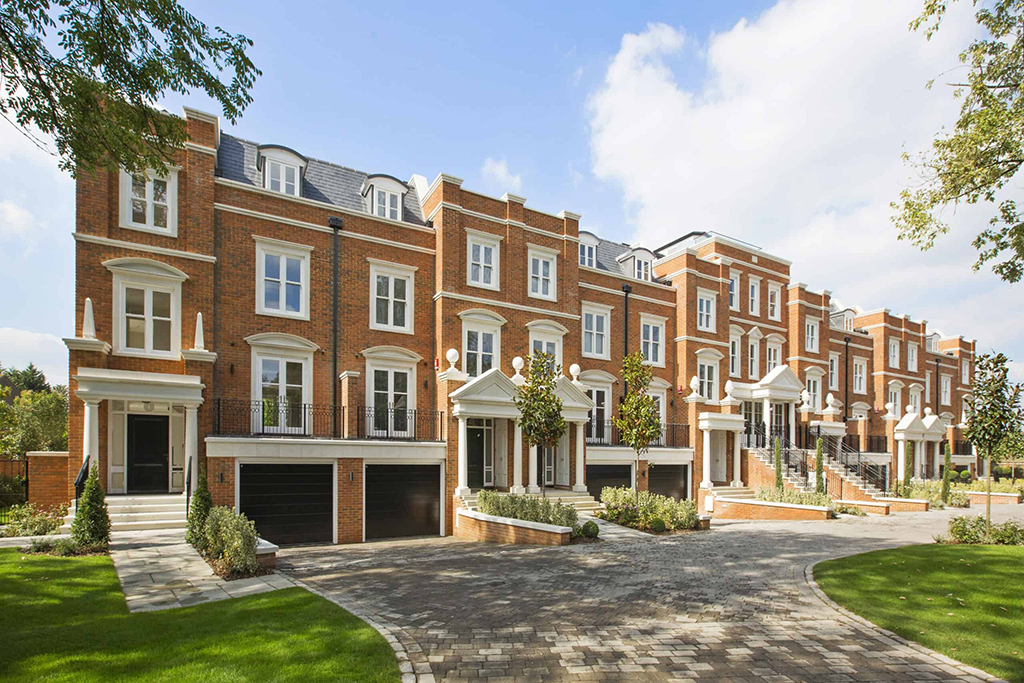
Houses in Berkshire built with Michelmersh bricks
The chief executive of brick manufacturer Michelmersh has told Construction News that his company “needs” its 40 per cent profit margin.
Michelmersh, a public-listed brickmaker and distributor, saw its revenue increase by 15 per cent in 2022, while its profit increased by 18 per cent, according to public accounts published on Wednesday (29 March).
The company turned over £68.4m in 2022 – an increase of £9m on its previous year – while it made a pre-tax profit of £11.4m, up from £9.7m. It’s profit margin therefore decreased slightly from 40.7 per cent to 39.4 per cent, after the firm bought a brick-fabricating company for £6m in November.
The positive results followed other product manufacturers such as Breedon and SIG that have seen revenue and profit grow during 2022 – while many contractors have seen margins shrink due to material price inflation.
Michelmersh chief executive Frank Hanna told CN that there was a “reason and rationale” behind his company’s high margins, adding that brick manufacturing was a “very complex sector”.
“There are massive barriers to entry. It’s very capital-intensive, so you need high levels of cash to do it; you need the margin.
“If you are looking at putting down a new factory now, you’re spending £1m per million bricks, roughly speaking. So to spend £50m-£100m is not unusual.
“Even low-level incremental improvement around our factories will see us spend a few million pounds, no problem. It’s a cash-hungry entity, so those margins are needed in terms of manufacturing.”
Hanna said that material price inflation had been driven by increased energy costs, but that Michelmersh was looking to create price stability for its clients, having hedged further energy price fluctuations and secured 90 per cent of its required energy for 2023.
“We’re pushing to ensure we give our customer base value and price dependency. We have timetabled incremental [price] increases – two in the year. My preference is to give our customers inflationary-orientated, anchored price increases – it helps them plan, it helps them with the projects.
“They don’t want input material cost price increases halfway through a project, [such as] a block of flats. It’s not helpful to the build programme, it’s just not good for construction output to have a myriad of price increases coming at you halfway through projects.”
Michelmersh chairman Martin Warner said the business was “mindful that there are significant challenges in the broader economy, with elevated inflation and a higher interest rate environment potentially impacting demand across the construction industry”.
However, he added that the company – which produces around 120 million bricks a year – has a “broad customer base across multiple end markets”, while demand for brick-cladding solutions is also spurred by efforts to replace unsafe cladding on existing buildings with non-combustible alternatives.
Related articles
Read More
Will Ing