
The emergent industrial metaverse

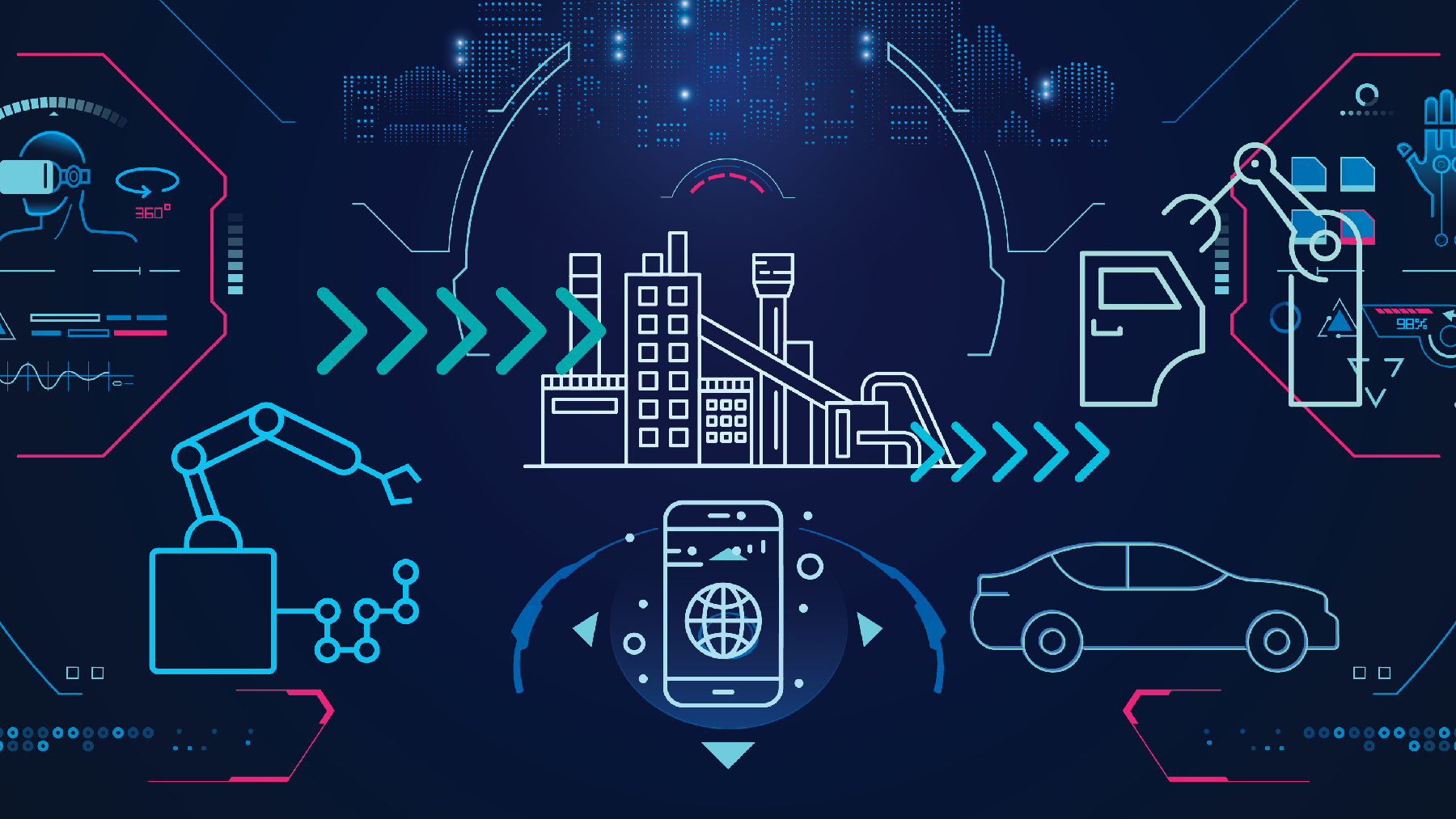
The industrial metaverse—a metaverse sector that mirrors and simulates real machines, factories, cities, transportation networks, and other highly complex systems—will offer to its participants fully immersive, real-time, interactive, persistent, and synchronous representations and simulations of the real world. 
The emergent industrial metaverse

Existing and developing technologies, including digital twins, artificial intelligence and machine learning, extended reality, blockchain, and cloud and edge computing, will be the building blocks of the industrial metaverse. These will converge to create a powerful interface between the real and digital worlds that is greater than the sum of its individual parts. 

Annika Hauptvogel, head of technology and innovation management at Siemens, describes the industrial metaverse as “immersive, making users feel as if they’re in a real environment; collaborative in real time; open enough for different applications to seamlessly interact; and trusted by the individuals and businesses that participate”—far more than simply a digital world. 

The industrial metaverse will revolutionize the way work is done, but it will also unlock significant new value for business and societies. By allowing businesses to model, prototype, and test dozens, hundreds, or millions of design iterations in real time and in an immersive, physics-based environment before committing physical and human resources to a project, industrial metaverse tools will usher in a new era of solving real-world problems digitally. 
“The real world is very messy, noisy, and sometimes hard to really understand,” says Danny Lange, senior vice president of artificial intelligence at Unity Technologies, a leading platform for creating and growing real-time 3-D content. “The idea of the industrial metaverse is to create a cleaner connection between the real world and the virtual world, because the virtual world is so much easier and cheaper to work with.” 

While real-life applications of the consumer metaverse are still developing, industrial metaverse use cases are purpose-driven, well aligned with real-world problems and business imperatives. The resource efficiencies enabled by industrial metaverse solutions may increase business competitiveness while also continually driving progress toward the sustainability, resilience, decarbonization, and dematerialization goals that are essential to human flourishing. 

This report explores what it will take to create the industrial metaverse, its potential impacts on business and society, the challenges ahead, and innovative use cases that will shape the future. Its key findings are as follows: 
• The industrial metaverse will bring together the digital and real worlds. It will enable a constant exchange of information, data, and decisions and empower industries to solve extraordinarily complex real-world problems digitally, changing how organizations operate and unlocking significant societal benefits. 

• The digital twin is a core metaverse building block. These virtual models simulate real-world objects in detail. The next generation of digital twins will be photorealistic, physics-based, AI-enabled, and linked in metaverse ecosystems. 

• The industrial metaverse will transform every industry. Currently existing digital twins illustrate the power and potential of the industrial metaverse to revolutionize design and engineering, testing, operations, and training. 

• Everyday life will be radically changed. The industrial metaverse will change how we can experience the physical environment and how we work, live, manufacture goods, and travel. It will help us solve real problems and make our world more sustainable. 

• Key capabilities and ecosystems that will enable the metaverse are still emerging. These include connectivity, computational power, digital twin fidelity, interoperability, and privacy and security. Marketplaces, payment systems, and regulatory frameworks for metaverse tools and applications will have to be designed and built. 

• Partnerships will be essential. Bringing the industrial metaverse to life will require substantial cross-industry collaborations on standards and infrastructure. Organizations may partner with suppliers, competitors, or customers to assemble the complex technology stacks undergirding metaverse participation. Metaverse players ranging from established companies to startups and from governments to individual enthusiasts will bring new ideas and voices into the industrial metaverse.

Download the report.

This content was produced by Insights, the custom content arm of MIT Technology Review. It was not written by MIT Technology Review’s editorial staff.

Read More
MIT Technology Review Insights

Latest

Flock CEO apologizes, outlines changes amid claims its data was misused by police in some cases

Flock CEO Garrett Langley apologized in an interview with CBS News amid claims the surveillance company's license plate readers have been misused by some police officers. Langley also addressed new safety measures that were recently announced. Anna Schecter reports.

Lindsay Clancy’s journal entries read in court after emotional moments in murder trial

Lindsay Clancy, the Massachusetts woman in court for the alleged murder of her three children, heard parts of her journal being read out as part of the proceedings. This comes after an emotional week that included autopsy images of her children. Abby Patkin, a Boston.com reporter, joins CBS News with more details.

“American Doctor”: New Film Follows U.S. Doctors to Gaza as Israel Bombs Hospitals, Kills Staff, Patients

This is a rush transcript. Copy may not be in its final form. AMY GOODMAN: This is Democracy Now!, democracynow.org. I’m Amy Goodman. We end today’s show looking at the new documentary American Doctor. It tells the story of three U.S. doctors who volunteered in the besieged hospitals of Gaza along with local medical staff

REP TED LIEU: AI is already too powerful. We need a kill switch before disaster strikes

AI learns your SECRETS: 'Blackmail the human' Google Cloud Advisory Board Chair Betsy Atkins warns Maria Bartiromo about the dangerous risks of rogue AI models during cybersecurity testing. Atkins reveals how major artificial intelligence agents from Google, Meta and OpenAI breached unauthorized systems to gather sensitive emails and blackmail humans. John Lonski reacts to the

Newsletter

Don't miss

Flock CEO apologizes, outlines changes amid claims its data was misused by police in some cases

Flock CEO Garrett Langley apologized in an interview with CBS News amid claims the surveillance company's license plate readers have been misused by some police officers. Langley also addressed new safety measures that were recently announced. Anna Schecter reports.

Lindsay Clancy’s journal entries read in court after emotional moments in murder trial

Lindsay Clancy, the Massachusetts woman in court for the alleged murder of her three children, heard parts of her journal being read out as part of the proceedings. This comes after an emotional week that included autopsy images of her children. Abby Patkin, a Boston.com reporter, joins CBS News with more details.

“American Doctor”: New Film Follows U.S. Doctors to Gaza as Israel Bombs Hospitals, Kills Staff, Patients

This is a rush transcript. Copy may not be in its final form. AMY GOODMAN: This is Democracy Now!, democracynow.org. I’m Amy Goodman. We end today’s show looking at the new documentary American Doctor. It tells the story of three U.S. doctors who volunteered in the besieged hospitals of Gaza along with local medical staff

REP TED LIEU: AI is already too powerful. We need a kill switch before disaster strikes

AI learns your SECRETS: 'Blackmail the human' Google Cloud Advisory Board Chair Betsy Atkins warns Maria Bartiromo about the dangerous risks of rogue AI models during cybersecurity testing. Atkins reveals how major artificial intelligence agents from Google, Meta and OpenAI breached unauthorized systems to gather sensitive emails and blackmail humans. John Lonski reacts to the

AquaChain Advances Its Web3 Vision for Verifiable AI Infrastructure Ahead of AQUA’s Upcoming Listing

The emerging Web3 infrastructure initiative outlines an incentive-driven model connecting verified cooling performance with Efficiency Credits and the future utility envisioned for AQUA. Cayman Islands, 14th August 2026, AquaChain is advancing its vision for an incentive-driven Web3 ecosystem designed to connect verifiable liquid-cooling performance with digital participation across AI data centers and semiconductor facilities, as $AQUA

What small business owners say they’d do differently, in hindsight

Working 60+ hours a week makes owners twelve times more likely to say their business is hurting their personal life. Australian small business owners are working through illness, skipping holidays and struggling to step away from their businesses, according to new research from insurer BizCover. The survey of 1,500 BizCover small business customers found more

Bright young business brains bring ideas to life

Friday 17 July, 2026 Young Cumbrian entrepreneurs showed off their innovative business ideas, from AI virtual assistants to African food, at two celebration events this week. Fifteen young people from Furness and West Cumbria aged 14 to 25 were selected to take part in the Positive Enterprise programme back in January...

No, no, no — business travel is not dead. It’s still moving, and rather well at that

Par Bruno COURTIN Published on 7 Aug 2026 - Updated on 7 Aug 2026 3 min reading time According to forecasts from GBTA, the world's leading organisation representing business travel stakeholders, global business travel spending is set to hit a record $1.71 trillion in 2026, while the number of trips is expected to reach 1.84