

Want more screen space? The Lenovo Tab M9 is a lightweight tablet in a somewhat unusual 9-inch format. This makes it ideal for anyone who wants the largest possible screen in the lightest and most compact chassis possible. Since it even has GPS, it should be a great deal for around US$150, right?
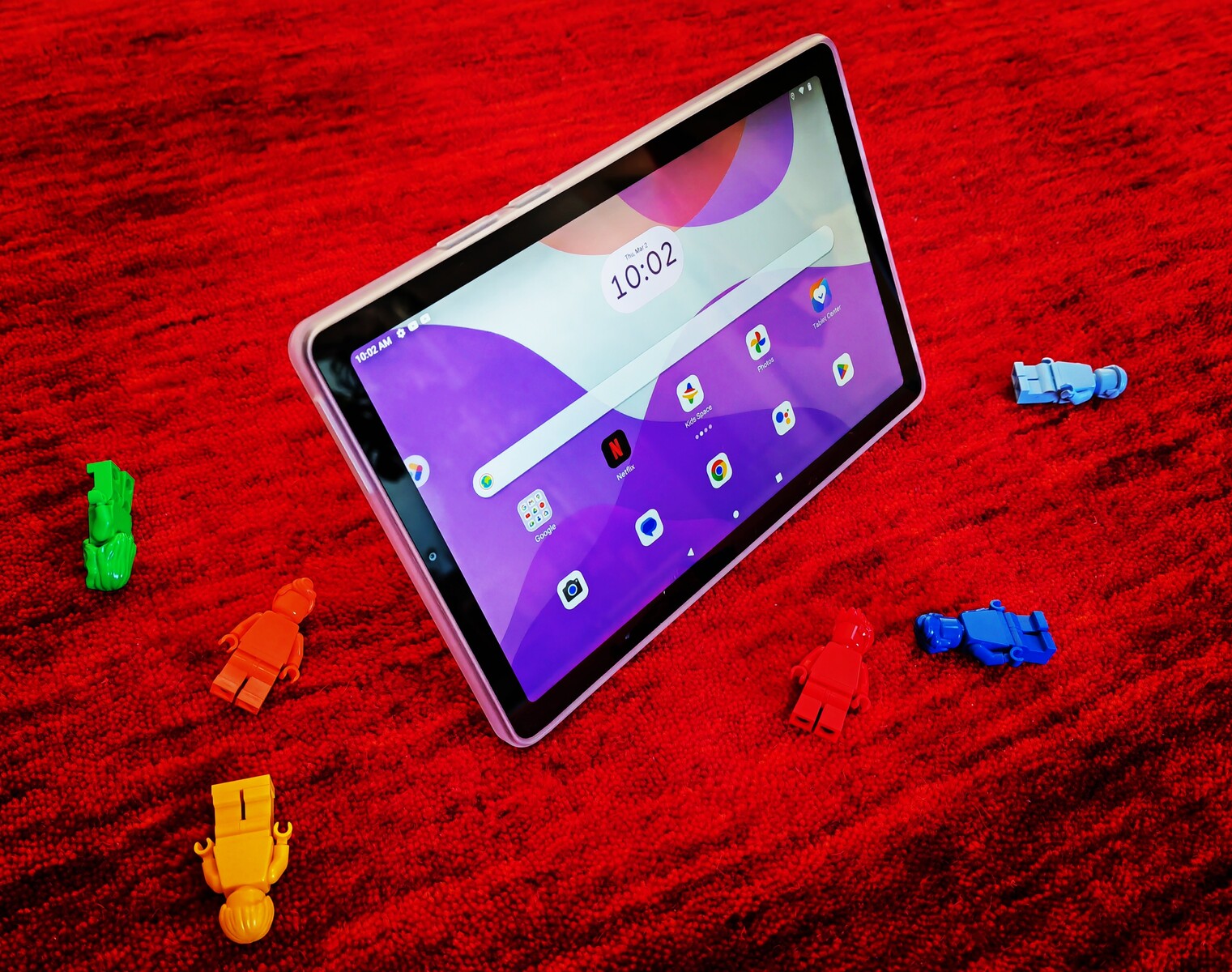
10 inches is too heavy, but 8 inches is too small? The Lenovo Tab M9 attempts to present itself as the golden mean with a relatively light chassis and 9-inch screen that offers a little more screen space than conventional 8-inch tablets. For just around US$150, you get an affordable tablet with GPS and a fairly large battery.
In our review, we compare it with several other devices in the same price range and determine for whom the unusually-sized tablet is suitable.
Display
9.00 inch 5:3, 1340 x 800 pixel 173 PPI, IPS, glossy: yes, 60 Hz
Storage
32 GB eMMC Flash, 32 GB
, 20 GB free
Connections
1 USB 2.0, Audio Connections: 3.5mm audio port, Card Reader: microSDXC up to 2TB, Brightness Sensor, Sensors: hall, acceleration
Networking
802.11 a/b/g/n/ac (a/b/g/n = Wi-Fi 4/ac = Wi-Fi 5/), Bluetooth 5.1, GPS
Size
height x width x depth (in mm): 8 x 215.4 x 136.8 ( = 0.31 x 8.48 x 5.39 in)
Battery
5100 mAh Lithium-Polymer, 10 Watt charging
Operating System
Android 12
Camera
Primary Camera: 8 MPix f/2.2, AF
Secondary Camera: 2 MPix f/2.2
Additional features
Speakers: stereo speakers, cover, charger, USB cable, SIM tool, 24 Months Warranty, fanless
Weight
344 g ( = 12.13 oz / 0.76 pounds) ( = 0 oz / 0 pounds)
Note: The manufacturer may use components from different suppliers including display panels, drives or memory sticks with similar specifications.
At 344 grams, the Lenovo Tab M9 even weighs a little less than some 8-inch competitors. Of course, it is larger due to the 9-inch screen. The edges around the screen are well sized so that you can easily hold the tablet without accidentally triggering the touchscreen. At the same time, they are thin enough that the tablet still looks modern.
The case is made of metal and the central part is printed with a pattern of triangles. Gaps are quite even and the transition to the screen is haptically pleasing; the edges are hardly noticeable here. Overall, the tablet feels very good to hold.
Lenovo offers two colors, Arctic Grey and Frost Blue, but only the gray version was available in Central Europe at the time of review. The tablet absorbs targeted applications of pressure and torsional stress quite well; only when twisting do ripples become visible in the liquid crystal on the sides of the screen.
A somewhat meager 32 GB of storage space is common for this price range, but anyone who likes to save photos on the tablet will quickly reach the storage capacity limits.
At least Lenovo also offers a variant with 64 GB, but this is only available in combination with an LTE module and the model is not widely available at present.
You also have to do without NFC, so no mobile payment services can be used. The USB-C port is only connected internally according to the USB 2.0 standard and is therefore somewhat slow when transferring data.
At least Lenovo offers a microSD port for storage expansion. Under testing, this operates at a speed typical for this class and does not come close to the transfer rates of our microSD Angelbird V60 reference card.
| SD Card Reader – average JPG Copy Test (av. of 3 runs) | |
| Samsung Galaxy Tab A7 Lite PowerVR GE8320, Helio P22T MT8768T, 32 GB eMMC Flash (Toshiba Exceria Pro M501) |
|
| Nokia T10 Mali-G57 MP1, T606, 32 GB eMMC Flash (Angelbird V60) |
|
| Amazon Fire HD 8 2022 Mali-G52 MP2, MT8169A, 32 GB eMMC Flash (Angelbird V60) |
|
| Lenovo Tab M9 Mali-G52 MP2, Helio G80, 32 GB eMMC Flash (Angelbird V60) |
|
| Lenovo Tab M8 (3rd Gen) PowerVR GE8320, Helio P22T MT8768T, 32 GB eMMC Flash (Angelbird V60) |
|
Lenovo Tab M9 Mali-G52 MP2, Helio G80, 32 GB eMMC Flash; SDCard Sequential Write 0.5 GB; Angelbird V60: Ø28.5 (14.1-42.8)
Lenovo Tab M8 (3rd Gen) PowerVR GE8320, Helio P22T MT8768T, 32 GB eMMC Flash; SDCard Sequential Write 0.5 GB: Ø23.8 (12.8-39.1)
Nokia T10 Mali-G57 MP1, T606, 32 GB eMMC Flash; SDCard Sequential Write 0.5 GB: Ø37.8 (25.8-45.2)
Samsung Galaxy Tab A7 Lite PowerVR GE8320, Helio P22T MT8768T, 32 GB eMMC Flash; SDCard Sequential Write 0.5 GB; Toshiba Exceria Pro M501: Ø34.8 (22.7-43.5)
Amazon Fire HD 8 2022 Mali-G52 MP2, MT8169A, 32 GB eMMC Flash; SDCard Sequential Write 0.5 GB; Angelbird V60: Ø29.4 (20.1-35.9)
Lenovo Tab M9 Mali-G52 MP2, Helio G80, 32 GB eMMC Flash; SDCard Sequential Read 0.5 GB; Angelbird V60: Ø76.6 (18.7-85.5)
Lenovo Tab M8 (3rd Gen) PowerVR GE8320, Helio P22T MT8768T, 32 GB eMMC Flash; SDCard Sequential Read 0.5 GB: Ø75.8 (13.3-83.9)
Nokia T10 Mali-G57 MP1, T606, 32 GB eMMC Flash; SDCard Sequential Read 0.5 GB: Ø71.2 (36.7-79.1)
Samsung Galaxy Tab A7 Lite PowerVR GE8320, Helio P22T MT8768T, 32 GB eMMC Flash; SDCard Sequential Read 0.5 GB; Toshiba Exceria Pro M501: Ø76.1 (48.6-80.9)
Amazon Fire HD 8 2022 Mali-G52 MP2, MT8169A, 32 GB eMMC Flash; SDCard Sequential Read 0.5 GB; Angelbird V60: Ø72.9 (34.2-84.6)
Android 12 is preinstalled, and Lenovo also leaves Google’s operating system largely unchanged. At the time of review, the security updates were from November 2022 and are thus already quite outdated.
On the positive side, Lenovo installs very few of its own apps and hardly any third-party apps ex works.
The tablet should also receive an update to Android 13 in mid-2023. Lenovo has not specified whether further new system versions are planned. But the company does say that the security update supply will expire at the end of April 2025.
Lenovo’s tablet provides users with WiFi 5, so it achieves WLAN transmission rates of around 300-350 Mb/s, which is typical for this class. Looking at the chart from our test with the Asus ROG Rapture AXE11000 reference router, we see that the transmission is quite stable and shows no dips.
When close to the router, signal strength is perfect, and is still sufficient at a distance of 10 meters and through three walls for websurfing and smooth video streaming.
| Networking | |
| iperf3 transmit AX12 | |
| Samsung Galaxy Tab A7 Lite PowerVR GE8320, Helio P22T MT8768T, 32 GB eMMC Flash |
|
| iperf3 receive AX12 | |
| Samsung Galaxy Tab A7 Lite PowerVR GE8320, Helio P22T MT8768T, 32 GB eMMC Flash |
|
| iperf3 receive AXE11000 | |
| Amazon Fire HD 8 2022 Mali-G52 MP2, MT8169A, 32 GB eMMC Flash |
|
| Lenovo Tab M9 Mali-G52 MP2, Helio G80, 32 GB eMMC Flash |
|
| Lenovo Tab M8 (3rd Gen) PowerVR GE8320, Helio P22T MT8768T, 32 GB eMMC Flash |
|
| Nokia T10 Mali-G57 MP1, T606, 32 GB eMMC Flash |
|
| iperf3 transmit AXE11000 | |
| Amazon Fire HD 8 2022 Mali-G52 MP2, MT8169A, 32 GB eMMC Flash |
|
| Lenovo Tab M9 Mali-G52 MP2, Helio G80, 32 GB eMMC Flash |
|
| Lenovo Tab M8 (3rd Gen) PowerVR GE8320, Helio P22T MT8768T, 32 GB eMMC Flash |
|
| Nokia T10 Mali-G57 MP1, T606, 32 GB eMMC Flash |
|
Lenovo Tab M9; iperf3 receive AXE11000; iperf 3.1.3: Ø325 (271-340)
Lenovo Tab M9; iperf3 transmit AXE11000; iperf 3.1.3: Ø369 (346-374)
Even the WiFi version of the Lenovo Tab M9 has a tracking module. A solid accuracy of 2 meters is quickly achieved outdoors, but the number of detected satellites is not so high.
We also carried out real-world testing of the tablet’s localization capabilities, i.e. we went for bike ride and took a Garmin Venu 2 smartwatch for comparison purposes.
The result: the Lenovo Tab M9 occasionally deviates from the actual route taken, but the accuracy is still generally usable for everyday location tasks. However, those wanting precision accuracy will have to look elsewhere.

Camera quality was clearly not the focus of the manufacturer: there is only an 8-megapixel camera on the back. It takes decent pictures at close range, but the dynamics leave a lot to be desired. This is also noticeable in environmental photos, where bright areas are overexposed. Some areas are also very blurry and lack detail. The sky appears grainy.
In low light and high contrasts, the sharpness is actually quite good, but the brightness is only very moderate. In the lab, the camera shows average sharpness and reasonably good contrast in good lighting. At only 1 lux illuminance, nothing more can be seen in the pictures.
In general, the camera is best suited for snapshots in very good lighting conditions, otherwise it is quickly overwhelmed.
Videos can be recorded in 1080p and 30 fps. The autofocus stutters from time to time, but is generally reliable. The brightness adjustment is also a little slow at times. In good lighting conditions, the resulting videos are satisfactory, but cannot cope in more difficult conditions.
The front camera has a resolution of only 2 megapixels, which means that even without zooming in, selfies are somewhat grainy and offer little detail in dark areas.
Image Comparison
Choose a scene and navigate within the first image. One click changes the position on touchscreens. One click on the zoomed-in image opens the original in a new window. The first image shows the scaled photograph of the test device.
Main camera – plantMain camera – environmentMain camera – low light

click to load images
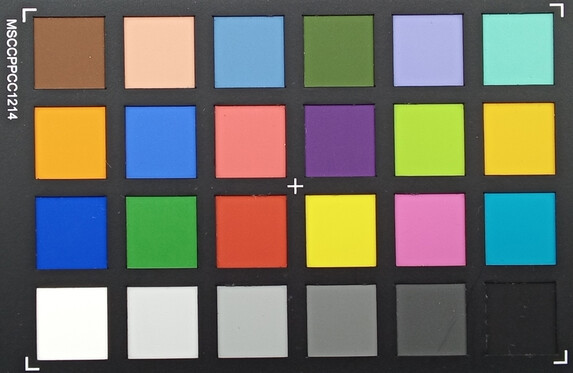
13.1 ∆E
13.8 ∆E
15.7 ∆E
10.1 ∆E
15.8 ∆E
10 ∆E
17.1 ∆E
17.9 ∆E
14.9 ∆E
7.6 ∆E
9.1 ∆E
14.4 ∆E
10.2 ∆E
6.7 ∆E
14 ∆E
8.4 ∆E
12.7 ∆E
10.5 ∆E
3.3 ∆E
5.5 ∆E
9 ∆E
4.2 ∆E
1.5 ∆E
4.2 ∆E
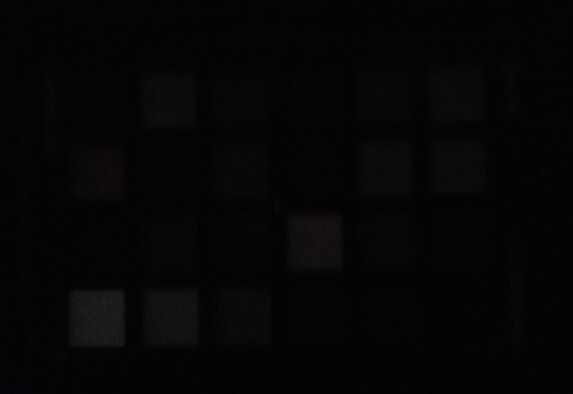
29.4 ∆E
55 ∆E
39.6 ∆E
36.3 ∆E
45.2 ∆E
62.4 ∆E
53.7 ∆E
35.7 ∆E
43.8 ∆E
28.3 ∆E
64.7 ∆E
64.7 ∆E
31.4 ∆E
48.3 ∆E
37.3 ∆E
76.8 ∆E
44 ∆E
42 ∆E
85.4 ∆E
69.8 ∆E
52 ∆E
36.9 ∆E
23.9 ∆E
13.4 ∆E
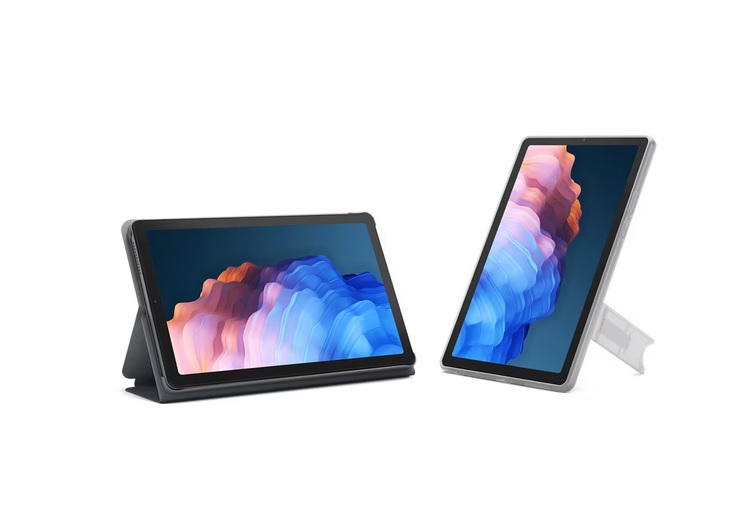
Another positive aspect is that Lenovo includes a clear case, i.e. a milky-transparent cover that even has an integrated stand which can be used to position the tablet in landscape or portrait mode.
A tool is included for opening the microSD slot. A charger and USB cable are also included in the package.
A folio case is available from the manufacturer for just under US$30, otherwise there are no specially adapted accessories available for purchase.
The warranty within the EU is 24 months. This may differ from region to region, so interested buyers should double-check before purchase.
The 60 Hz screen is easy to use, and the similarly pried competition does not offer screens with a higher frame rate either. The operation could be a little smoother, but even so, users can navigate through the menus fairly quickly.
No fingerprint sensor is available, but facial recognition can be used as a biometric unlocking method. The front camera does a good job and facial data is saved very quickly. Facial recognition also works well at different distances and even when we hold it in landscape instead of portrait format. But there is a one-second delay before the face is recognized. In dark environments, the light on the screen is sufficient for facial recognition.
However, since no additional hardware is used here, someone who looks similar to the user could possibly unlock the tablet, and photos may also be sufficient for unlocking under certain circumstances.
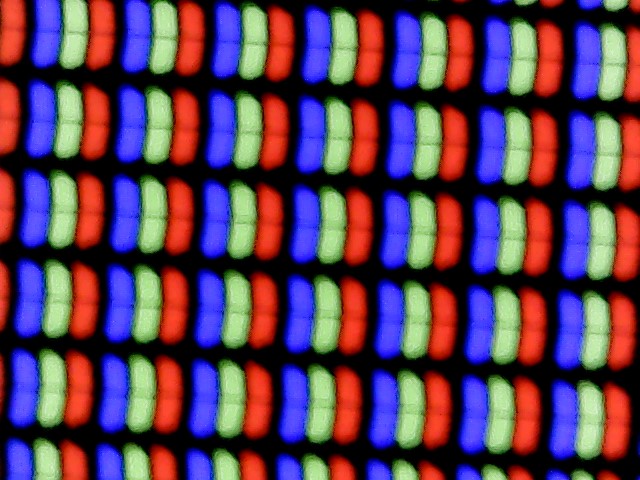
At 1340 x 800, the resolution is slightly higher than most 8-inch tablets in this price range, so the pixel density is still acceptable. Nevertheless, it is evident that the tablet could have used more pixels for its screen size: the display does not look as sharp as on Full HD screens.
At 368 cd/m², the IPS panel provides comparatively high brightness for the price range, albeit still quite dark for outdoor use. On the other hand, the tablet offers a fairly good black level of 0.17 cd/m², so that a very good contrast ratio and comparatively strong colors are possible on the display.
No PWM flickering was detected, so sensitive users can use the tablet without issue.
| 391 cd/m² | 378 cd/m² | 335 cd/m² | ||
| 392 cd/m² | 405 cd/m² | 339 cd/m² | ||
| 371 cd/m² | 358 cd/m² | 339 cd/m² | ||
Distribution of brightness
X-Rite i1Pro 2
Maximum: 405 cd/m² (Nits) Average: 367.6 cd/m² Minimum: 3.52 cd/m²
Brightness Distribution: 83 %
Center on Battery: 405 cd/m²
Contrast: 2382:1 (Black: 0.17 cd/m²)
ΔE Color 5.15 | 0.59-29.43 Ø5.2
ΔE Greyscale 3.7 | 0.57-98 Ø5.4
84.9% sRGB (Calman 2D)
Gamma: 2.287
| Lenovo Tab M9 IPS, 1340×800, 9.00 | Lenovo Tab M8 (3rd Gen) IPS, 1280×800, 8.00 | Nokia T10 IPS, 1280×800, 8.00 | Samsung Galaxy Tab A7 Lite TFT, 1340×800, 8.70 | Amazon Fire HD 8 2022 LCD, 1280×800, 8.00 | |
|---|---|---|---|---|---|
| Screen | -64% | -45% | -32% | -17% | |
| Brightness middle | 405 | 353 -13% | 446 10% | 360 -11% | 388 -4% |
| Brightness | 368 | 330 -10% | 429 17% | 332 -10% | 364 -1% |
| Brightness Distribution | 83 | 81 -2% | 94 13% | 85 2% | 90 8% |
| Black Level * | 0.17 | 0.64 -276% | 0.65 -282% | 0.24 -41% | 0.36 -112% |
| Contrast | 2382 | 552 -77% | 686 -71% | 1500 -37% | 1078 -55% |
| Colorchecker dE 2000 * | 5.15 | 6.5 -26% | 4.87 5% | 6.7 -30% | 4.38 15% |
| Colorchecker dE 2000 max. * | 10.12 | 11.36 -12% | 9.85 3% | 12.4 -23% | 10.7 -6% |
| Greyscale dE 2000 * | 3.7 | 7.3 -97% | 5.7 -54% | 7.6 -105% | 2.9 22% |
| Gamma | 2.287 96% | 2.118 104% | 2.189 101% | 2.33 94% | 2.232 99% |
| CCT | 7379 88% | 8264 79% | 7781 84% | 8744 74% | 6221 104% |
* … smaller is better
Screen Flickering / PWM (Pulse-Width Modulation)
ℹ
To dim the screen, some notebooks will simply cycle the backlight on and off in rapid succession – a method called Pulse Width Modulation (PWM) . This cycling frequency should ideally be undetectable to the human eye. If said frequency is too low, users with sensitive eyes may experience strain or headaches or even notice the flickering altogether.
| Screen flickering / PWM not detected | 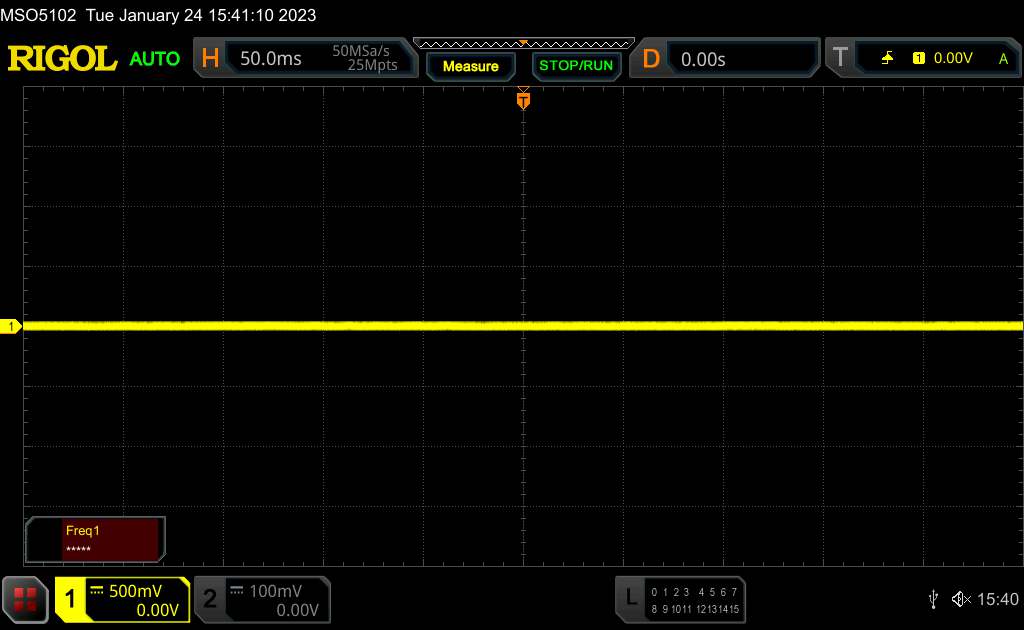 | ||
In comparison: 53 % of all tested devices do not use PWM to dim the display. If PWM was detected, an average of 19277 (minimum: 5 – maximum: 3846000) Hz was measured. | |||
In our measurements with the spectral photometer and CalMAN software, we observed a minimal blue cast in bright grayscales, but the display performs well overall with fairly accurate reproduction values. The colors don’t really give cause for complaint either, as only the blue and brown tones deviate a little too strongly from the optimum.
Display Response Times
ℹ
Display response times show how fast the screen is able to change from one color to the next. Slow response times can lead to afterimages and can cause moving objects to appear blurry (ghosting). Gamers of fast-paced 3D titles should pay special attention to fast response times.
| ↔ Response Time Black to White | ||
|---|---|---|
| 32.2 ms … rise ↗ and fall ↘ combined | ↗ 13.7 ms rise | 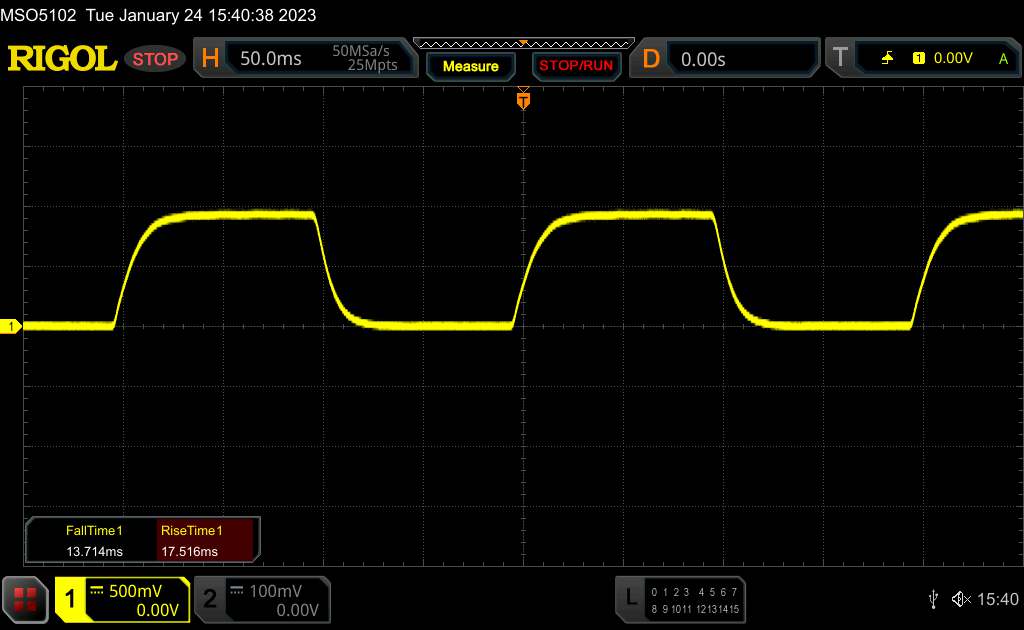 |
| ↘ 17.5 ms fall | ||
| The screen shows slow response rates in our tests and will be unsatisfactory for gamers. In comparison, all tested devices range from 0.4 (minimum) to 240 (maximum) ms. » 85 % of all devices are better. This means that the measured response time is worse than the average of all tested devices (22.6 ms). | ||
| ↔ Response Time 50% Grey to 80% Grey | ||
| 42.7 ms … rise ↗ and fall ↘ combined | ↗ 23.7 ms rise | 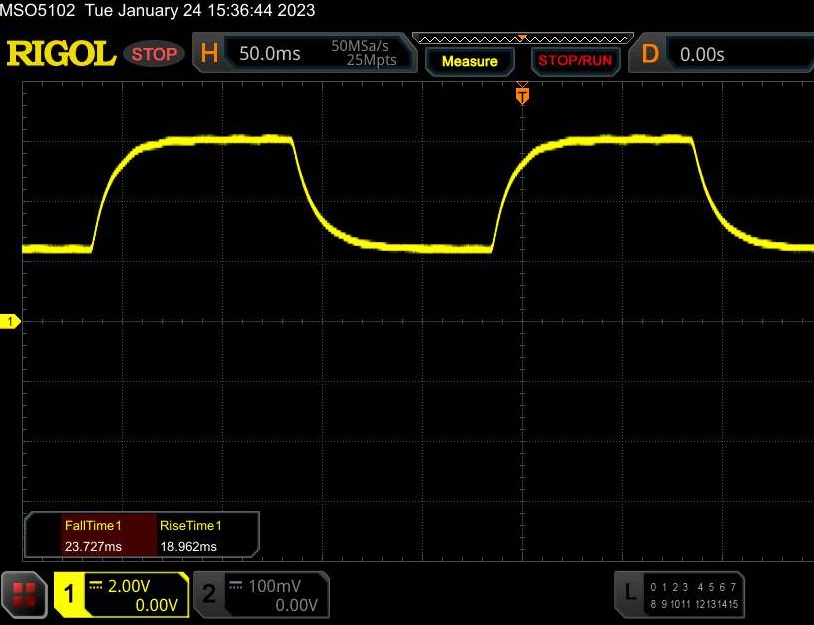 |
| ↘ 19 ms fall | ||
| The screen shows slow response rates in our tests and will be unsatisfactory for gamers. In comparison, all tested devices range from 0.25 (minimum) to 636 (maximum) ms. » 64 % of all devices are better. This means that the measured response time is worse than the average of all tested devices (35.6 ms). | ||
Reflections on the display make outdoor use difficult, and the display’s brightness is barely sufficient, even on cloudy days.
The viewing angle stability is very much without criticism; only a slight decrease in brightness at very flat viewing angles can be seen.
The Lenovo Tab M9 comes with a SoC from MediaTek, namely the Helio G80. Although a 4-year-old SoC, it offers slightly more performance compared to other inexpensive tablets. In benchmark comparisons with similarly priced tablets, the test device always comes out on top.
In everyday use, you can expect reasonably smooth system operation, but you shouldn’t overload the small tablet. After all, it is a mid-range SoC and not a high-end processor.
| Geekbench 5.4 | |
| Single-Core | |
| Average of class Tablet (152 – 1892, n=45, last 2 years) |
|
| Average Mediatek Helio G80 (300 – 387, n=11) |
|
| Lenovo Tab M9 |
|
| Nokia T10 |
|
| Samsung Galaxy Tab A7 Lite |
|
| Lenovo Tab M8 (3rd Gen) |
|
| Amazon Fire HD 8 2022 |
|
| Multi-Core | |
| Average of class Tablet (780 – 8524, n=45, last 2 years) |
|
| Average Mediatek Helio G80 (790 – 1370, n=11) |
|
| Nokia T10 |
|
| Lenovo Tab M9 |
|
| Lenovo Tab M8 (3rd Gen) |
|
| Samsung Galaxy Tab A7 Lite |
|
| Antutu v9 – Total Score | |
| Average of class Tablet (117837 – 1416727, n=37, last 2 years) |
|
| Average Mediatek Helio G80 (204040 – 232228, n=5) |
|
| Lenovo Tab M9 |
|
| Amazon Fire HD 8 2022 |
|
| Samsung Galaxy Tab A7 Lite |
|
| PCMark for Android – Work 3.0 | |
| Average of class Tablet (4564 – 13996, n=38, last 2 years) |
|
| Nokia T10 |
|
| Lenovo Tab M9 |
|
| Average Mediatek Helio G80 (5589 – 8120, n=9) |
|
| Lenovo Tab M8 (3rd Gen) |
|
| Samsung Galaxy Tab A7 Lite |
|
| Amazon Fire HD 8 2022 |
|
| BaseMark OS II | |
| Overall | |
| Average of class Tablet (444 – 6908, n=31, last 2 years) |
|
| Average Mediatek Helio G80 (2072 – 2400, n=7) |
|
| Lenovo Tab M9 |
|
| Samsung Galaxy Tab A7 Lite |
|
| Amazon Fire HD 8 2022 |
|
| System | |
| Average of class Tablet (2793 – 10926, n=31, last 2 years) |
|
| Average Mediatek Helio G80 (4045 – 5452, n=7) |
|
| Lenovo Tab M9 |
|
| Samsung Galaxy Tab A7 Lite |
|
| Amazon Fire HD 8 2022 |
|
| Memory | |
| Average of class Tablet (970 – 8167, n=31, last 2 years) |
|
| Average Mediatek Helio G80 (2343 – 3101, n=7) |
|
| Lenovo Tab M9 |
|
| Samsung Galaxy Tab A7 Lite |
|
| Amazon Fire HD 8 2022 |
|
| Graphics | |
| Average of class Tablet (928 – 22308, n=31, last 2 years) |
|
| Lenovo Tab M9 |
|
| Average Mediatek Helio G80 (1735 – 1818, n=7) |
|
| Amazon Fire HD 8 2022 |
|
| Samsung Galaxy Tab A7 Lite |
|
| Web | |
| Average of class Tablet (10 – 1598, n=31, last 2 years) |
|
| Average Mediatek Helio G80 (1069 – 1243, n=7) |
|
| Lenovo Tab M9 |
|
| Samsung Galaxy Tab A7 Lite |
|
| Amazon Fire HD 8 2022 |
|
| UL Procyon AI Inference – Overall Score | |
| Average of class Tablet (1535 – 73266, n=20, last 2 years) |
|
| Lenovo Tab M9 |
|
| Average Mediatek Helio G80 (3400 – 3992, n=2) |
|
| Amazon Fire HD 8 2022 |
|
| Samsung Galaxy Tab A7 Lite |
|
Legend
Lenovo Tab M9 Mediatek Helio G80, ARM Mali-G52 MP2, 32 GB eMMC Flash
Nokia T10 UNISOC T606, ARM Mali-G57 MP1, 32 GB eMMC Flash
The ARM Mali G52 with two pipelines is used as the graphics solution. The Lenovo Tab M9 is also usually superior to other comparison devices in the graphics benchmarks.
Again, you shouldn’t expect high-end performance, but you can assume that somewhat more graphics-intensive applications will run on the tablet.
| 3DMark / Wild Life Extreme Unlimited | |
| Lenovo Tab M9 Mali-G52 MP2, Helio G80, 32 GB eMMC Flash | |
| Nokia T10 Mali-G57 MP1, T606, 32 GB eMMC Flash | |
| Samsung Galaxy Tab A7 Lite PowerVR GE8320, Helio P22T MT8768T, 32 GB eMMC Flash | |
| 3DMark / Wild Life Extreme | |
| Lenovo Tab M9 Mali-G52 MP2, Helio G80, 32 GB eMMC Flash | |
| Nokia T10 Mali-G57 MP1, T606, 32 GB eMMC Flash | |
| Samsung Galaxy Tab A7 Lite PowerVR GE8320, Helio P22T MT8768T, 32 GB eMMC Flash | |
| 3DMark / Wild Life Unlimited Score | |
| Lenovo Tab M9 Mali-G52 MP2, Helio G80, 32 GB eMMC Flash | |
| Nokia T10 Mali-G57 MP1, T606, 32 GB eMMC Flash | |
| Samsung Galaxy Tab A7 Lite PowerVR GE8320, Helio P22T MT8768T, 32 GB eMMC Flash | |
| 3DMark / Sling Shot Extreme (Vulkan) Unlimited | |
| Lenovo Tab M9 Mali-G52 MP2, Helio G80, 32 GB eMMC Flash |
|
| Samsung Galaxy Tab A7 Lite PowerVR GE8320, Helio P22T MT8768T, 32 GB eMMC Flash |
|
| Nokia T10 Mali-G57 MP1, T606, 32 GB eMMC Flash |
|
| Amazon Fire HD 8 2022 Mali-G52 MP2, MT8169A, 32 GB eMMC Flash |
|
| Lenovo Tab M8 (3rd Gen) PowerVR GE8320, Helio P22T MT8768T, 32 GB eMMC Flash |
|
| 3DMark / Sling Shot Extreme (Vulkan) Unlimited Graphics | |
| Lenovo Tab M9 Mali-G52 MP2, Helio G80, 32 GB eMMC Flash |
|
| Nokia T10 Mali-G57 MP1, T606, 32 GB eMMC Flash |
|
| Amazon Fire HD 8 2022 Mali-G52 MP2, MT8169A, 32 GB eMMC Flash |
|
| Samsung Galaxy Tab A7 Lite PowerVR GE8320, Helio P22T MT8768T, 32 GB eMMC Flash |
|
| Lenovo Tab M8 (3rd Gen) PowerVR GE8320, Helio P22T MT8768T, 32 GB eMMC Flash |
|
| 3DMark / Sling Shot Extreme (Vulkan) Unlimited Physics | |
| Nokia T10 Mali-G57 MP1, T606, 32 GB eMMC Flash |
|
| Lenovo Tab M9 Mali-G52 MP2, Helio G80, 32 GB eMMC Flash |
|
| Amazon Fire HD 8 2022 Mali-G52 MP2, MT8169A, 32 GB eMMC Flash |
|
| Lenovo Tab M8 (3rd Gen) PowerVR GE8320, Helio P22T MT8768T, 32 GB eMMC Flash |
|
| Samsung Galaxy Tab A7 Lite PowerVR GE8320, Helio P22T MT8768T, 32 GB eMMC Flash |
|
| 3DMark / Sling Shot Extreme (ES 3.1) | |
| Lenovo Tab M9 Mali-G52 MP2, Helio G80, 32 GB eMMC Flash | |
| Nokia T10 Mali-G57 MP1, T606, 32 GB eMMC Flash | |
| Amazon Fire HD 8 2022 Mali-G52 MP2, MT8169A, 32 GB eMMC Flash | |
| Lenovo Tab M8 (3rd Gen) PowerVR GE8320, Helio P22T MT8768T, 32 GB eMMC Flash | |
| 3DMark / Sling Shot Extreme (ES 3.1) Graphics | |
| Lenovo Tab M9 Mali-G52 MP2, Helio G80, 32 GB eMMC Flash |
|
| Nokia T10 Mali-G57 MP1, T606, 32 GB eMMC Flash |
|
| Amazon Fire HD 8 2022 Mali-G52 MP2, MT8169A, 32 GB eMMC Flash |
|
| Samsung Galaxy Tab A7 Lite PowerVR GE8320, Helio P22T MT8768T, 32 GB eMMC Flash |
|
| Lenovo Tab M8 (3rd Gen) PowerVR GE8320, Helio P22T MT8768T, 32 GB eMMC Flash |
|
| 3DMark / Sling Shot Extreme (ES 3.1) Physics | |
| Nokia T10 Mali-G57 MP1, T606, 32 GB eMMC Flash |
|
| Lenovo Tab M9 Mali-G52 MP2, Helio G80, 32 GB eMMC Flash |
|
| Amazon Fire HD 8 2022 Mali-G52 MP2, MT8169A, 32 GB eMMC Flash |
|
| Lenovo Tab M8 (3rd Gen) PowerVR GE8320, Helio P22T MT8768T, 32 GB eMMC Flash |
|
| Samsung Galaxy Tab A7 Lite PowerVR GE8320, Helio P22T MT8768T, 32 GB eMMC Flash |
|
| GFXBench / Aztec Ruins High Tier Onscreen | |
| Lenovo Tab M9 Mali-G52 MP2, Helio G80, 32 GB eMMC Flash |
|
| Nokia T10 Mali-G57 MP1, T606, 32 GB eMMC Flash |
|
| Amazon Fire HD 8 2022 Mali-G52 MP2, MT8169A, 32 GB eMMC Flash |
|
| Lenovo Tab M8 (3rd Gen) PowerVR GE8320, Helio P22T MT8768T, 32 GB eMMC Flash |
|
| Samsung Galaxy Tab A7 Lite PowerVR GE8320, Helio P22T MT8768T, 32 GB eMMC Flash |
|
| GFXBench / Aztec Ruins High Tier Offscreen | |
| Amazon Fire HD 8 2022 Mali-G52 MP2, MT8169A, 32 GB eMMC Flash |
|
| Lenovo Tab M9 Mali-G52 MP2, Helio G80, 32 GB eMMC Flash |
|
| Nokia T10 Mali-G57 MP1, T606, 32 GB eMMC Flash |
|
| Samsung Galaxy Tab A7 Lite PowerVR GE8320, Helio P22T MT8768T, 32 GB eMMC Flash |
|
| Lenovo Tab M8 (3rd Gen) PowerVR GE8320, Helio P22T MT8768T, 32 GB eMMC Flash |
|
| GFXBench / Aztec Ruins Normal Tier Onscreen | |
| Amazon Fire HD 8 2022 Mali-G52 MP2, MT8169A, 32 GB eMMC Flash |
|
| Lenovo Tab M9 Mali-G52 MP2, Helio G80, 32 GB eMMC Flash |
|
| Nokia T10 Mali-G57 MP1, T606, 32 GB eMMC Flash |
|
| Lenovo Tab M8 (3rd Gen) PowerVR GE8320, Helio P22T MT8768T, 32 GB eMMC Flash |
|
| Samsung Galaxy Tab A7 Lite PowerVR GE8320, Helio P22T MT8768T, 32 GB eMMC Flash |
|
| GFXBench / Aztec Ruins Normal Tier Offscreen | |
| Lenovo Tab M9 Mali-G52 MP2, Helio G80, 32 GB eMMC Flash |
|
| Amazon Fire HD 8 2022 Mali-G52 MP2, MT8169A, 32 GB eMMC Flash |
|
| Nokia T10 Mali-G57 MP1, T606, 32 GB eMMC Flash |
|
| Lenovo Tab M8 (3rd Gen) PowerVR GE8320, Helio P22T MT8768T, 32 GB eMMC Flash |
|
| Samsung Galaxy Tab A7 Lite PowerVR GE8320, Helio P22T MT8768T, 32 GB eMMC Flash |
|
Compared to other low-priced tablets, the Lenovo Tab M9 does very well when surfing the web and is significantly faster in the benchmarks. In everyday use, however, you still have to wait every now and then for large websites to appear in full, and when scrolling, images only appear after a certain loading time.
| Jetstream 2 – Total Score | |
| Average of class Tablet (17 – 225, n=41, last 2 years) |
|
| Lenovo Tab M9 (Chrome 110) |
|
| Average Mediatek Helio G80 (29 – 38.7, n=7) |
|
| Amazon Fire HD 8 2022 (Silk Browser 106) |
|
| Samsung Galaxy Tab A7 Lite (Chrome 92.0.4515.115) |
|
| Speedometer 2.0 – Result | |
| Average of class Tablet (13.9 – 376, n=39, last 2 years) |
|
| Lenovo Tab M9 (Chome 110) |
|
| Average Mediatek Helio G80 (21.8 – 30, n=7) |
|
| Amazon Fire HD 8 2022 (Silk Browser 106) |
|
| Samsung Galaxy Tab A7 Lite (Chrome 92.0.4515.115) |
|
| Octane V2 – Total Score | |
| Average of class Tablet (5004 – 74614, n=45, last 2 years) |
|
| Lenovo Tab M9 (Chrome 110) |
|
| Average Mediatek Helio G80 (10432 – 12744, n=8) |
|
| Nokia T10 (Chrome 109) |
|
| Amazon Fire HD 8 2022 (Silk Browser 106) |
|
| Samsung Galaxy Tab A7 Lite (Chrome 92.0.4515.115) |
|
| Lenovo Tab M8 (3rd Gen) (Chrome 109) |
|
| Mozilla Kraken 1.1 – Total Score | |
| Samsung Galaxy Tab A7 Lite (Chrome 92.0.4515.115) |
|
| Amazon Fire HD 8 2022 (Silk Browser 106) |
|
| Average Mediatek Helio G80 (3227 – 4076, n=7) |
|
| Lenovo Tab M9 (Chrome 110) |
|
| Average of class Tablet (451 – 12972, n=42, last 2 years) |
|
* … smaller is better
Our test device also has to make do with a sluggish eMMC storage, but the storage controller performed well under testing, so that the Tab M9 at least gets good read and write rates out of the flash storage.
However, one should not hope for lightning-fast transfers and short loading times.
| Lenovo Tab M9 | Lenovo Tab M8 (3rd Gen) | Nokia T10 | Samsung Galaxy Tab A7 Lite | Amazon Fire HD 8 2022 | Average 32 GB eMMC Flash | Average of class Tablet | ||||||||||||||||||||||||||||||||||||||||||||||||||||||||||||||||||
|---|---|---|---|---|---|---|---|---|---|---|---|---|---|---|---|---|---|---|---|---|---|---|---|---|---|---|---|---|---|---|---|---|---|---|---|---|---|---|---|---|---|---|---|---|---|---|---|---|---|---|---|---|---|---|---|---|---|---|---|---|---|---|---|---|---|---|---|---|---|---|---|---|
| AndroBench 3-5 | -51% | -11% | -37% | -44% | -47% | 101% | ||||||||||||||||||||||||||||||||||||||||||||||||||||||||||||||||||
| Sequential Read 256KB | 274.3 | 262.1 -4% | 273.5 0% | 271.1 -1% | 270.37 -1% | Lenovo Tab M9; PUBG Mobile; Balanced; 2.4.0: Ø29.5 (24-31) Lenovo Tab M9; Diablo Immortal; Medium Mobile Low; 1.7.3: Ø30 (29-31) Lenovo Tab M9; Diablo Immortal; Ultra Mobile Very High; 1.7.3: Ø29.9 (26-31) Even under prolonged load, tablet temperatures remain within reasonable limits: We measured a maximum of 34.9 °C on the chassis, and only to a very limited extent in certain areas. Even in hot environmental temperatures, the device should be pleasant to use most of the time. No drops in performance were determined during prolonged use either: The 3DMark stress tests delivered consistent results even after 20 benchmark runs. Lenovo Tab M9 Mali-G52 MP2, Helio G80, 32 GB eMMC Flash; Wild Life Stress Test Stability; 0.0.0.0: Ø4.26 (4.2-4.28) Nokia T10 Mali-G57 MP1, T606, 32 GB eMMC Flash; Wild Life Stress Test Stability; 0.0.0.0: Ø2.49 (2.46-2.54) Lenovo Tab M9 Mali-G52 MP2, Helio G80, 32 GB eMMC Flash; Wild Life Extreme Stress Test; 1.1.0.2: Ø1.07 (1.063-1.076)
Power Supply (max.) 34.9 °C = 95 F | Room Temperature 19 °C = 66 F | Fluke t3000FC (calibrated), Voltcraft IR-260 (+) The average temperature for the upper side under maximal load is 29.7 °C / 85 F, compared to the average of 30.2 °C / 86 F for the devices in the class Tablet. The Lenovo Tab M9 comes with stereo speakers that sound quite good for such a cheap tablet. You shouldn’t expect real bass, but you can expect well-balanced sound that makes individual instruments recognizable, even in classical music. A 3.5mm audio port is installed. Otherwise you can use Bluetooth 5.1 for connecting external audio devices. Bluetooth codecs include SBC, AAC, LDAC, aptX and aptX HD. Lenovo Tab M9; 1920×1080 Aztec Ruins Normal Offscreen: Ø3.8 (2.78-4.54) Due to the high consumption in idle mode, the runtimes in this usage scenario are limited despite the 5100 mAh battery. Samsung’s Tab A7 Lite, for example, clearly outperforms here. Nevertheless, our test device achieves values suitable for everyday use in all scenarios. With 15:55 hours in the WLAN test, you should expect two working days of normal use. Battery Runtime
Pros+ relatively light + good runtimes + elegant metal case + cover with stand included + hardly any bloatware + GPS module also on the WiFi model + accurate facial recognition + no PWM Cons– little storage – outdated security patches – high idle consumption – graphic errors in games – mediocre photo quality from the cameras The Lenovo Tab M9 is an affordable tablet that comes in a stylish and good quality metal case. It is slightly larger than the average 8-inch tablet, but not too heavy. At first glance, this makes it a good replacement for those looking for a little more screen space. Lenovo promises two years of security updates and another operating system version. However, since the manufacturer does not say how often patches are distributed and the last security patches were quite some time ago at the time of review, it remains to be seen just how secure the operating system will be during the update period. The tablet has a fast SoC that theoretically allows for mobile telephony, but the LTE version is currently not widely available. For this, Lenovo has activated the tracking module, which definitely can be used for localization if precision accuracy is not so important for you. The screen is reasonably bright, but hardly sufficient for outdoor use on sunny days. Good battery life, usable speakers and very little heating make for a positive impression overall.
The third-generation Lenovo Tab M8 is hardly any cheaper, but also available in an LTE version. The Samsung Galaxy Tab A7 Lite also offers GPS, which can save you a few dollars. Global availability of the Lenovo Tab M9 appears to be sporadic at present. Interested buyers are advised to check directly via Lenovo, where applicable, or via popular resellers in their region. We found, for example, that the model is available in: This list is not exhaustive. Prices are as of 03.03.2023 and are subject to change.
Lenovo Tab M9 Connectivity 41 / 70 → 58% Games Performance 13 / 78 → 17% Application Performance 50 / 92 → 54% Tablet – Weighted Average TransparencyThe present review sample was made available to the author as a loan by the manufacturer or a shop for the purposes of review. The lender had no influence on this review, nor did the manufacturer receive a copy of this review before publication. There was no obligation to publish this review. Pricecompare Editor of the original article: Florian Schmitt – Managing Editor Mobile – 1008 articles published on Notebookcheck since 2009 I initially wrote about gaming laptops when I joined Notebookcheck in 2009. I was then involved with the setup of the comparison portal Notebookinfo and worked with social media concepts for large companies like BMW and Adidas, while also returning to work for Notebookcheck in 2012. Nowadays, I focus on smartphones, tablets, and future technologies. Since 2018 I have been Managing Editor for mobile device reviews, working alongside my colleague Daniel Schmidt.  Translator: Jacob Fisher – Translator – 165 articles published on Notebookcheck since 2022 Growing up in regional Australia, I first became acquainted with computers in my early teens after a broken leg from a football (soccer) match temporarily condemned me to a predominately indoor lifestyle. Soon afterwards I was building my own systems. Now I live in Germany, having moved here in 2014, where I study philosophy and anthropology. I am particularly fascinated by how computer technology has fundamentally and dramatically reshaped human culture, and how it continues to do so. Florian Schmitt, 2023-03- 3 (Update: 2023-03- 3) Read More | ||||||||||||||||||||||||||||||||||||||||||||||||||||||||||||||||||