

It’s Not Case Closed on the Lab Leak Theory
Yes, the Department of Energy says the virus most likely came from a lab. No, they aren’t very sure at all—and other agencies disagree.
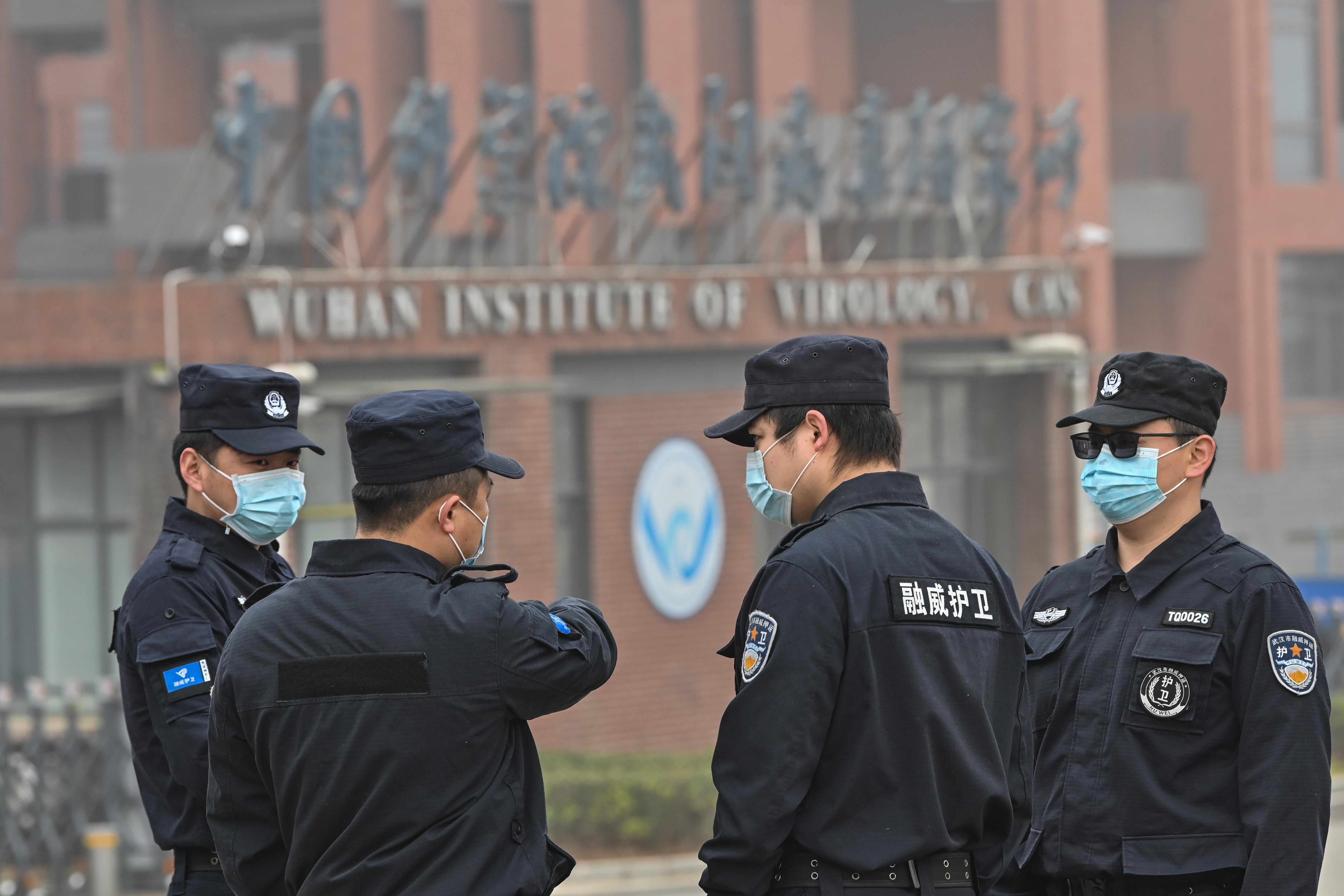
HECTOR RETAMAL/Getty Images
On February 26, the Wall Street Journal ran a story that looked, at first glance, like a bombshell: “Lab Leak Most Likely Origin of Covid-19 Pandemic, Energy Department Now Says.”
So, did something big just happen? Do we finally have a smoking gun to settle the mysterious origins of COVID-19 once and for all?
Since early in the pandemic, the lab leak hypothesis has posited that the novel coronavirus emerged from a lab—from a well-intentioned SARS study gone wrong, or as a nefarious bioweapon. In contrast, the natural spread hypothesis assumes that SARS-CoV-2 came to us the way most new viruses do: from interactions with infected animals. The debate has gotten extraordinarily heated, with proponents of each accusing the other side of motivated reasoning.
The Journal reported that the Department of Energy now has an official stance on the origin of COVID, based on new information. The New York Times matched the WSJ story with its own story, and the New York Post ran paparazzi photos of Anthony Fauci outside his home refusing to comment on the news. But it’s not clear if the DOE’s assessment changes all that much.
The DOE’s information is classified, so it’s hard to evaluate what it contains. But we do know that the DOE has “low confidence” in their assessment that the virus came from a lab, as the WSJ reported, so it seems like whatever they know now isn’t thoroughly convincing.
Then there’s the fact that the DOE is not the final arbiter of truth on where COVID came from. In fact, a National Security Council spokesperson said today that there is not a consensus within the government.
Many agencies have been looking into it: Back in 2021, the Biden administration asked the Intelligence Community to investigate the origins of the pandemic. The Department of Energy’s intelligence arm was one of eight agencies that looked into the matter.
After 90 days, the agencies came back with a group report. They all agreed that there was insufficient evidence to settle the debate. Even so, each agency shared their best guess. Four of the eight agencies (along with the National Intelligence Council, which also participated), leaned towards natural spread, with low confidence. The FBI leaned lab leak, with moderate confidence. Three agencies, including the CIA and the DOE, couldn’t make up their minds.
So, the news is really about one agency in this process finally making a choice. On February 26th, the Journal reported that in an updated version of the report that is currently classified, the DOE finally picked a position: lab leak, low confidence. The Journal also reported that the DOE was the only agency that changed it’s position.
From the 2021 report, it does not appear that one undecided agency picking a lane would have much impact on the intelligence community’s overall assessment. That’s because, different conclusions aside, the agencies actually agreed on a lot.
Lab leak or not, they agreed with full confidence that COVID was not a biological weapon and were confident that China did not see the pandemic coming. Most agencies also agreed that COVID wasn’t genetically engineered, leaving less nefarious lab-leak options like mis-handling animals or viruses.
The agencies also agreed on what shape a smoking gun would take. To prove a lab-leak theory, they would need evidence, “that a laboratory in Wuhan was handling SARS-CoV-2 or a close progenitor virus before COVID-19 emerged.” To prove the natural spread hypothesis, they would need evidence that “allows them to determine the specific pathway for initial natural contact with an animal,” states the report.
If there were now evidence to firmly support either chain of events, presumably the DOE would have higher confidence in their assessment—and, other agencies would be joining them in their conclusion. The Journal article explains that the other agencies had the same information and did not switch their positions.
In the meantime, since the original intelligence agency report, there has been new evidence for natural spread. Two related papers published in Science in July 2022 combined epidemiologic methods and genomics to map the earliest known COVID cases. They found that cases centered on one particular live-animal market in Wuhan, China, and that two slightly different variants emerged there within a few weeks. This implies that the virus was mutating in infected animals being sold on-site, rather than originating in research labs across the river. Still, it’s not clear where the first infected animal came from. As an author on one of the papers pointed out, a lab leak is still technically plausible.
“If [the Wuhan Institute of Virology] was doing experiments with a virus that could have evolved into SARS-CoV-2, that would dramatically change the likelihood that this virus would coincidentally emerge somewhere in Wuhan naturally, especially if it was collected years earlier in a far-off location,” Angela Rasmussen wrote in a tweet, basically agreeing with the Intelligence Community on what a smoking gun would look like.
There is no evidence that these labs had such a virus. Researchers also haven’t yet found a good suspect in the wild for a precursor virus that could have jumped to humans in each scenario.
This is complicated, painstaking work, and we’re not likely to have a firm answer soon. As Jon Ehrenreich pointed out in January in Slate, it took decades to pinpoint where diseases like Ebola and HIV originated.
In the meantime, while sleuthing is fun—and it’s good that someone’s doing it—it is also a distraction for most of us. The intelligence community’s 2022 threat assessment still flags other pandemics from animals as a big risk. Maybe we should worry more about what virology twitter has been talking about this week: the potential for bird flu to spread among humans.
Read More
Elida Schildgen