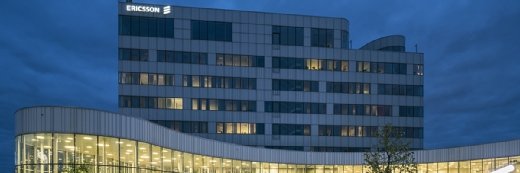
As the telecoms sector gathers in Barcelona for the annual Mobile World Congress, communications services providers face a turbulent market that will require careful investments to be made
By
Andy Walker
Published: 15 Feb 2023
Pressure on the telecoms industry has never been greater. Communications services providers (CSPs) are up against multiple challenges – from a turbulent labour market to the need to reduce their energy consumption.
And yet there’s enormous potential for the industry to rapidly advance and evolve. Finally, 5G is at a point where it can be monetised at scale, and advanced networks are changing where CSPs fit in the value chain and ecosystem.
All these conversations will collide at this year’s Mobile World Congress (MWC), as attendees come together to discuss where to reduce expenditure and where to make critical investments. Here are five trends CSPs will be trying to navigate and find solutions for at this year’s event.
A stormy economic and labour market is leading to high-stakes investment decisions
CSPs are in a classic margin squeeze. They’re forced by competitive pressures to spend big on spectrum, 5G and fibre, while their input costs are rising from inflation. At the same time, in many markets, they’re unable to raise prices. The net result is margin erosion that puts them in the often-uncomfortable debates about whether to reduce capital spending – a tactic that ultimately leads to them becoming less competitive.
CSPs will be in a tough spot and over the next 12 months they will need to make some high-stakes decisions over where to spend and how to save. CSPs should approach the current market with the idea that they may need to push in three directions to succeed:
They should reconsider their structures and look for opportunities to unlock value by bringing in partners to invest in parts of their business – like so-called TowerCos for their physical network assets, as an example. They should also weigh choices like splitting NetCo (network operations) and ServCo (services operations) organisations to further unlock value.
CSPs need to be more aggressive at leveraging technology to digitise their own businesses. They should be using artificial intelligence (AI) for marketing, care and sales – but beyond these, how can they think about AI in operations? A number of leading telecoms firms are working these opportunities.
They need to develop growth plans that drive revenue from adjacencies to their core network businesses. Most telecoms are trying to unlock value here – a few are succeeding by rethinking how they innovate, and how they engage their partners.
5G is moving from evolution to revolution
The hype on 5G got ahead of the reality over the past several years, but as the network deployment continues, compelling new use cases are emerging.
For context, it typically takes about ten years between each generational leap of mobile network technologies. Once introduced, it takes two to three years for a network to fully deploy, and then it takes another couple of years before we start to see real-world applications.
We’re now at a point where 5G is moving from being an evolution to a revolution, with huge leaps in adoption driven by the CSPs’ transformation into a communications platform. Some of the hot topics at this year’s MWC are likely to include the densification of networks, successes to date, new partnerships, new operating models, ways to monetise 5G, and ways to manage increasingly complex environments.
The hype on 5G got ahead of the reality over the past several years, but compelling new use cases are emerging Andy Walker, Accenture
Sustainability is climbing the agenda
While CSPs are making significant investments in new spectrum and infrastructure, they are also facing calls to reduce their energy consumption and waste. How can they address both needs?
Environmental, social and governance (ESG) solutions are being tailored based on the opportunity, existing capabilities, and supporting infrastructure. There is no one-size-fits-all approach, but to become responsible actors in the discussions on energy usage and greenhouse gas emissions, CSPs need to consider priority areas for investment in energy management and operations.
The first is in green energy management and green networks. With ongoing issues in relation to global supply, energy management has become critical in managing costs and reducing carbon emissions. To maximise this investment, CSPs should pay close attention to data benchmarks from networks, data centres and operations, as well as energy sources such as renewables and batteries. This will help CSPs to integrate more renewables, remedy inefficiencies, and optimise buying schemes.
Other potential areas for investment include deep tech know-how in AI and ESG platforms; investment in products, procurement, innovation and supply chain to infuse sustainability in the full lifecycle of a product; bolstered leadership to drive a comprehensive cultural shift within the organisation; and a green scorecard system to build transparency of a data-driven approach and measure impactful change.
Industry restructures are not “if” but “when”
Conflicting pressures, and an urgent need to cost-effectively roll out 5G networks, are leading many CSPs to reconsider how their businesses are structured – and the optimal models to be successful long term. Across Europe, for example, new spin-offs are being created to accelerate fibre deployments. Others – such as Vantage Towers set up by Vodafone and Totem by Orange – have separated their tower businesses. The sale of assets is providing CSPs with immediate capital, while a separate entity or joint venture can monetise the infrastructure through multi-tenancy.
Alternative routes being explored by CSPs include splitting network and services business into NetCo/ServCo organisations, or consolidating their digital service business and cutting non-core activities into separate businesses – or eliminating them entirely. The benefits of this could include higher asset utilisation, new opportunities to attract investors and increased focus from management.
Ultimately, CSPs know there is an opportunity to create a fundamental change in value by separating infrastructure from services, pursuing new uses of third parties, and accelerating growth-related investments. Those that don’t restructure risk maintaining their underperforming networks, which will limit the ability to create new revenue streams from network wholesaling, tower leasing and managed service models.
For many, the question of separation is not “if” but “when”. In this new environment, where structural changes are no longer a novelty, CSPs must be ready to consider new business models and use cases that will differentiate and grow their customer base.
CSPs are moving towards network as a service
Today’s networks must be able to meet a broad, rapidly changing set of needs, in addition to providing workers with seamless connectivity to data, applications and platforms from anywhere and everyone.
CSPs are embracing a transformation journey with the adoption of innovative technology capabilities, which will convert their current business model into a “communications platform” capable of delivering network as a service (NaaS).
NaaS creates customer value by moving to a flexible consumption model, and private networks are emerging as customised fit-for-purpose networks. This will, however, require a workforce with modern network engineering expertise, and it must be an industry imperative to close the knowledge and skills gap related with these open, disaggregated solutions.
It would be easy for CSPs to get overwhelmed in the current challenging environment – but they remain in an enviable position to capitalise on a new era of connectivity. With the right networks and offers in place, there’s an opportunity for them foster strong customer relationships and thrive. CSPs must attend MWC with a growth mindset – helping to ensure success in the years, and decades, ahead.
Andy Walker is Accenture’s global lead for the communications and media industries.
Read more on Telecoms networks and broadband communications
A virtual power plant, or VPP, is a collection of household devices (such as smart thermostats, electric-vehicle chargers, home batteries, and solar panels) that a utility can control. Usually that means commanding the devices to draw less electricity during peak hours. For example, the utility might adjust your thermostat or delay or slow EV charging
On 22 September 2026, Computer Weekly turns 60. To mark the milestone, we asked some of our friends - experts, parliamentarians, IT leaders and suppliers - for their perspectives on how tech has changed their lives over six decades. What's changed the most for you since then? One of the fascinations of technology is its
From the garage to the forefront of AI-driven racing, Emirati women are helping shape the next generation of engineering and autonomous technology By Andrea Benito , Computer Weekly Published: 28 Aug 2026 As the UAE marks Emirati Women’s Day 2026 under the theme “We Emerge Stronger and Better”, the occasion offers an opportunity to reflect
Tierney - stock.adobe.com Thought Machine’s Google-inspired banking technology has now been adopted by 20 global Tier 1 banks By Karl Flinders, Chief reporter and senior editor EMEA Published: 27 Aug 2026 9:00 Deutsche Bank’s private bank will use Thought Machine’s cloud-based banking platform as it reduces core systems from 15 to two cloud-based platforms, after
A virtual power plant, or VPP, is a collection of household devices (such as smart thermostats, electric-vehicle chargers, home batteries, and solar panels) that a utility can control. Usually that means commanding the devices to draw less electricity during peak hours. For example, the utility might adjust your thermostat or delay or slow EV charging
On 22 September 2026, Computer Weekly turns 60. To mark the milestone, we asked some of our friends - experts, parliamentarians, IT leaders and suppliers - for their perspectives on how tech has changed their lives over six decades. What's changed the most for you since then? One of the fascinations of technology is its
From the garage to the forefront of AI-driven racing, Emirati women are helping shape the next generation of engineering and autonomous technology By Andrea Benito , Computer Weekly Published: 28 Aug 2026 As the UAE marks Emirati Women’s Day 2026 under the theme “We Emerge Stronger and Better”, the occasion offers an opportunity to reflect
Tierney - stock.adobe.com Thought Machine’s Google-inspired banking technology has now been adopted by 20 global Tier 1 banks By Karl Flinders, Chief reporter and senior editor EMEA Published: 27 Aug 2026 9:00 Deutsche Bank’s private bank will use Thought Machine’s cloud-based banking platform as it reduces core systems from 15 to two cloud-based platforms, after
EXCLUSIVE: The fifth installment of Attack of the Killer Tomatoes, titled Attack of the Killer Tomatoes: Organic Intelligence, is coming to VOD platforms on October 6. This is following a theatrical release that began on August 7 for the David Ferino-directed comedy. The release comes via a strategic distribution partnership between Starboard Entertainment and Stonecutter
Par Bruno COURTIN Published on 7 Aug 2026 - Updated on 7 Aug 2026 3 min reading time According to forecasts from GBTA, the world's leading organisation representing business travel stakeholders, global business travel spending is set to hit a record $1.71 trillion in 2026, while the number of trips is expected to reach 1.84
By offering the ability to automate routine note-taking, requirements gathering, and data analysis tasks, AI is helping to make the decisive human side of this key business-IT role more impactful. AI’s impact has been felt across nearly every industry, and its rise has already started to alter several roles in tech, including that of the
In Brief: GBTA’s latest Business Travel Index report shows spending gains driven by higher prices as geopolitical uncertainty and transportation pressures weigh on the outlook Global Business Travel Spending to Hit Record $1.71 Trillion in 2026, While Trips Reach 1.84 Billion, Says GBTA Forecast - Image Credit Unsplash+ Global business travel spending is forecast to