

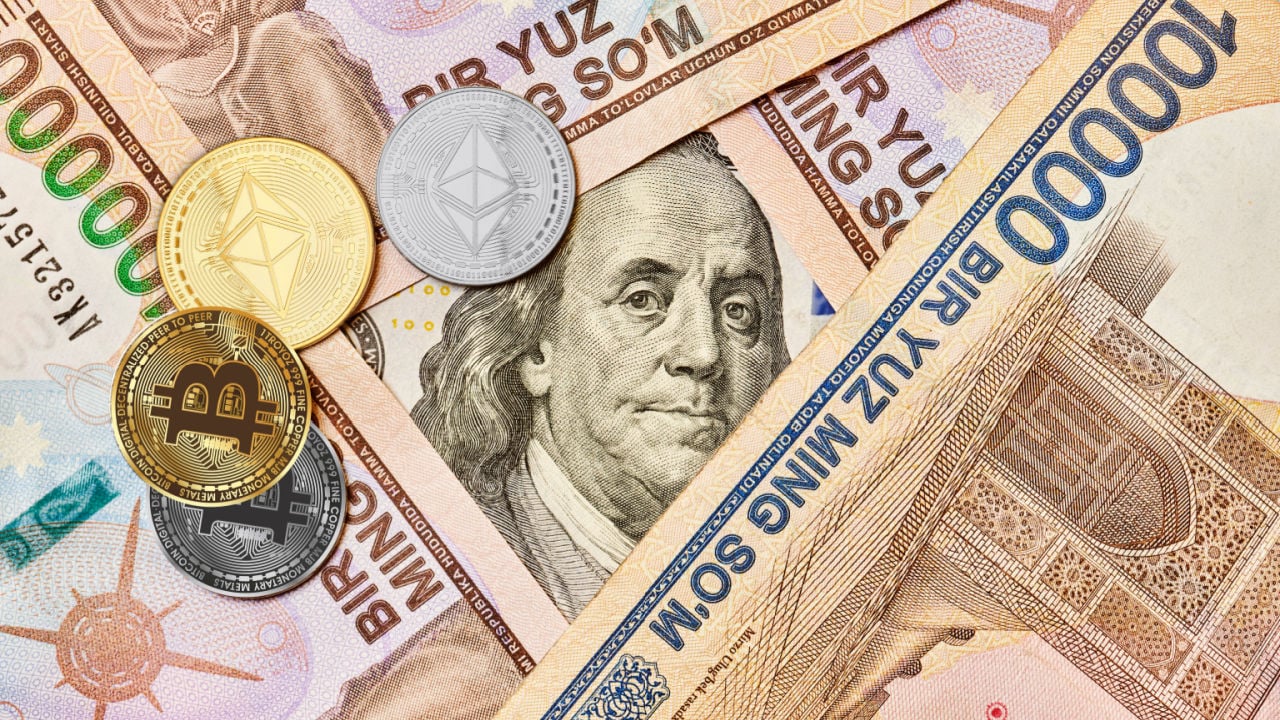
The Central Bank of Uzbekistan has permitted foreign-based businesses to open domestic bank accounts and deposit funds received from cryptocurrency trading. These companies will also be able to transfer the money abroad, but operations in the country will be restricted.
Uzbekistan Updates Rules for Operations With Proceeds From Crypto Exchange Transactions
The Central Bank of the Republic of Uzbekistan has adopted amendments to its regulations for foreign exchange transactions that concern non-resident legal entities, including those working with cryptocurrencies. In particular, they are now allowed to have accounts at local banks but the options to operate with funds coming from cryptocurrency trading are narrow.
According to the new rules, money transferred from foreign accounts of companies participating in crypto exchanges or amounts received from the sale of crypto assets can be deposited into foreign currency accounts in Uzbekistan, the legal information portal Norma.uz announced, quoted by the crypto news outlet Forklog.
These funds can then be either transferred to an exchange in order to again buy digital coins or to the accounts of the foreign-registered entities in the jurisdictions from which the money originally came. However, their use for other purposes in Uzbekistan is prohibited, the report revealed.
The changes have entered into force on Feb. 9, 2023. Before that date, foreign non-resident companies could not open accounts in Uzbekistan’s banks with few exceptions envisaged by the law.
The government of Uzbekistan has been taking steps to regulate its crypto market. In late 2022, the authority overseeing the sector, the National Agency of Perspective Projects (NAPP) under President Shavkat Mirziyoyev, approved rules for the issuance and circulation of crypto assets.
The agency also regulated the licensing of crypto exchanges. Five trading platforms are now authorized to operate in the country — the state-controlled exchange Uznex and four smaller “crypto shops.” Meanwhile, the authorities in Tashkent have been trying to restrict access to foreign trading websites.
Residents of Uzbekistan were allowed to trade digital currencies on domestic exchanges in November 2021. While crypto-related transactions are tax free, crypto service providers in Uzbekistan are required to pay monthly fees. Earlier this month, the NAPP revealed that licensed crypto companies have paid over $310,000 to the budget last year.
Tags in this story
Do you think foreign crypto companies will avoid working in Uzbekistan due to the latest restrictions on the use of crypto-related funds? Share your thoughts on the subject in the comments section below.

Lubomir Tassev
Lubomir Tassev is a journalist from tech-savvy Eastern Europe who likes Hitchens’s quote: “Being a writer is what I am, rather than what I do.” Besides crypto, blockchain and fintech, international politics and economics are two other sources of inspiration.


Image Credits: Shutterstock, Pixabay, Wiki Commons
Disclaimer: This article is for informational purposes only. It is not a direct offer or solicitation of an offer to buy or sell, or a recommendation or endorsement of any products, services, or companies. Bitcoin.com does not provide investment, tax, legal, or accounting advice. Neither the company nor the author is responsible, directly or indirectly, for any damage or loss caused or alleged to be caused by or in connection with the use of or reliance on any content, goods or services mentioned in this article.
Read More
Lubomir Tassev