

UC Riverside researchers have identified tiny organisms that not only survive but thrive during the first year after a wildfire. The findings could help bring land back to life after fires that are increasing in both size and severity.
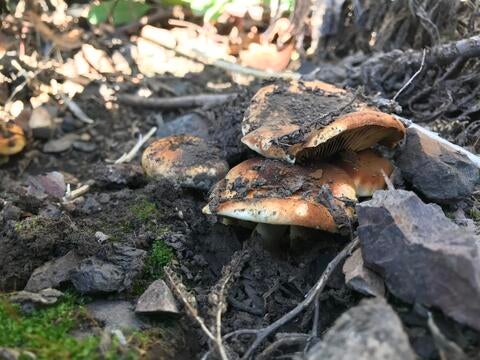
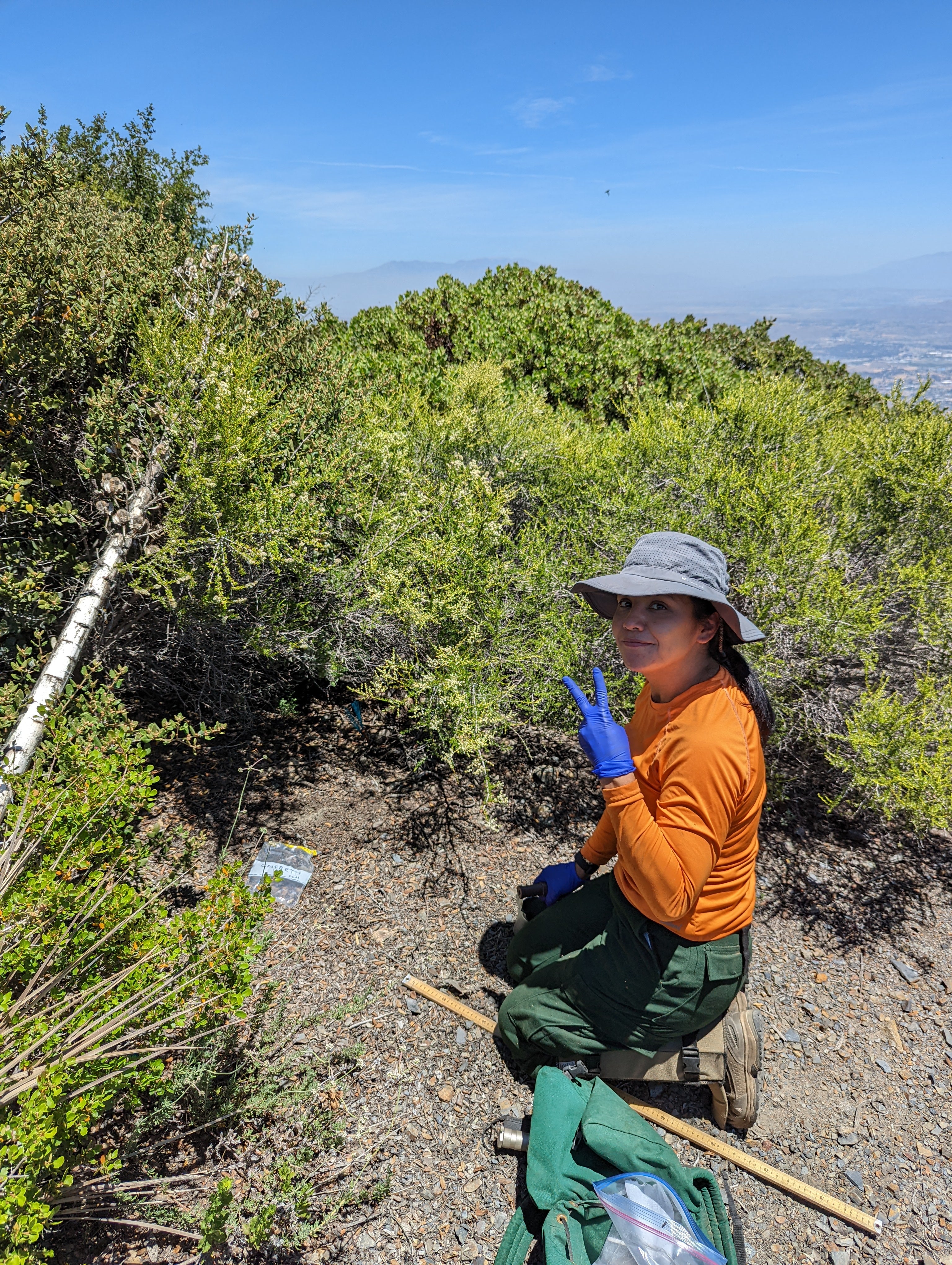
The Holy Fire burned more than 23,000 acres across Orange and Riverside counties in 2018. Wanting to understand how the blaze affected bacteria and fungi over time, UCR mycologist Sydney Glassman led a team of researchers into the burn scar.
“When we first came into fire territory, there was ash up to my shins. It was a very severe fire,” Glassman said.
The researchers visited the scar nine times over the course of the next year, comparing the charred earth with samples from nearby, unburned soil. Their findings, now published in the journal Molecular Ecology, show that the overall mass of microbes dropped between 50 and 80% after the fire, and did not recover during that first year.
However, some things lived. “Certain species increased in abundance, and in fact there were really rapid changes in abundance over time in the burned soils,” Glassman said. “There were no changes at all in the unburned soils.”
It wasn’t just one type of bacteria or fungi that survived. Rather, it was a parade of microbes that took turns dominating the burned soil in that first post-fire year. “There were interesting, distinct shifts in the microbes over time. As one species went down, another came up,” Glassman said.
In the early days, they found microbes with high tolerance for fire and high heat. Later, fast-growing organisms with a lot of spores — able to take advantage of space with little microbial competition — seemed to dominate. Toward the end of the year, organisms able to consume charcoal and other post-fire debris high in nitrogen tended to dominate.

Certain microbes called methanotrophs regulate the breakdown of methane, a greenhouse gas. Fabiola Pulido-Chavez, UCR plant pathology PhD candidate and first author of the study, noticed that genes involved in methane metabolism doubled in post-fire microbes.
“This exciting finding suggests post-fire microbes can “eat” methane to gain carbon and energy, and can potentially help us reduce greenhouses gases,” Pulido-Chavez said.
The researchers continue to test whether the fungi and bacteria they found were able to thrive at different points in time as a result of their unique and varied traits, or whether there is another reason for the shifts they saw in the soil.
“We think one organism can’t be good at all the skills necessary to thrive in a burn scar,” Glassman said. “If you’re good at tolerating heat, you’re probably not as good at growing fast.”
What the researchers saw in the soil bears some resemblance to the human body’s response to a major stress. People suffer an illness and take antibiotics. The medicine destroys bacteria in a person’s gut, and new organisms begin to show up that either weren’t there before or did not previously have a large presence.
Eventually, a person’s gut bacteria might return to something like its pre-infection state, but there is no guarantee.
“We are also trying to understand what gets the land back to where it was before the disturbance, which in this case was an enormous fire,” Glassman said. “A lot of what we’re studying could be transferrable to a human microbiome setting.”
For a century, scientists have known about ways that plants are able to adapt to wildfires, and eventually re-colonize a burn scar. As this new research shows, fungi and bacteria may have developed similar coping strategies.
“It’s exciting because we’ve only developed the technology in the last couple of decades to really understand what microbes are doing in the soil, and how they contribute to regeneration,” Glassman said.
What is now being learned about post-fire microbe behavior could change older theories about plant behavior, since microbes were not factored into them. “To me, this is exciting, as microbes have long been overlooked, yet they are essential for ecosystem health,” Pulido-Chavez said.
One open question that remains is whether adaptations that plants and microbes have developed in response to wildfires will adapt again to megafires or recurrent fires. Whereas there might have been a period of several decades before a plot of land burned more than once, it is increasingly common for the same soil to burn again in fewer than 10 years.
Particularly in the West, climate change is causing rising temperatures and earlier snow melt, extending the dry season when forests are most vulnerable to burning. What does the increase in size, severity, and frequency of fires do for natural burn recovery?
“Things can recover, but it takes time, and whether or not the land recovers after super-frequent megafires is another story. Can recovery time keep pace with megafires? We don’t know yet,” Glassman said.
Read More
Jeanice Mischke