
Statistics framework to remove bias from debate about how well mouse models mimic human disease

Business News

Business News lab mouse
Credit: Pixabay/CC0 Public Domain

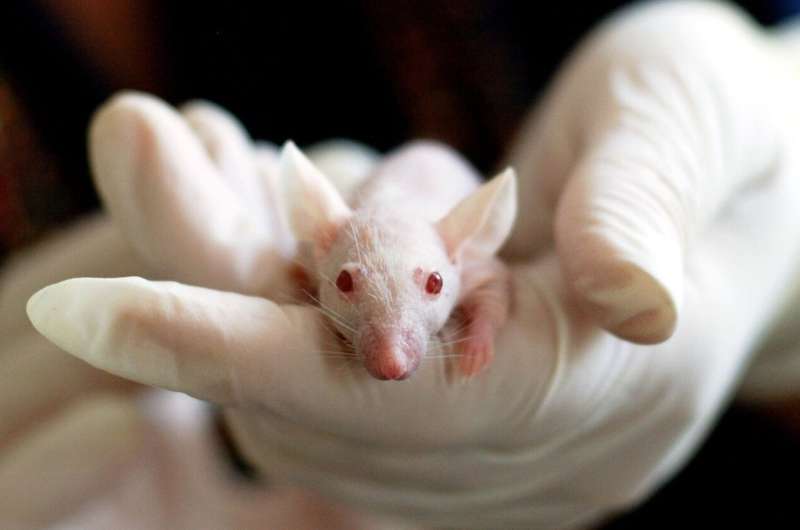
Mice and other animals have been key to some of the biggest medical breakthroughs in human history. But animals aren’t always good models of human disease, leading to failed experiments and controversy over their usefulness.

A team of biostatisticians led by University of Pittsburgh School of Public Health scientists announced today in PNAS that they’ve developed a framework to determine how much congruence and discordance laboratory animals have with specific human diseases. The tool removes potential bias from scientific interpretation of how translational animal data is for human conditions.

“There have been decades of debate about whether animal models mimic humans well and whether they are useful for translational or ,” said senior author George Tseng, Sc.D., professor and vice chair for research in Pitt Public Health’s Department of Biostatistics. “Our framework is the first to provide and bioinformatic workflow to properly address that debate.”

Tseng and his team tackled the topic after two papers published in PNAS—one in 2013 and one in 2014—that used the same datasets presented contradictory conclusions on the usefulness of mice as models of human diseases that involve inflammation, such as sepsis and burns.

The team reanalyzed the datasets in the contradictory PNAS papers with their Congruence Analysis for Model Organisms (CAMO) framework. It found that for the six human inflammatory disorders studied, two were well mimicked by mice; two were not, and two did not have enough data to draw conclusions. Tseng’s team determined that the previous studies reached different endpoints because the scientific teams—one mostly composed of laboratory-based scientists and the other primarily of clinicians—had used different thresholds, or cut-off points, for their analyses.

“The conclusion drawn by our unbiased, threshold-free framework is much more realistic,” Tseng said. “In the end, you cannot say that the mouse model is totally useless or totally perfect. A can mimic some biological mechanisms well but others poorly. The issue is whether it mimics the mechanism of interest, such as the drug target. And it even revealed that the data aren’t perfect in some situations—if you have limited information, you can’t draw a conclusion.”

The team is extending their research into cancer to examine which cell-cultured models are good mimics for tumors and to learn, for example, whether mice mimic the human circadian rhythm.

“We anticipate CAMO becoming an essential part of preclinical studies to solve all manner of human diseases,” Tseng said.

More information:
Wei Zong et al, Transcriptomic congruence analysis for evaluating model organisms, Proceedings of the National Academy of Sciences (2023). DOI: 10.1073/pnas.2202584120

Citation:
Statistics framework to remove bias from debate about how well mouse models mimic human disease (2023, February 2)
retrieved 3 February 2023
from https://medicalxpress.com/news/2023-02-statistics-framework-bias-debate-mouse.html

This document is subject to copyright. Apart from any fair dealing for the purpose of private study or research, no
part may be reproduced without the written permission. The content is provided for information purposes only.

Read More
Georgianna Fetzer

Latest

These Types Of Vehicles Typically Depreciate Faster Than Others

Every gearhead has been in this situation. You're surfing through eBay Motors or Facebook Marketplace looking for cars, either just for fun or because you want a new project, and you see it: a European luxury car like a Mercedes S-Class, a BMW 7 Series, or something wild like a Maserati. The price is really

Roundtables: Inside the Musk v. Altman Trial

Watch subscriber-only discussion going behind the scenes of the trial and the implications for the AI race. Available only for MIT Alumni and subscribers. Listen to the session or watch below Elon Musk lost his suit against OpenAI, in which he alleged CEO Sam Altman and President Greg Brockman had deceived him over the company’s

Interview: How Volvo built software for a two-and-a-half-tonne moving object

Anders Bell points to his grey hair and laughs. “Three years ago, it was still blond and curly,” says Volvo’s chief engineering and technology officer. The remark is more than self-deprecating. It captures what Volvo has been through: five years of building a software-defined vehicle (SDV) from scratch, as a traditional carmaker, with no blueprint

‘Summer House’ Reunion Trailer Bombshells and More Us Weekly Top Stories

Getty Images(3) Here’s a rundown of Us Weekly‘s top stories making headlines in celebrity news, sports and entertainment on May 19, 2026. Here are key takeaways: • Dramatic reunion: Ciara Miller slammed Amanda Batula and West Wilson in the newly released Summer House season 10 reunion trailer, accusing West of dating Amanda “to spite” her.

Newsletter

Don't miss

These Types Of Vehicles Typically Depreciate Faster Than Others

Every gearhead has been in this situation. You're surfing through eBay Motors or Facebook Marketplace looking for cars, either just for fun or because you want a new project, and you see it: a European luxury car like a Mercedes S-Class, a BMW 7 Series, or something wild like a Maserati. The price is really

Roundtables: Inside the Musk v. Altman Trial

Watch subscriber-only discussion going behind the scenes of the trial and the implications for the AI race. Available only for MIT Alumni and subscribers. Listen to the session or watch below Elon Musk lost his suit against OpenAI, in which he alleged CEO Sam Altman and President Greg Brockman had deceived him over the company’s

Interview: How Volvo built software for a two-and-a-half-tonne moving object

Anders Bell points to his grey hair and laughs. “Three years ago, it was still blond and curly,” says Volvo’s chief engineering and technology officer. The remark is more than self-deprecating. It captures what Volvo has been through: five years of building a software-defined vehicle (SDV) from scratch, as a traditional carmaker, with no blueprint

‘Summer House’ Reunion Trailer Bombshells and More Us Weekly Top Stories

Getty Images(3) Here’s a rundown of Us Weekly‘s top stories making headlines in celebrity news, sports and entertainment on May 19, 2026. Here are key takeaways: • Dramatic reunion: Ciara Miller slammed Amanda Batula and West Wilson in the newly released Summer House season 10 reunion trailer, accusing West of dating Amanda “to spite” her.

Abortion bans lead to worse outcomes for miscarriages

🛡️ Just a quick check We’re checking your connection to prevent automated abuse

Tesla’s Business Has Become Much More Diversified in Just the Past Five Years. Does That Make Its Stock a Better Buy Today?

Key Points Tesla's energy generation and storage segment generated 27% revenue growth last year. The company's non-automotive segments were able to help offset a double-digit decline in auto revenue in 2025. These 10 stocks could mint the next wave of millionaires › Tesla (NASDAQ: TSLA) is known for its electric vehicles (EVs), and while they

WD sees sustainability as key business driver in an ‘AI economy’

Hard drive company WD promoted long-term operations and sustainability executive Jackie Jung to become its first chief sustainability officer in February, as it steps up sales to companies building AI data centers. Her vision: Turn sustainability into a “brand” for WD, a strategy that reduces risk for the $6 billion company (formerly known as Western

5 Business Ideas Worth Starting in 2026

If there is one thing Nigerians understand well, it is how to spot opportunity inside hardship. In 2026, that mindset will matter more than ever. The economy is tough, competition is rising, and many people are looking for smarter ways to earn, build, and survive. But even in a difficult environment, some businesses still stand