

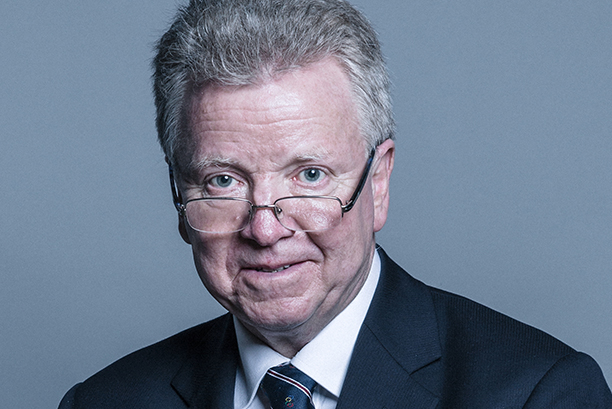
Lord Colin Moynihan
Amey has named former government minister Lord Colin Moynihan as its new chair.
Moynihan, formerly a junior minister for energy, has taken over from Ian Tyler, who leaves the position after more than four years.
Moynihan was an energy minister under both Margaret Thatcher and John Major. He also served as a parliamentary undersecretary for environment and was sports minister at the time of the 1989 Hillsborough disaster.
Moynihan, also a former Olympic rower, was the first president of the British Wind Energy Association and chairman of the UK Renewable Energy Advisory Group.
He is the latest in a series of recent leadership changes at Amey, following its acquisition by private equity firms One Equity Partners and Buckthorn Partners in October.
Moynihan is chair at Buckthorn, where former chancellor of the exchequer Philip Hammond is also a partner.
Amey chief executive Andy Milner, who rejoined the business last month following three years away, said the business was at “an important turning point”.
“Colin’s wealth of experience in both government and business across numerous sectors will help us realise Amey’s potential,” Milner added.
Moynihan said: “It is a crucial time to be joining Amey as the company looks to bring its expertise in transport and buildings infrastructure to bear on the UK’s net-zero ambitions.”
Buckthorn Partners is based in London and focuses on buying energy-services businesses involved in the anticipated energy transition from fossil fuels to renewables.
Buckthorn founding partner Nicholas Gee, the firm’s chief financial officer Joe Connolly and its managing partner Mark Chaichian have also joined Amey’s board.
They are accompanied by three senior executives from One Equity Partners: operating partner Todd Bradley, senior associate Jordan Lawrie and principal Ante Kusurin.
US private equity firm One Equity Partners owns a portfolio of industrial, healthcare and technology companies across Europe and North America. It was spun out of JP Morgan in 2015.
After the sale of Amey was agreed in October, DRS Bond Management director Chris Davies warned: “In my experience, private equity and the construction sector are not well-suited. This is not a reflection on Amey, their management team or order book. Private equity is typically predicated on an internal rate of return of between 25 per cent and 40 per cent over three to five years.
“Over three years at a 25 per cent internal rate of return, their minimum expectation should be to grow the enterprise value to at least £781m at resale. That is punchy to say the least given the prevailing macroeconomic and geopolitical picture.”
Related articles
Read More
Joshua Stein