CW@60: The foundation that makes new technology pay off

Context is everything – especially in a world driven by AI

By

  • Taroon Mandhana

Published: 18 Sep 2026

Computer Weekly 60th anniversary logo

On 22 September 2026, Computer Weekly turns 60. To mark the milestone, we asked some of our friends – experts, parliamentarians, IT leaders and suppliers – for their perspectives on how tech has changed their lives over six decades. What’s changed the most for you since then?

Over my career I have watched a long line of technologies arrive with enormous fanfare – client-server, the internet, big data, the cloud, and now AI. Each of these genuinely moved what was possible, often in a non-linear leap, and AI is the most powerful of them yet. But the headlines always skip the more interesting half of the story – what actually lets a leap like that pay off.

Because here is what struck me each time the frontier moved – the vehicle kept changing, but what it carried did not, and it only grew more important. The work itself – what a team is doing, what has been decided, who owns what comes next – has to be captured somewhere shared and trustworthy, or the new capability has nothing solid to stand on. In every era, that shared, reliable record of work is what let the leap actually translate into progress rather than noise.

New capability raises the value of the fundamentals

The instinct is to assume that each powerful new tool makes the plumbing beneath it matter less. My experience is the reverse.

Technology changes what a team can do – it does not remove the need for a team to agree on what it is doing and to trust a common picture of where things stand. Coordination – planning, alignment, keeping everyone pointed at the same outcome – has been the quiet constraint on human work since long before computers.

Every wave of technology either strengthened that foundation or strained it. The waves that endured were the ones that made the shared record of work better. The more capable the layer on top, the more it leans on that foundation being solid.

Why AI makes this more foundational, not less

AI sharpens this to a point. We are now putting agents to work alongside people at real scale – in my own organisation, thousands of them working next to several thousand engineers. On a recent panel I was asked what breaks first at that scale. My honest answer – knowing what is actually going on with any given project or team.

As the number of actors participating in the work multiplies – humans and agents – holding an accurate, shared picture of the work becomes dramatically harder and, at the same time, more valuable. You need a place where the effort of both people and agents is tracked together in one view – a system of record like Jira and a context graph like the Teamwork Graph that captures how the organisation actually works.

Photo of Taroon Mandhana, CTO at Atlassian

“Technology changes what a team can do – it does not remove the need for a team to agree on what it is doing and to trust a common picture of where things stand”

Taroon Mandhana
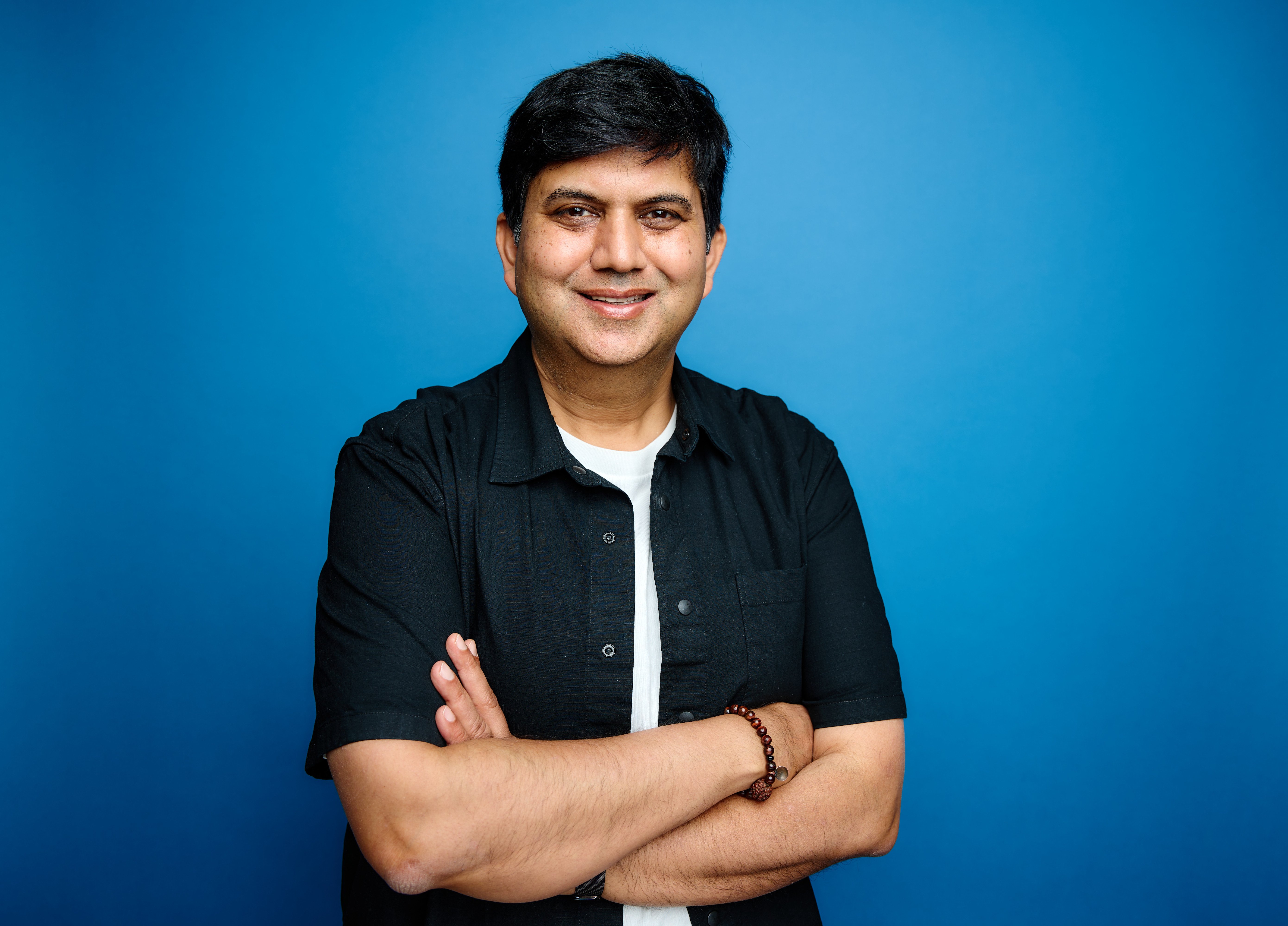
That shared organisational context is what lets a new person, or a new agent, pick up work without starting from zero or missing something crucial. Speed is only useful if everyone, and everything, is building towards the same thing. The more autonomous participants you add, the more that connective tissue becomes the thing that determines whether all that new capability compounds or fragments. Every agent both produces and consumes work signals, so there is simply more to keep straight – which is exactly why the shared record has to hold.

What changed for me

I have felt the shift personally. For most of my career, a large part of leading meant chasing information – asking people for the current state of their work, the micro-decisions they had made and why, then assembling an accurate view from a dozen partial updates.

AI changed what I can do with that. I created an agent that surfaces risks and blockers across every key project I care about. Instead of sifting through the noise of Slack threads, emails, alerts, pages, and comments, I get an immediate, accurate signal about where a team genuinely needs help.

My job has moved from gathering the picture to acting on it. But the agent is only as good as what it draws on – it works because the underlying system of record and context graph are doing their job faithfully.

Building for the next 60 years

If sixty years of technology has taught me anything, it is that the new capability and durable foundations are not in tension – they make each other more valuable. The models will keep changing – whatever is state-of-the-art this year will be ordinary the next, and I want us riding every one of those advances. What makes them worth adopting is the accumulated context of how an organisation works and the shared, trusted record that holds it together.

That foundation has quietly made every leap in my career pay off. As AI multiplies what teams and agents can do, I would bet on the contextual layer to matter more than ever.

Taroon Mandhana is CTO at Atlassian.

Read more on Collaboration software and productivity software

Read More
Diego Coby

Latest

AOC AG277QSD: New 26.5-inch QHD gaming monitor with 320Hz and 1000-nit HDR

ⓘ AOC, edited The AGON AG277QSD is primarily aimed at competitive gamers. AOC's AGON AG277QSD is a 26.5-inch QHD QD-OLED panel that promises a 320Hz refresh rate, 0.03ms response time and 1,000-nit HDR performance. Aimed at competitive gamers, the monitor offers extensive features and connectivity, though international availability remains unconfirmed. AOC has just launched a

Trump says the AI backlash is a Democratic hoax. This week’s polling put Republican opposition to data centres at 47%.

President Donald Trump posted twice about artificial intelligence on Saturday. The first post asked his followers to vote on a new name for the technology. The second called the campaign against it a hoax and promised an AI Force and an AI czar. The rename has taken most of the attention. The second post is the one that contains

Researchers found a way to eavesdrop on headphones from 30 meters away, and encryption can’t stop it

Serving tech enthusiasts for over 25 years. TechSpot means tech analysis and advice you can trust. The big picture: Researchers in Hong Kong have developed a technique that uses injected radio signals to extract audio and other information from headphones, phones and smart-home devices. Called InjectEave, the method targets analog components that can leak signals too weak

CW@60: What sport taught me about technology, and vice versa

The leadership traits required for building successful teams - and successful IT projects - span technology and sport, says Capgemini's CTO By Steven Webb Published: 18 Sep 2026 On 22 September 2026, Computer Weekly turns 60. To mark the milestone, we asked some of our friends - experts, parliamentarians, IT leaders and suppliers - for

Newsletter

Don't miss

AOC AG277QSD: New 26.5-inch QHD gaming monitor with 320Hz and 1000-nit HDR

ⓘ AOC, edited The AGON AG277QSD is primarily aimed at competitive gamers. AOC's AGON AG277QSD is a 26.5-inch QHD QD-OLED panel that promises a 320Hz refresh rate, 0.03ms response time and 1,000-nit HDR performance. Aimed at competitive gamers, the monitor offers extensive features and connectivity, though international availability remains unconfirmed. AOC has just launched a

Trump says the AI backlash is a Democratic hoax. This week’s polling put Republican opposition to data centres at 47%.

President Donald Trump posted twice about artificial intelligence on Saturday. The first post asked his followers to vote on a new name for the technology. The second called the campaign against it a hoax and promised an AI Force and an AI czar. The rename has taken most of the attention. The second post is the one that contains

Researchers found a way to eavesdrop on headphones from 30 meters away, and encryption can’t stop it

Serving tech enthusiasts for over 25 years. TechSpot means tech analysis and advice you can trust. The big picture: Researchers in Hong Kong have developed a technique that uses injected radio signals to extract audio and other information from headphones, phones and smart-home devices. Called InjectEave, the method targets analog components that can leak signals too weak

CW@60: What sport taught me about technology, and vice versa

The leadership traits required for building successful teams - and successful IT projects - span technology and sport, says Capgemini's CTO By Steven Webb Published: 18 Sep 2026 On 22 September 2026, Computer Weekly turns 60. To mark the milestone, we asked some of our friends - experts, parliamentarians, IT leaders and suppliers - for

CW@60: The language I could speak – and a lesson from a Sony Walkman

On 22 September 2026, Computer Weekly turns 60. To mark the milestone, we asked some of our friends - experts, parliamentarians, IT leaders and suppliers - for their perspectives on how tech has changed their lives over six decades. What's changed the most for you since then? I no longer believe 60 to be old.

Mum of 3 and business owner reacts to NDR 2026 support measures, Lifestyle News

The National Day Rally on Sunday (Aug 23) saw a slate of new measures to support parents and families, including more childcare leave for working parents and more financial support for Singaporean children. Following the announcement of these measures, a Singaporean mum who is also the business owner has voiced her views on the matter.

‘Eye of the storm’: Business owner’s fight to keep nail tech siblings in country

A Whangārei beauty salon owner says her business may face trouble if she cannot find a way to keep her siblings in the country. Anna Vu owns AV Beauty Spa, and has worked in the city for 12 years. She said she had always struggled to find suitably skilled nail technicians and beauty staff and

What small business owners say they’d do differently, in hindsight

Working 60+ hours a week makes owners twelve times more likely to say their business is hurting their personal life. Australian small business owners are working through illness, skipping holidays and struggling to step away from their businesses, according to new research from insurer BizCover. The survey of 1,500 BizCover small business customers found more