

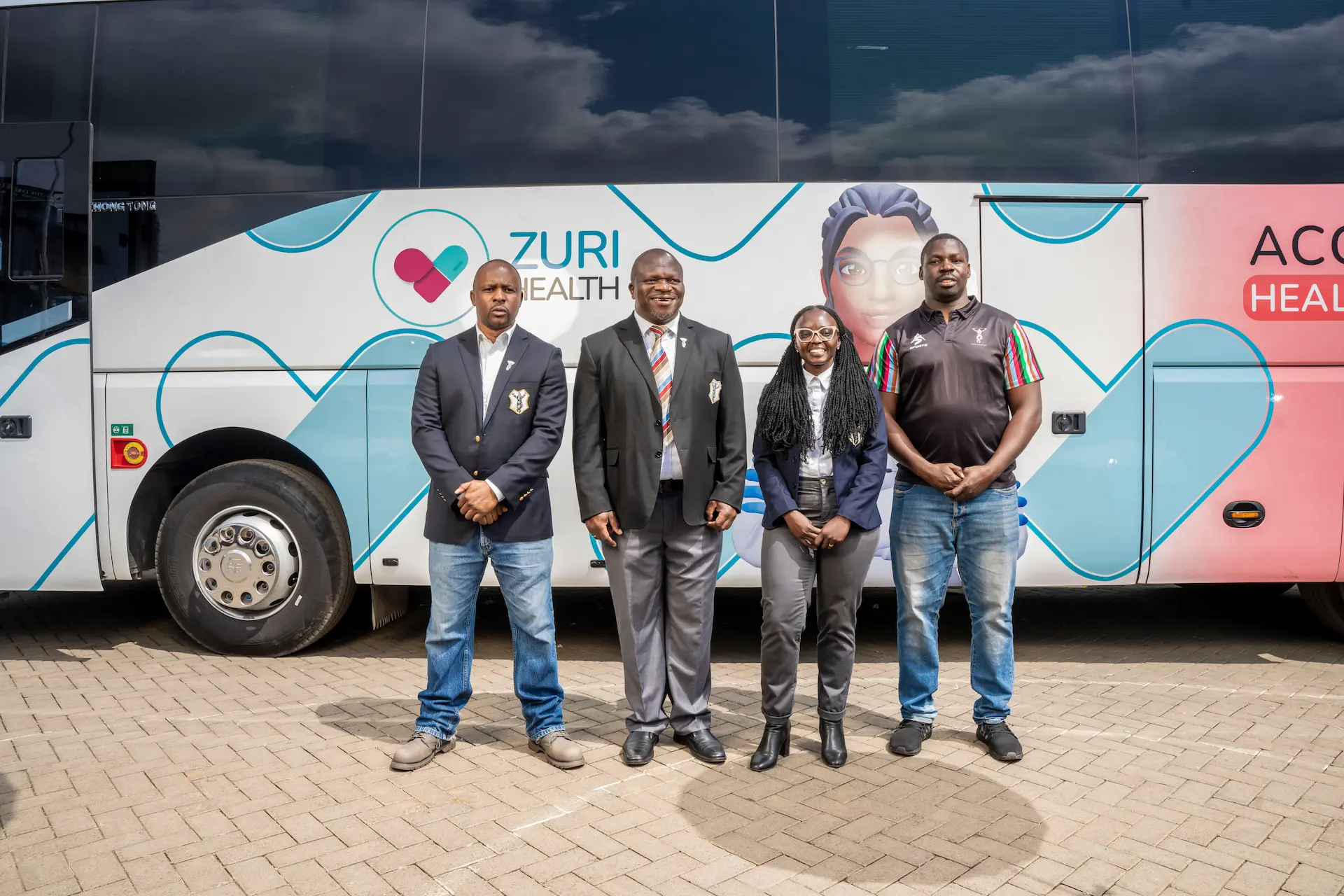
Kenya Harlequin FC and Zuri Health are set to roll out an integrated, tech-enabled medical infrastructure across the 2026 rugby season, embedding digital diagnostics, mobile care delivery and real-time athlete monitoring into match-day operations.
Under the agreement, Zuri Health’s mobile unit, Zuri Express, will function as a field-deployable clinical system across Kenya Cup and Sevens fixtures, effectively extending a modular healthcare stack to stadium environments. The setup includes a mobile diagnostic suite capable of point-of-care imaging and testing, including portable X-ray, ultrasound, ECG, laboratory analysis, dental screening and sports rehabilitation services.
The system is designed as a distributed care workflow rather than a traditional sideline clinic, with athlete data captured and processed in near real time to support injury assessment and recovery decisions. Match-day operations will be supported by dedicated emergency response teams, dual ambulance coverage, and coordinated referral pathways into Zuri Health’s broader care network.
Beyond acute care, the partnership introduces a structured digital athlete health layer covering pre-season baseline screening, biometric tracking, and ongoing wellness monitoring. Medical data collected during training and fixtures will be integrated into Zuri Health’s digital platform, enabling longitudinal tracking of player load, injury risk indicators and recovery progress.
Fans on the other hand will access a “Zuri Wellness Hub” at match venues, offering free screenings and onboarding into Zuri Health’s digital ecosystem, including its WhatsApp-based telemedicine service and chronic care management tools.
The initiative effectively extends the platform’s user acquisition funnel from physical events into continuous digital care engagement.
Kenya Harlequin chairman Victor Sudi said the model strengthens the club’s operational medical capacity while modernising athlete welfare systems. Zuri Health vice president of partnerships Yvonne Kariuki said the deployment demonstrates how mobile-first health infrastructure can be integrated into high-intensity sporting environments.
The deal reflects a broader shift in East Africa toward software-driven healthcare delivery models, where mobile clinics, telemedicine platforms and data-enabled diagnostics are increasingly converging with live events to create hybrid physical-digital care systems.
Ronald Bwire
Read More