

Latest
Features, Interviews, Long Reads
Features, Editors’ Blog, Long Reads
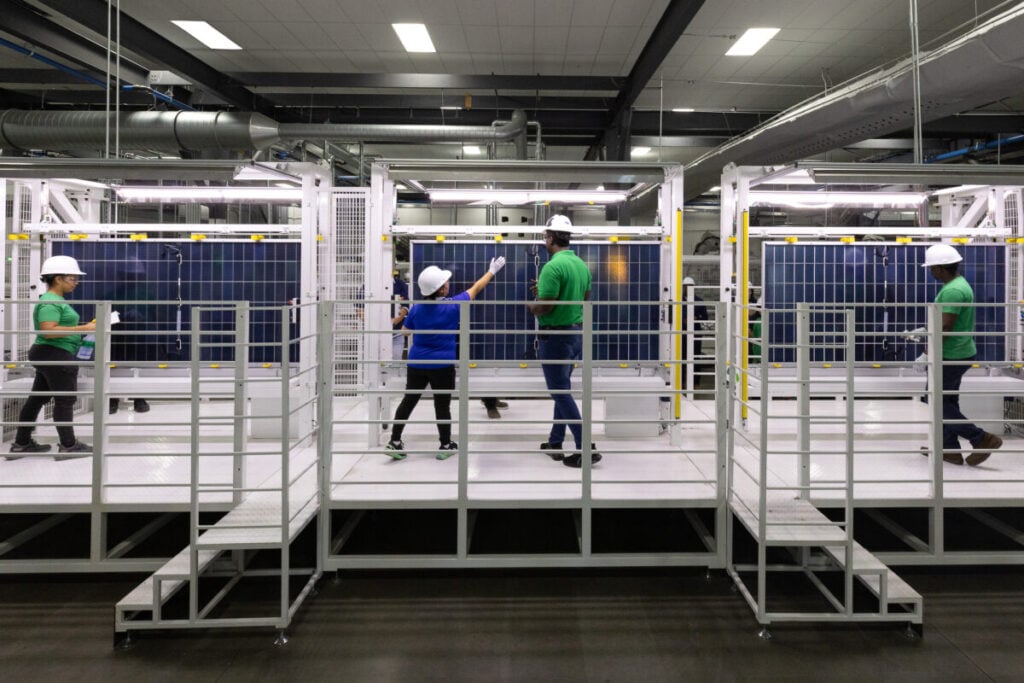
Chinese solar manufacturing giant JinkoSolar has sold a majority stake in its US business to private equity firm FH Capital.
Under the agreement, FH Capital will take a 75.1% stake in Jinko Solar (US) Industries, which operates a 2GW solar module manufacturing facility in Jacksonville, Florida. JinkoSolar will retain a 24.9% minority stake.
This article requires Premium SubscriptionBasic (FREE) Subscription
Already a subscriber? Sign In
Try Premium for just $1
- Full premium access for the first month at only $1
- Converts to an annual rate after 30 days unless cancelled
- Cancel anytime during the trial period
Premium Benefits
- Expert industry analysis and interviews
- Digital access to PV Tech Power journal
- Exclusive event discounts
Or continue reading this article for free
FH Capital said it would deploy additional capital to “at least double” the facility’s solar module production capacity and begin US battery energy storage system (BESS) manufacturing. The company owns assets in the energy and industrial sectors, including investments in South Carolina solar cell manufacturer ES Foundry.
Nigel Cockroft, US general manager of JinkoSolar, said: “We believe this transaction provides the right ownership, management and strategic direction for this new venture to grow capacity and serve the growing demand for high-performance US-sourced renewable energy products.”
The ownership change comes amid increased scrutiny on the influence of Chinese companies and products in the US solar industry. The Trump administration introduced new Foreign Entity of Concern (FEOC) restrictions in its 2025 budget bill, which limit the amount of Chinese ownership, influence or funding a solar manufacturing facility or power generation project can have and still receive federal tax support.
Combined with requirements around using domestic content and a thicket of AD/CVD and other tariffs on Chinese-owned solar imports and others from various parts of the world, the US has become even less hospitable for foreign-owned solar manufacturing.
Other Chinese companies have reduced or entirely sold their US manufacturing assets. Trina Solar sold a majority stake in its module manufacturing facility in December 2024 to T1 Energy (formerly Freyr Battery) and JA Solar sold its 2GW US module assembly plant to Corning.
Questions remain over whether the US’ restrictive approach to Chinese products and companies will benefit its solar manufacturing industry, which grew massively in the last few years to reach roughly 50GW of nameplate annual module production capacity.
Some of the biggest US players – led by cadmium telluride (CdTe) thin-film module producer First Solar and Korean-owned Hanwha Qcells – have made the case for greater trade enforcement and tariffs to support US solar manufacturers. Their legal representative, Tim Brightbill, said in March that downstream legislative changes to the solar industry “make robust trade enforcement more urgent than ever”.
However, industry analysts have warned that harsh protectionist measures like the ongoing Section 232 investigation into polysilicon imports could “choke the entire US solar market”. Additionally, the gap between module manufacturing capacity and the availability of domestic upstream components like cells and wafers could significantly hamper the cost-competitiveness that tariffs are meant to give to US companies. Aaron Hall, head of the renewables data platform Anza, told PV Tech Premium last month that the lack of domestic US wafer supply could drive “pricing pressure” for US-made products and cause a “fundamental bottleneck” in supply.
PV Tech has been running PV ModuleTech Conferences since 2017. PV ModuleTech USA, on 16-17 June 2026, will be our fifth PV ModulelTech conference dedicated to the U.S. utility scale solar sector. The event will gather the key stakeholders from solar developers, solar asset owners and investors, PV manufacturing, policy-making and and all interested downstream channels and third-party entities. The goal is simple: to map out the PV module supply channels to the U.S. out to 2028 and beyond.
San Francisco Bay Area, USA
PV Tech has been running an annual PV CellTech Conference since 2016. PV CellTech USA, on 13-14 October 2026 is our fourth PV CellTech conference dedicated to solar manufacturing in the USA.
From polysilicon, wafers, ingots, cells and modules, to critical component suppliers including glass and frames, the event connects every stage of the value chain under one roof.
PV CellTech USA also brings together investors, innovators, manufacturers and industry stakeholders to collaborate and strengthen domestic solar manufacturing across the United States.
Read Next

As trade dynamics shift, could the EU become the next big market for Indian solar suppliers? PV Tech Premium explores the outlook with Wood Mackenzie’s Yana Hryshko and IEEFA’s Charith Konda.

PV Talk: Frank Oudheusden explains how robotics could create a paradigm shift and improvements in PV system optimisation for extreme weather.
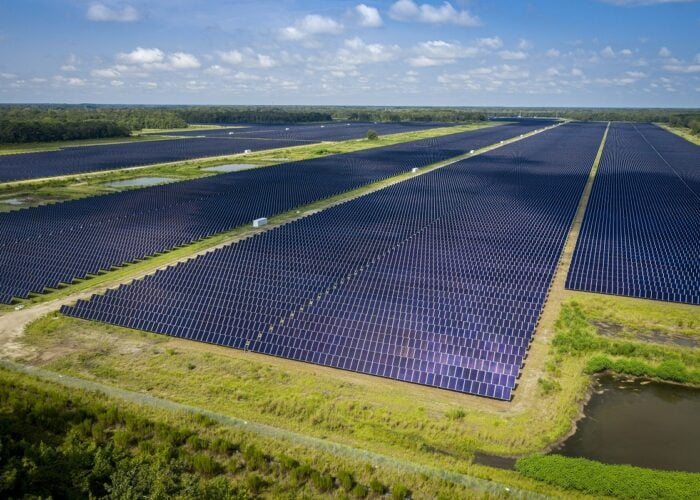
The planned merger of US utilities NextEra Energy and Dominion Energy should be met with “caution” by state lawmakers, according to a number of US clean energy and political non-profit groups.
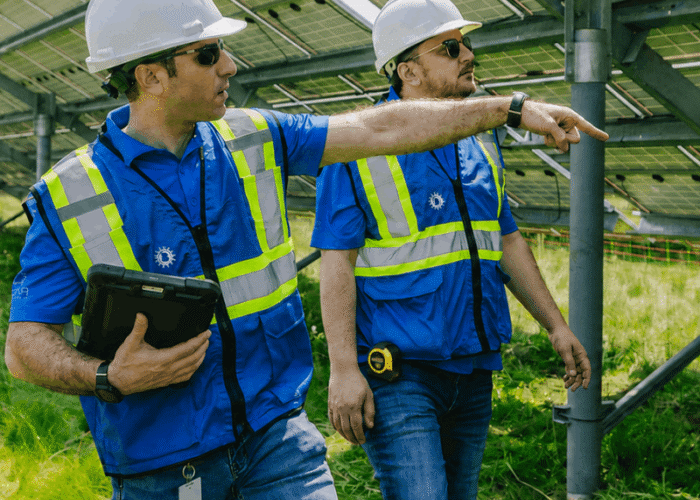
Polar Racking has launched a Solar Asset Management Division to support operations and maintenance (O&M) activities across utility-scale and commercial solar projects in North America and the Caribbean.
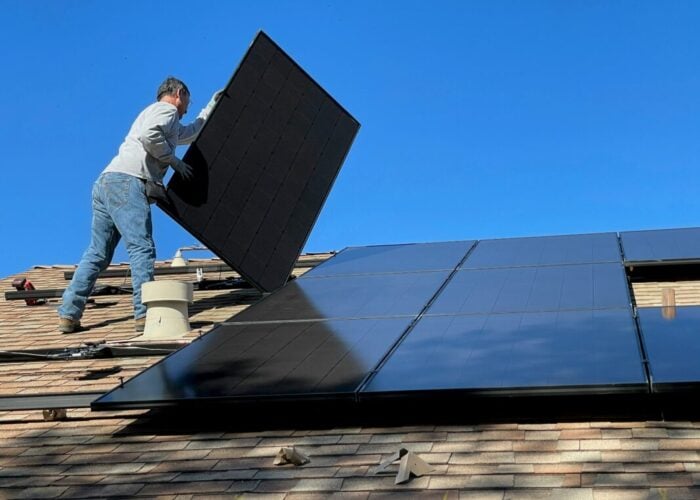
US solar glass producer Stewart Glass is expanding its facility in Ohio with a new production line expected in 2027.
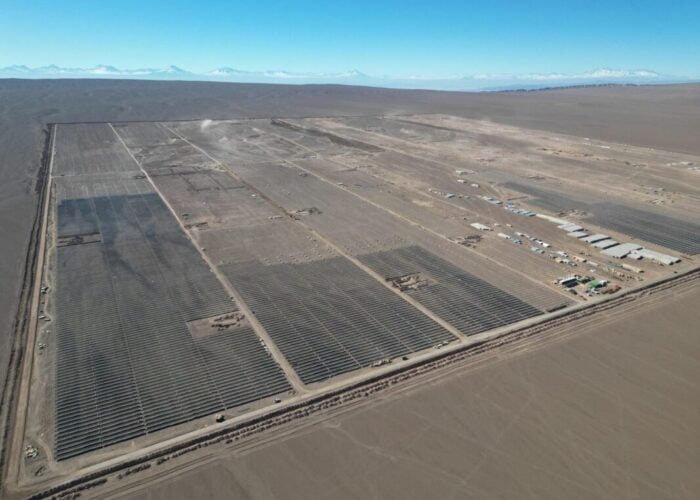
Spanish independent power producer Grenergy has signed a long-term hybrid power purchase agreement (PPA) with US utility Georgia Power.

Most Read
Upcoming Events
Media Partners, Solar Media Events
Johannesburg, South Africa
Media Partners, Solar Media Events
National Exhibition and Convention Center (Shanghai)
Will Norman
Read More