

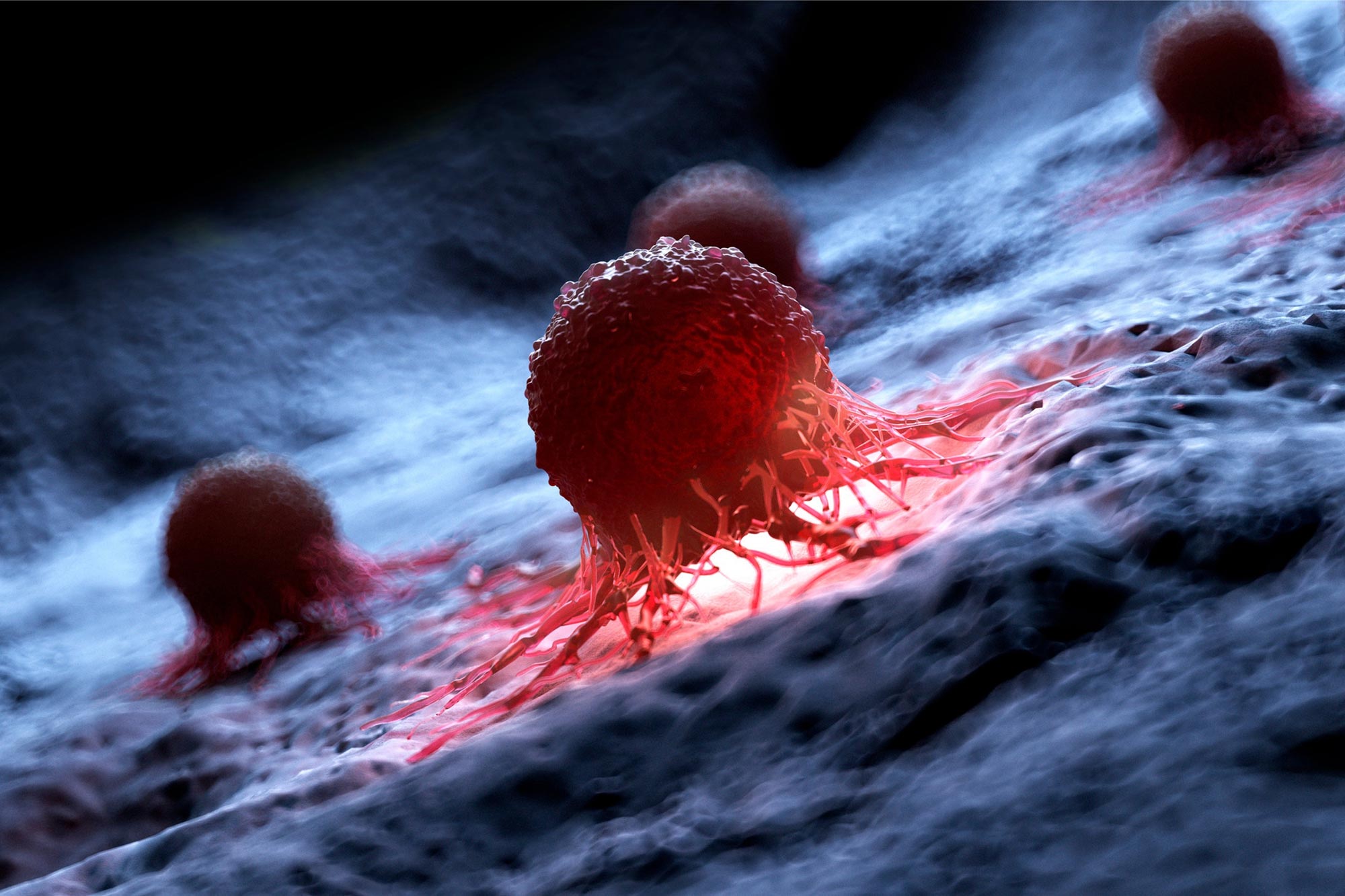
Cancer research may be overlooking a crucial variable: age.
Cancer becomes more common with age and is often harder to treat in older adults. Yet most lab studies still rely on young mice, roughly equivalent to humans in their early 20s. Fewer than 10% of experiments include aged animals. This mismatch may be one reason many cancer therapies that succeed in early testing fail later in human trials, where patients are typically much older.
New findings from Fox Chase Cancer Center, presented at the American Association for Cancer Research annual meeting, indicate that melanoma does not behave the same across age groups. Researchers found that cancer spread was lowest in young mice, highest in middle-aged mice, and then dropped again in very old mice.
Age Matters in Cancer Research
“The vast majority of studies are done in these very young mice that have a healthy and intact immune system,” said Mitchell Fane, PhD, a cancer biologist who specializes in aging and cancer, and lead investigator of the study. “Right now, it’s easy to personalize care for someone who’s young and fit, who’s potentially not going to experience as many toxicities; understanding how therapies affect older patients would give us more and better treatment options.”

The researchers point to a group of immune cells known as gamma delta (γδ) T cells as a key factor. These cells act as early defenders that help stop cancer from spreading. Young and very old mice had higher levels of γδ T cells, and their tumors were more likely to remain dormant or spread less.
Middle-aged mice showed the opposite pattern. They had fewer γδ T cells, and their melanoma was much more likely to spread to organs such as the lungs and liver.
How Tumors Evade the Immune System
The study also found that melanoma cells can weaken the immune system as animals age. In middle-aged mice, tumors released molecules that suppressed or exhausted γδ T cells. This allowed previously inactive cancer cells to “wake up” and spread more aggressively.
When scientists removed γδ T cells from young and very old mice, cancer spread increased. This suggests these immune cells normally help control tumor growth. In contrast, blocking immune-suppressing signals restored immune activity and reduced cancer spread, but only in middle-aged mice.
One reason older mice are rarely used in research is cost and time. Young mice are easier and less expensive to obtain. In comparison, mice must be raised for about 18 to 24 months before they are considered aged.
To address this, Fane and his colleague Yash Chabra, PhD, both Assistant Professors in the Cancer Signaling and Microenvironment Research Program, helped create an aged mouse facility at Fox Chase. This resource gives scientists better tools to study how cancer develops in older individuals.
“Now we have a facility with established aged mouse colonies, which lowers the cost and time barriers to aging research,” he said. “It allows us to tell colleagues, ‘Your model is interesting, why not test it in aged mice?’”
Rethinking Cancer Risk Across the Lifespan
Understanding how aging affects cancer is essential for improving treatment in older patients. Fane’s lab is also exploring why cancer risk does not follow a simple upward trend with age.
“While risk increases steadily as people age, it abruptly decreases after ages 80-85, said Fane. “We want to explain the mechanism of why very old patients are getting less cancer, but middle-aged patients are getting more.”
Reference: “Abstract 2072: Role of the aging on the ᵧδ; T-cells in metastatic cutaneous melanoma progression.” by Kelly Coutant, Christopher Price, Jhon Pasamonte, Pulkit Datt and Mitchell Fane, 3 April 2026, Cancer Research.
DOI: 10.1158/1538-7445.AM2026-2072
Never miss a breakthrough: Join the SciTechDaily newsletter.
Follow us on Google and Google News.
Temple University Health System
Read More