

John Ternus, Apple’s senior vice president of hardware engineering, takes over as CEO on Sept. 1, ending Tim Cook’s 15-year tenure at the top of the world’s most valuable consumer technology company.
Apple’s presence with China is perhaps the defining relationship of the Tim Cook era. Chinese factories, managed by Global 500 companies like Foxconn and Luxshare, made the iPhones that turned the company into a global juggernaut. Chinese consumers also snapped up Apple products, making the country one of Apple’s most important markets. Cook was also a frequent visitor to Beijing, meeting senior officials and dropping by Apple stores and major partners throughout the country.
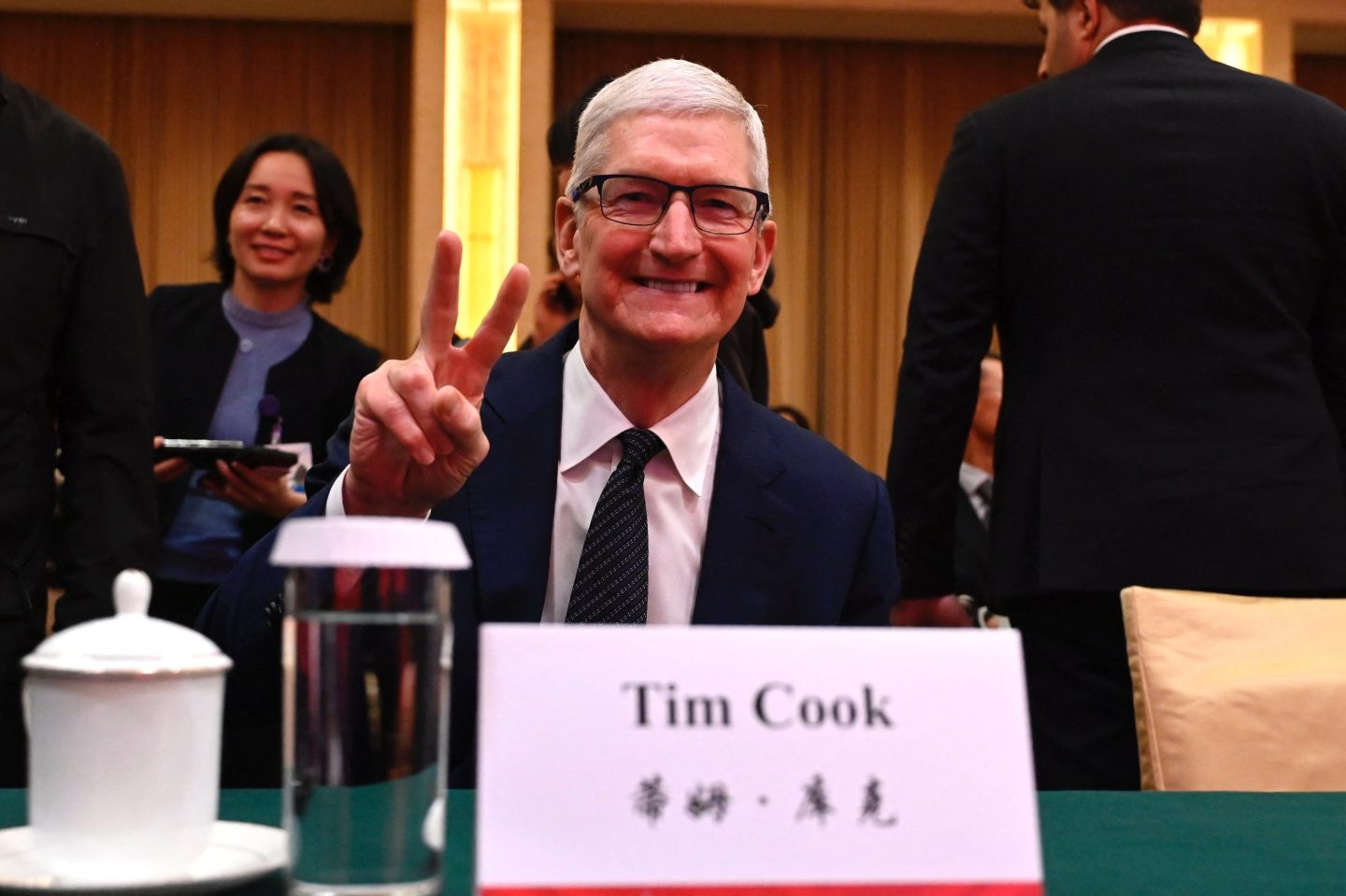
“There is a Chinese proverb I love: ‘A single tree does not make a forest,’” Cook said earlier this year at the China Development Forum, a summit organized by Beijing. “Together, I believe we can plant that forest.”
Pedro Pardo—AFP via Getty Images
It’s not clear how much experience Cook’s successor has with China. Apple’s statement announcing his appointment doesn’t mention any specific global market, let alone China. In fact, the only mention of global markets is attached to Cook’s new role as executive chairman, which will include “engaging with policymakers around the world.” Ternus’s extremely sparse Linkedin page doesn’t mention China.
Ternus inherits a China business that’s turned a corner from a tricky few years, yet still brings significant headaches, from a protectionist Washington and a prickly Beijing to a Chinese consumer who has grown less reflexively loyal to Western brands.
Why China matters to Apple
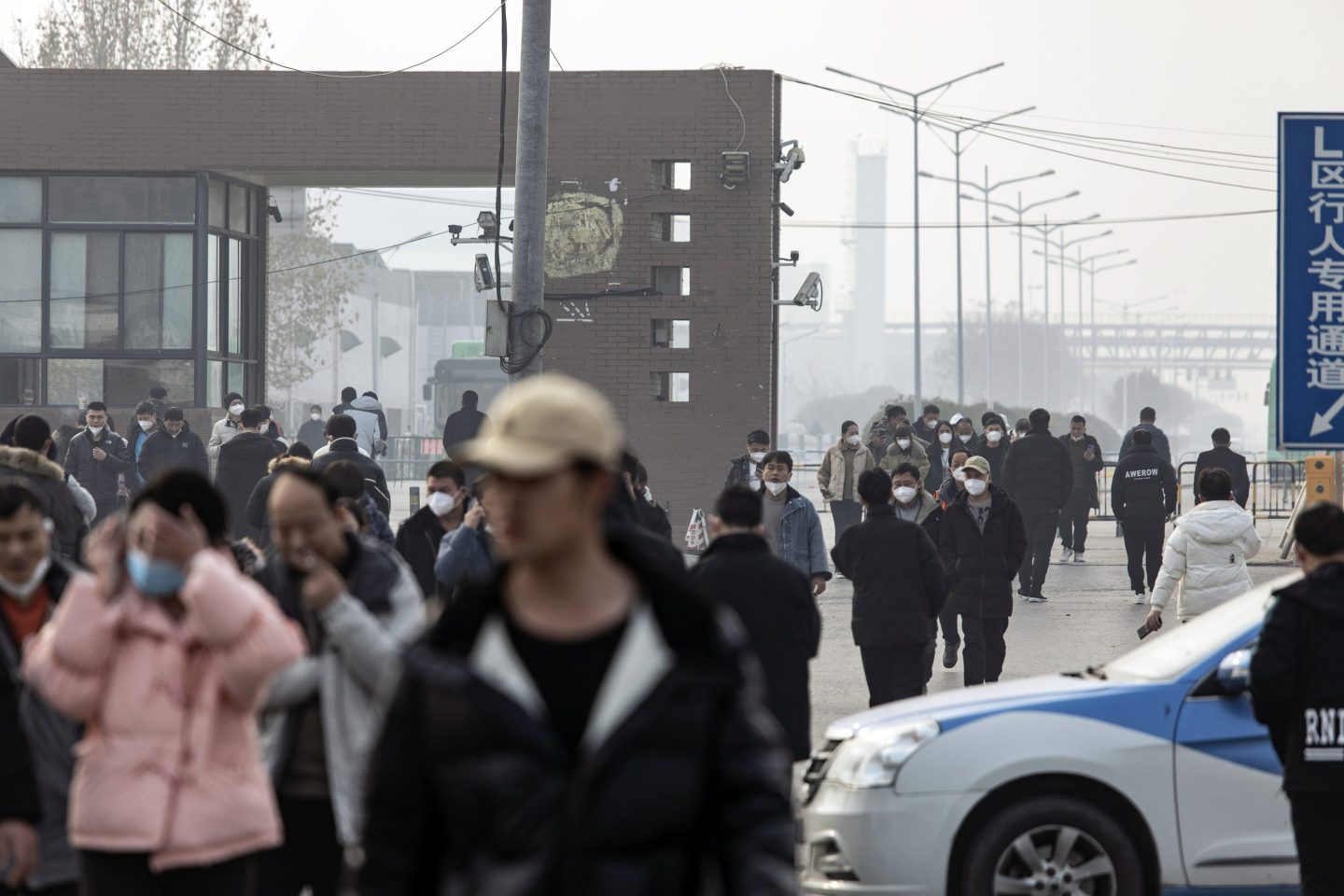
China is home to much of Apple’s supply chain, a decision that’s primarily due to Cook, who met Terry Gou, the founder of Taiwanese manufacturer Foxconn, in 2000. That started a decades-long partnership where Foxconn (and other original equipment manufacturers) would assemble iPhones in massive factory compounds, including the famed Zhengzhou complex deemed “iPhone City.”
Qilai Shen—Bloomberg via Getty Images
Yet disruptions during the COVID pandemic, when China’s strict lockdowns threatened iPhone supplies, prompted Cook to diversify production to alternate manufacturing bases in India and Vietnam. U.S. President Donald Trump’s trade war with China accelerated those plans, with Cook even promising to build servers and Mac mini computers in the U.S.
“Supply chain execution will be the defining early test of Apple’s next CEO,” says Nabila Popal, a senior director of the data and analytics team at International Data Corporation (IDC), a market research firm. “The success of Ternus’ tenure may hinge on whether he can advance Apple’s China‑plus‑one strategy without triggering political or commercial backlash in China, and maintain the momentum and share in a market Apple cannot afford to fall back on.”
A big consumer market
Greater China—a catch-all term that includes mainland China, Hong Kong and the island of Taiwan—contributed $64.3 billion in revenue for Apple in its 2025 fiscal year, which ended on Sep. 27. That was a slight drop from the previous fiscal year, but still enough to make it Apple’s third-largest market. Put another way: Apple generates about as much revenue from China as Boeing’s entire worldwide business.
Apple’s China sales have slipped for the past three years, as the company faced greater competition from domestic brands like Huawei and Xiaomi. Beijing also ordered state-owned enterprises and government departments to stop using iPhones and other Apple devices at work.
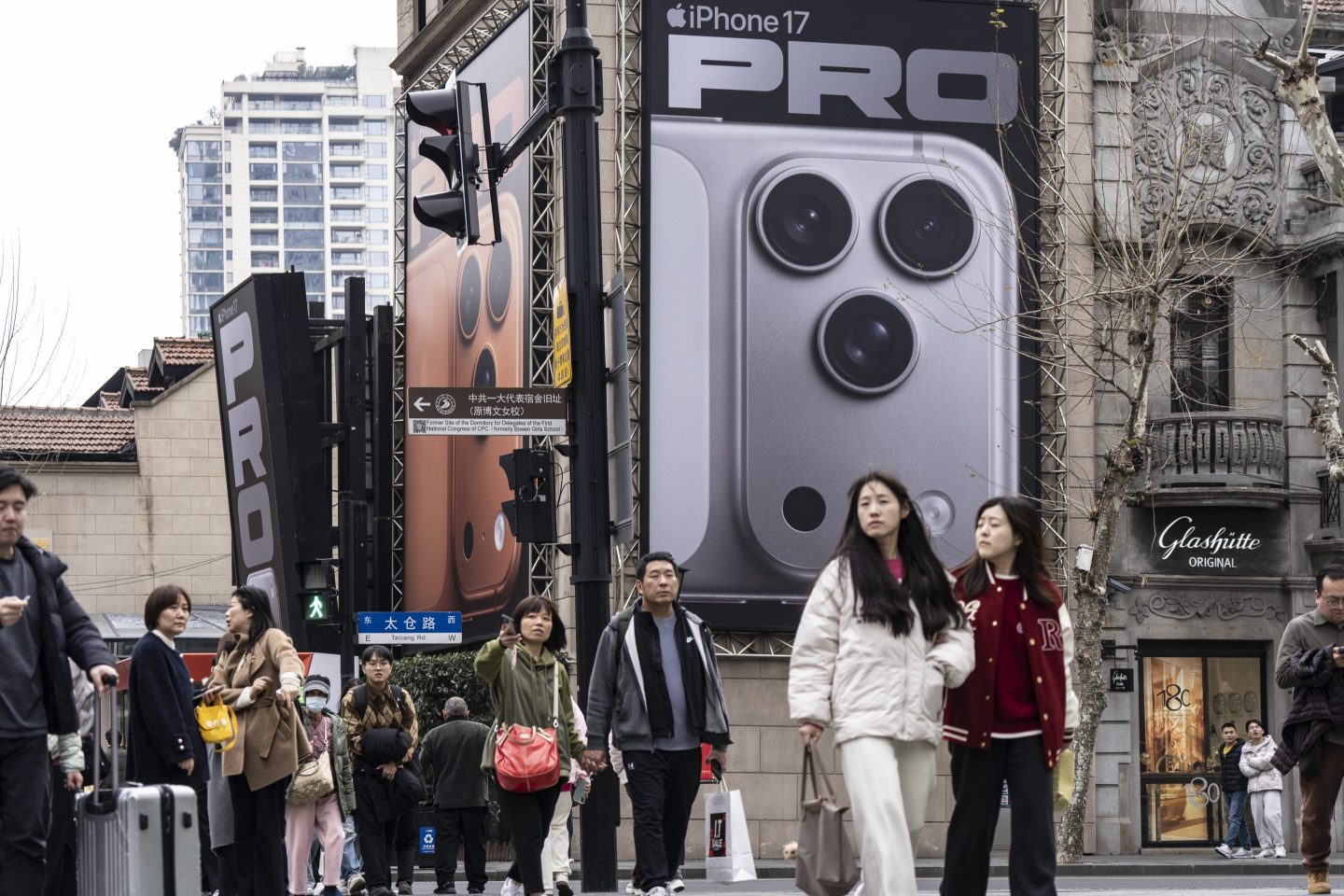
Luckily, the iPhone 17 has helped turn around Apple’s fortunes. Greater China sales rose to $25 billion in Apple’s most recent quarter, up from $18.5 billion a year earlier. Cook called it “the best iPhone quarter in history in Greater China” in an earnings call with analysts.
Qilai Shen—Bloomberg via Getty Images
IDC data for the first quarter of 2026 put Apple as the No. 2 smartphone seller in China, with a 19% market share. That’s an improvement from a year earlier, when Apple was stuck in fourth place, behind Huawei, Oppo and Vivo.
“Apple’s remarkable turnaround in China is due to the incredible success of the iPhone 17,” Popal says. New hardware helped, but even the phone’s new orange color—nicknamed “Hermès Orange” by Chinese consumers—won back Chinese consumers. “Such simple design changes that help scream “I have the latest iPhone” go a long way to boost demand, especially in a brand conscious market like China,” Popal adds.
The memory crisis is also giving Apple an edge over its Chinese counterparts. As AI companies and device makers compete for limited supplies from a handful of chip manufacturers, Apple’s financial firepower allows it to outspend rivals, “a luxury many other Chinese players do not have,” Popal points out.
Media reports claim that Apple is set to introduce its first foldable iPhone later this year. Foldables are quickly becoming mainstream devices in China, fuelled by improvements in thinness and durability, as well as consumer behavior that prizes the larger screen to watch videos and do work.
IDC’s Popal thinks the release will “help push Apple into a category it previously entirely conceded to the competition, and give Huawei—the leader in foldables globally and in China—a run for its money.”
Chinese innovation
Apple Intelligence, Apple’s AI service, still isn’t available in China. Beijing requires AI tools to be approved by the Cyberspace Administration of China. Apple has struck deals with Chinese tech companies like Baidu and Alibaba to help convince Chinese regulators, to no avail.
In contrast, Chinese phone makers are racing to embed AI into their products. ZTE unveiled a prototype in December that used ByteDance’s Doubao AI to boot and launch applications by voice command. Honor is releasing a “robot phone” with a gimbal camera designed for active user interaction.
Jade Gao—AFP via Getty Images
One of Apple’s Chinese competitors was also able to do something the U.S. company couldn’t pull off: Make a car. Apple studied the car market for the better part of a decade before abandoning the project over profitability concerns.
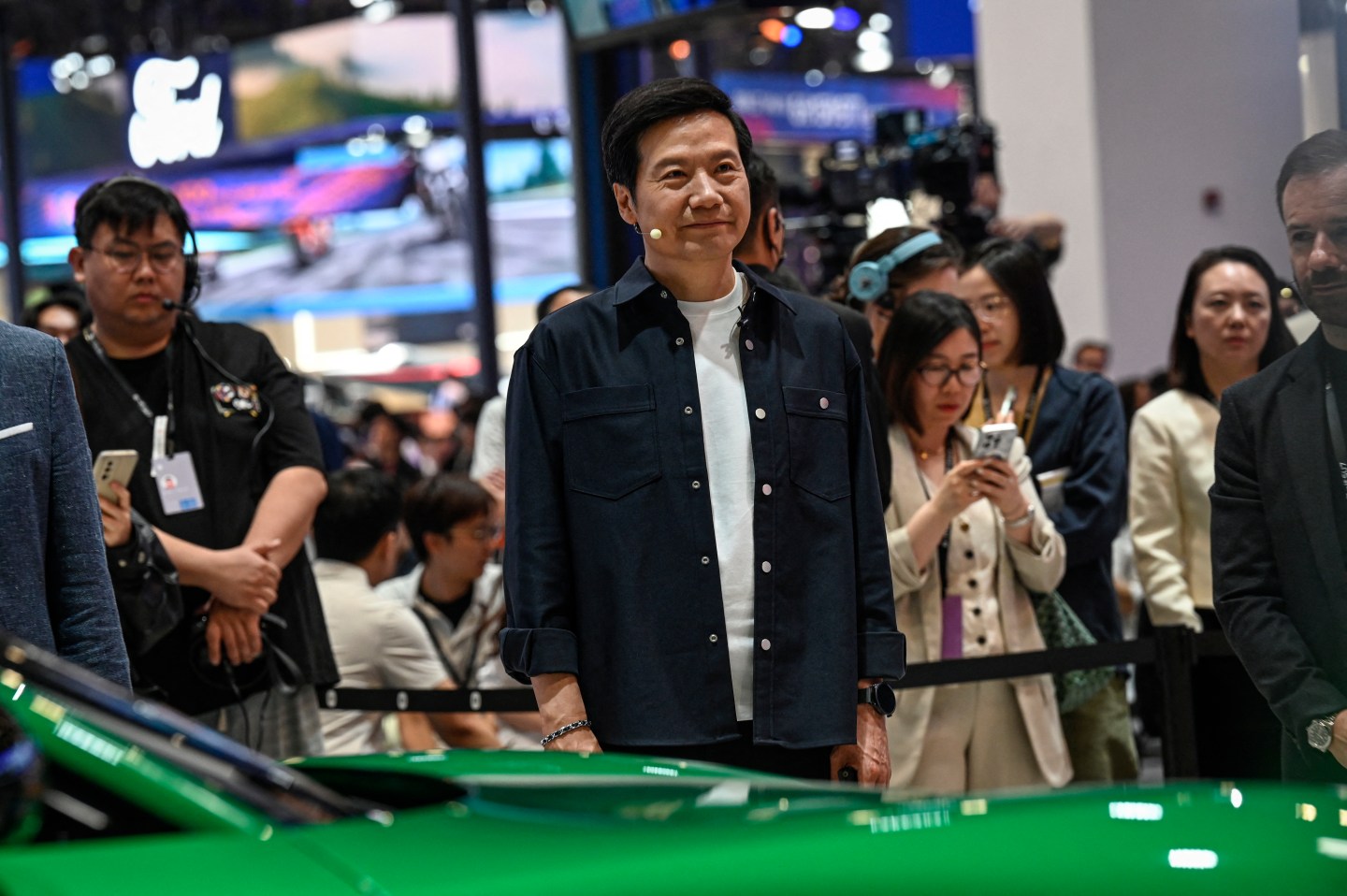
Xiaomi, led by Steve Jobs-fan Lei Jun, stuck with its EV plans, releasing its first car in 2024. The Chinese company’s cars have become a huge success among Chinese customers, delivering half a million cars since the launch. (Ford CEO Jim Farley is also a fan). Xiaomi’s EV success is now reverberating back to its phones, as Chinese consumers see it as proof of the company’s innovation bona fides.
Read More
Nicholas Gordon