

This article was produced by National Geographic Traveller (UK).
“Vieni, vieni!” Noris Cunaccia beckons me towards her, the Italian words softly reverberating through a thicket of trees before being swallowed by the porous forest floor. Her tightly tied boots crunch softly as she moves sure-footed across the uneven terrain, conjuring an image of a sylvan pixie, her dark curly hair protruding from a felt hat that bobs up and down as she moves.
She crouches by a low-growing shrub, bringing a branch closer to her nose. Closing her eyes, she inhales what is, for her, a deeply familiar scent. “This is pino mugo — mountain pine,” she reveals, rolling a couple of small buds through her fingers. “It’s prolific here — it thrives in rocky terrain at high altitude.”
I’m in the Adamello Brenta Nature Park, the largest protected area of the Trentino region at Italy’s northeasterly reaches. Spilling into the Alps on the border with Lombardy, the Unesco-listed geopark is shaped by two geologically diverse mountain ranges: the limestone Brenta Dolomites, with their rugged towers and jagged peaks, and the granitic Adamello-Presanella group, home to Italy’s largest glacier. The result is a geologically unique landscape, taking in dense larch and pine forests, verdant pastures, razor peaks, glaciers and plunging waterfalls.
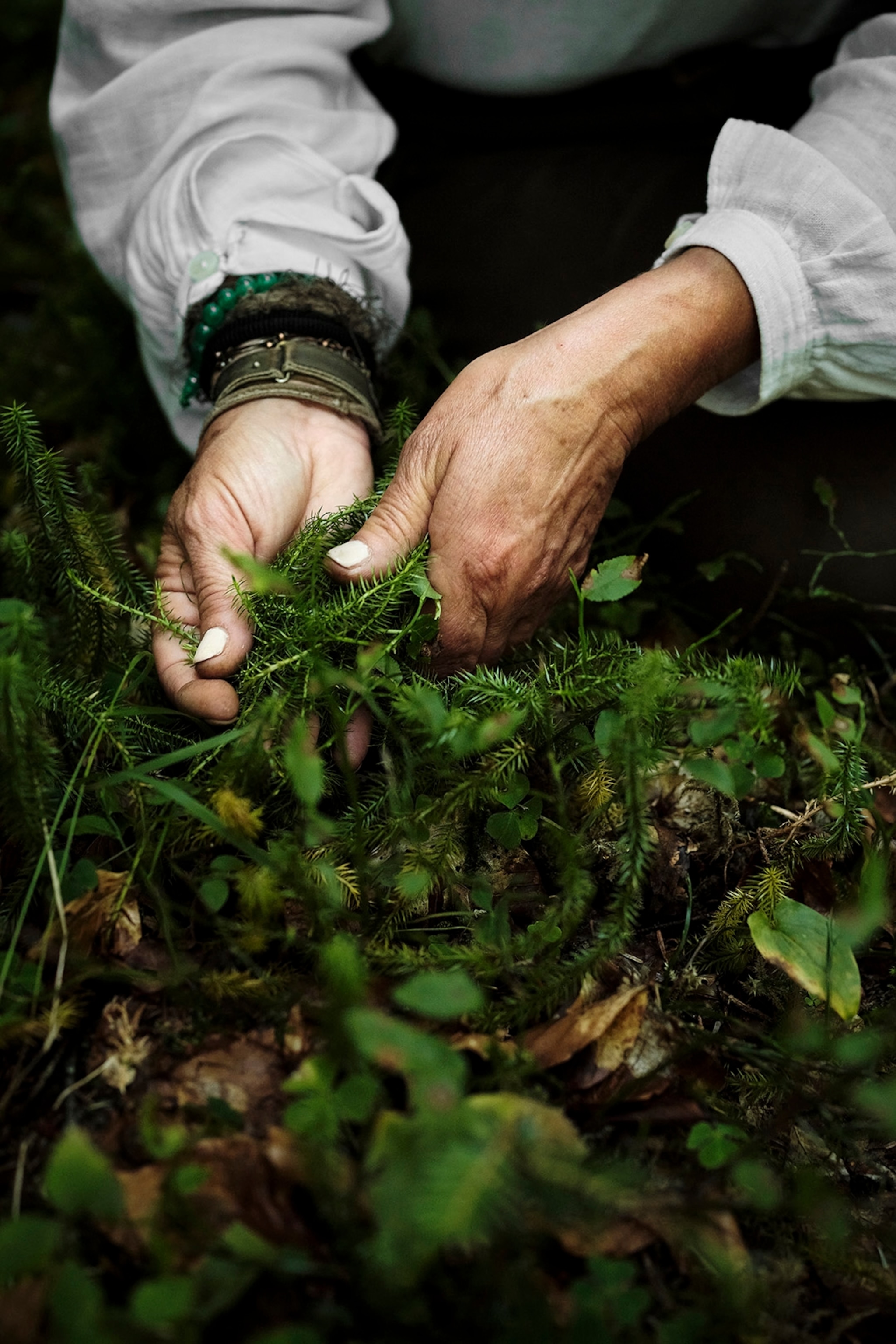
Pino mugo — mountain pine — can be easily foraged in the range and has a nutty scent.
Photograph by Varoli Marco
While the ski resorts of the eastern Dolomites were lately in the international spotlight during the Winter Olympics, this westernmost part of the range offers quieter marvels, harbouring an extraordinarily rich variety of plant species. “I pick the young buds at the end of May and let them ferment in glass jars in the sun until autumn,” continues Noris. “Part of a process to make mugolio that takes over 10 years.” I learn that locals have used mugolio syrup for centuries as a remedy — it’s said to help winter ailments, from coughs to bronchitis. “It’s best enjoyed drizzled over milky ice cream or ricotta,” says Noris when I ask how she likes to use it.
I try this later when we call into Prà de la Casa — a meadow-surrounded guesthouse in the heart of the Adamello Brenta Nature Park, just beyond the teeny mountain town of St Antonio di Mavignola. Here, the mugolio marries beautifully with a selection of cheeses, its resinous, sweet notes of pine contrasting with the sharpness of an intense stravecchio (‘extra mature’) cheese aged on spruce boards, and a hard and crumbly variety made with unpasteurised milk.
Noris is one of the very few people to have been granted permission to forage in the Adamello Brenta Nature Park, and I can immediately sense her close bond with the surrounding environment — the way she moves so dexterously, how she gently squints her eyes as she listens in to the sounds of the forest. “I work with the rhythms of the earth, mapping designated areas of the mountains in my head,” she says. “I forage in one area one year, and another the following year, never interfering with a plant’s life cycle.”
I follow her up the mountainside, our hiking boots crunching under our feet. It’s mid-March, and a thin layer of snow still carpets the ground, although the first signs of spring have begun to declare themselves. I can hear the murmuring of a river, its bed bursting with life as the high alpine snowpack begins to melt, feeding the park’s profusion of lakes and rivers. I’m only a short drive from Madonna di Campiglio, one of the region’s rather exclusive ski resorts, yet the whirring of cable-cars feels a world away from the soft rustling of the trees.
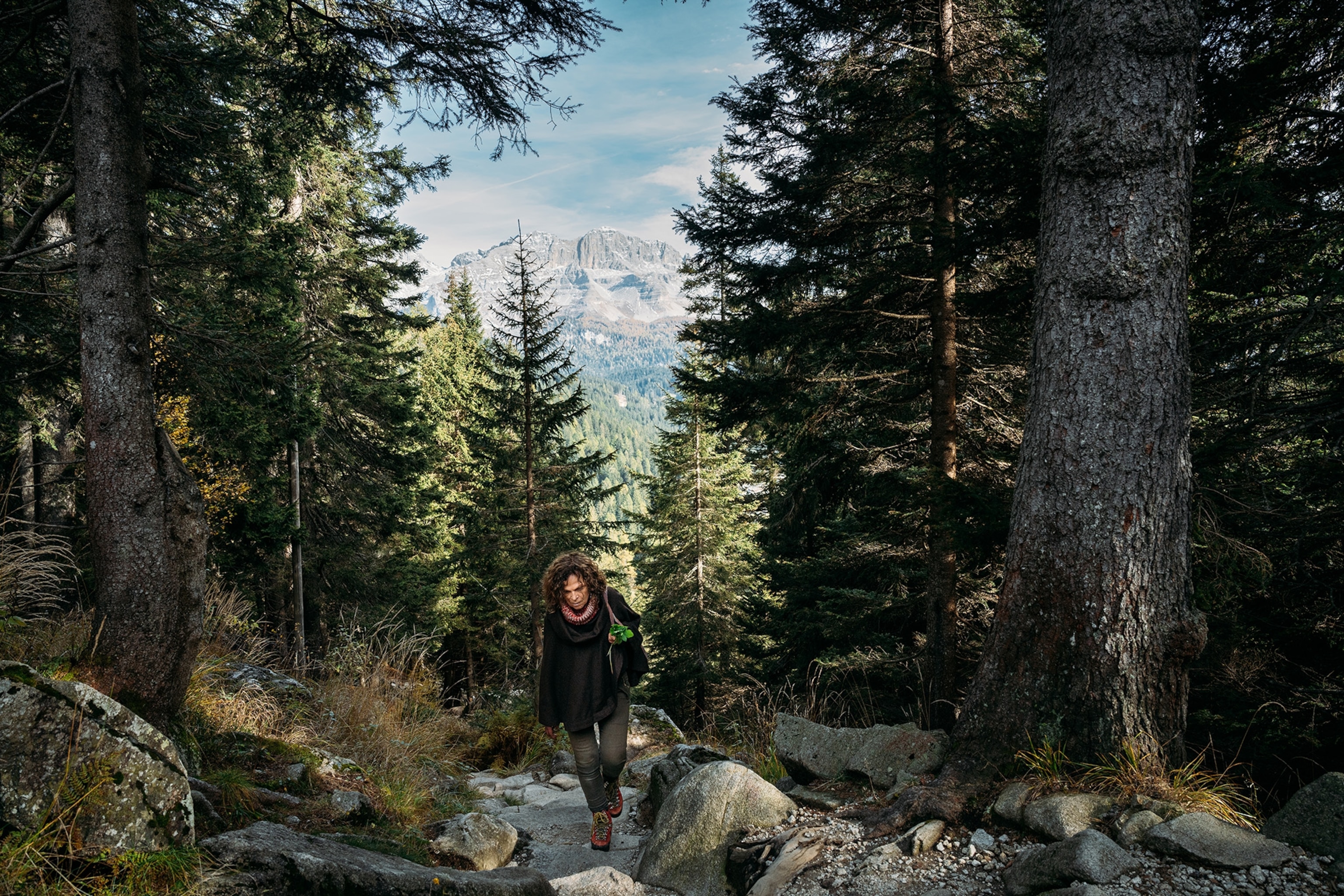
The Adamello-Presanella range hosts an abundance of streams that fuel the area’s extremely rich variety of plant life.
Photograph by Varoli Marco
Bear necessities
One of the area’s most prized shoots is radicchio dell’orso (‘bear’s chicory’), an alpine blue sow-thistle that’s one of the first wild shoots to grow when the snows have thawed. “It’s considered fuel for animals such as mules, cows and roe deer, and legend says it’s a favourite among brown bears, hence its name,” Noris tells me as we cross a wooden bridge, the murmur of icy-cold, emerald-green waters flowing below. This is an area that’s rich in water, with dozens of streams snaking down from the Adamello-Presanella range, merging here into a single torrent.
It’s thought that around 100 brown bears now inhabit the area and will feed largely on shoots like these when they finally wake from their winter slumber, along with buds, leaves and berries. Their diet will become increasingly varied throughout summer and autumn as they once again prepare for hibernation.
“As a child, I would head out and pick radicchio dell’orso with my father, who taught me a lot about plants,” says Noris. “It grows at high altitudes, above 1,800 metres, and can only be gathered for a couple of weeks a year. Locals are allowed to pick a maximum of two kilos a day,” she explains. “Its tender and slightly bitter offshoots serve as the perfect accompaniment to cold cuts, bread gnocchi, savoury strudel and meat dishes.”
As spring rolls into summer, Noris’s basket fills with a host of other delights, ranging from the aromatic aglio della regina (‘queen’s garlic’), with its pungent truffle-like flavour, to corniole, wild red berries that Noris says cleanse the palate and are “perfect as a refreshing sorbet between courses”.
Noris takes this bounty to her laboratory and research centre, housed in a mountain hut on the shores of Lake Nambino, almost 1,800 metres above sea level. Over the years, she’s compiled encyclopaedic knowledge that she shares not only with botanists but also with farmers and chefs far and wide. Working with her brother, Giovanni, Noris runs Primitivizia, an artisanal business that transforms foraged delicacies into pestos, pickles, preserves and oils, allowing her to share the flavours of her beloved Dolomites with the rest of the world.
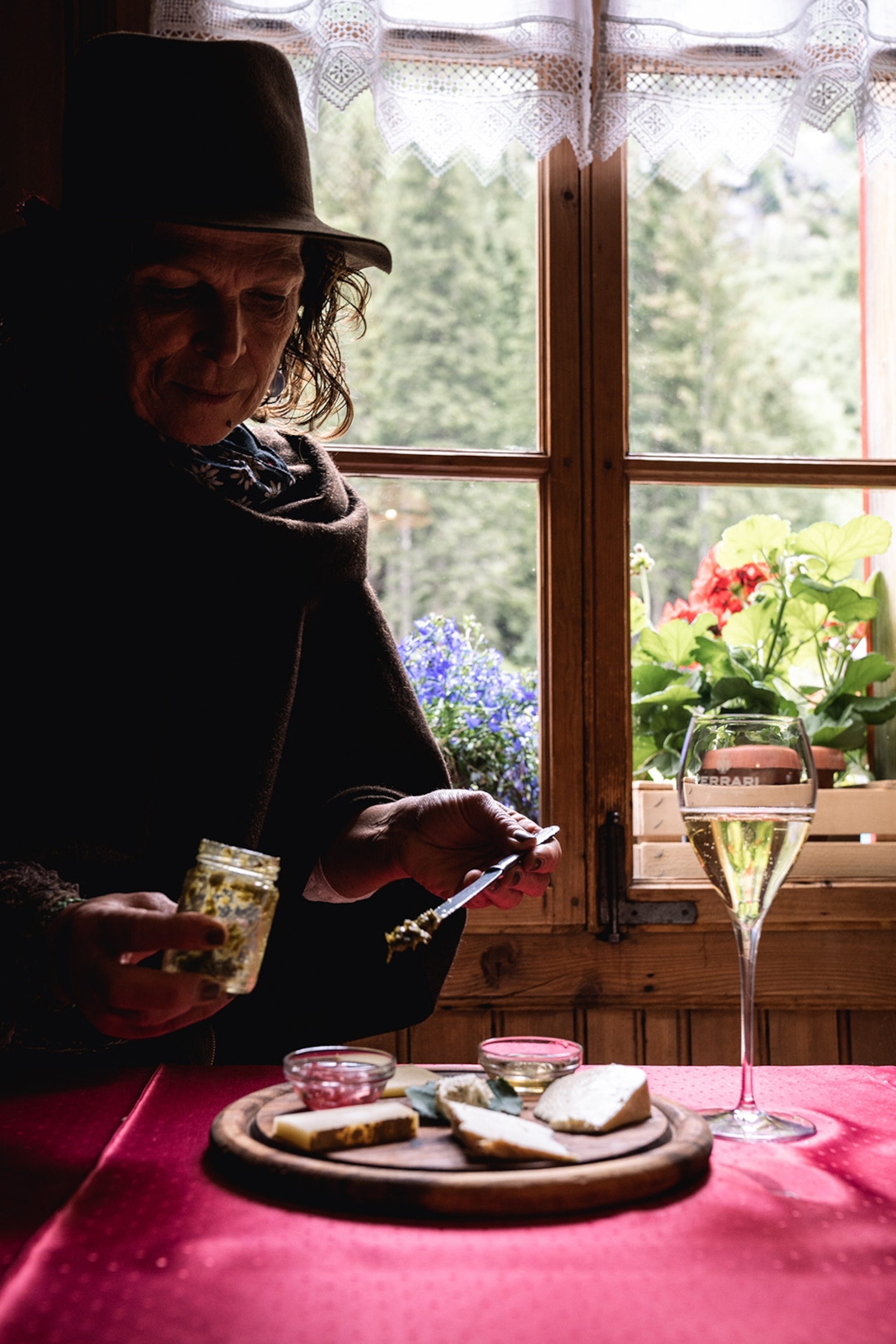
Together with her brother Giovanni, Noris turns foraged goods into delicacies that end up on menus around the world.
Photograph by Varoli Marco
One of the restaurants that makes use of Primitivizia’s products is Michelin-starred Grual, set in Lefay Resort & Spa Dolomiti. This elegant, pitched-roof hotel, all timber, stone and glass, cuts a chic contrast against the wall of mountains that forms a backdrop to the nearby town of Pinzolo. At a table in Grual’s low-lit dining room, a forest of tree sculptures lining the walls, I savour dishes from an eight-course tasting menu that makes the most of Noris’s foraged bounty.
Marinated trout comes with tuber salad and Noris’s much-loved pino mugo, while a dish of mountain potato with wild herb pesto is served with a dollop of her rosehip ketchup, a chutney-like condiment made with wild rose berries. Its smooth texture and subtly sour flavour of autumnal fruits contrasts perfectly with the crispiness of the potato.
Every dish is a celebration of what lies around us, an enticement to slow down and appreciate what the natural world gives us. And I’m reminded of what Noris had said to me earlier, out in the forest. “Nature is a friend that needs to be discovered, layer by layer, and carefully understood,” she’d said. “There’s a hidden world out there full of botanical riches — all we need to do is take a closer look.”
To subscribe to National Geographic Traveller (UK) magazine click here. (Available in select countries only).
@NatGeoTravel
Read More