

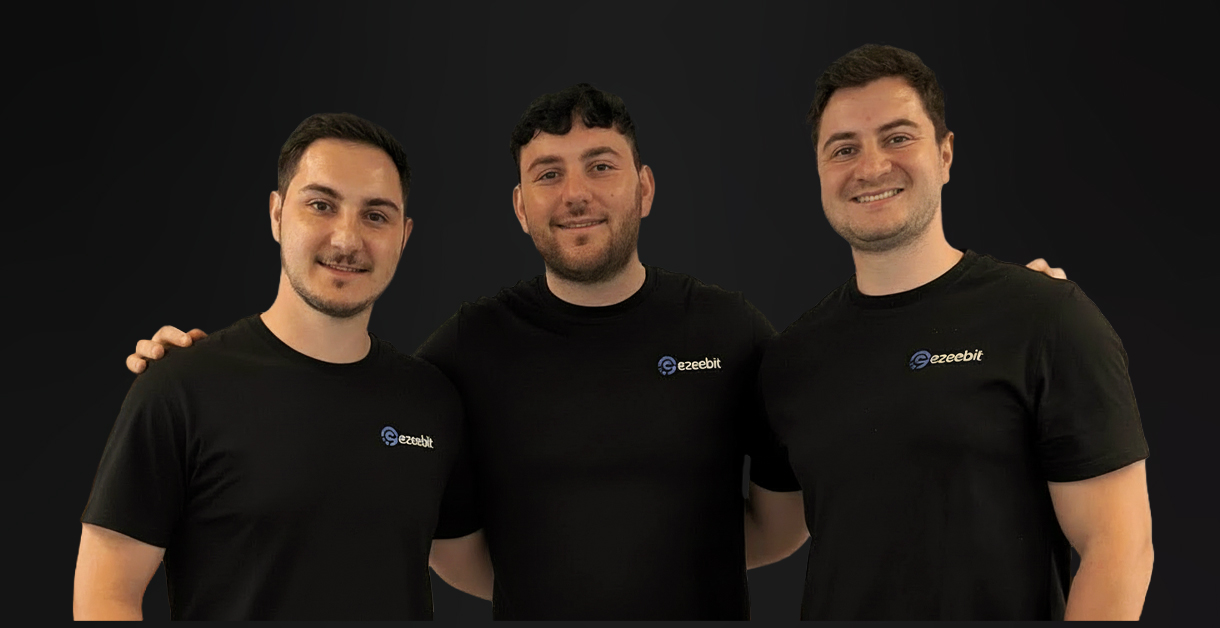
Ezeebit, the stablecoin and cryptocurrency payment infrastructure firm, has raised $2.05 million to accelerate product development and merchant adoption in South Africa, Kenya, and Nigeria.
The firm, which enables merchants to accept cryptocurrency payments with instant stablecoin settlement and next-business-day local fiat payouts, will also use the funds to expand strategic partnerships with banks, PSPs, and telcos
The seed funding round was led by Raba Partnership, an earlier backer of Flutterwave, Stitch, Fuse, and BVNK and joined by Founder Collective, which was an early backer of Uber, WHOOP, Airtable, and The Trade Desk. The round also includes strategic angels Terry Angelos (ex-Visa), Anton Katz (Talos), Nadir Khamissa (Hello Group), David De Picciotto (ex-Revolut), and Chris Harmse (BVNK).
“African merchants are tied to slow, expensive payment rails, while consumers increasingly hold crypto for remittances and savings but lack a safe way to spend it,” explains Daniel Katz, CEO and Co-Founder of Ezeebit. “We bridge this gap by connecting decentralised and traditional finance with a compliant stablecoin settlement layer. This funding empowers us to provide that vital infrastructure, allowing millions to participate fully in the global digital economy.”
According to the 2025 Geography of Cryptocurrency Report, between July 2024 and June 2025, Sub-Saharan Africa received over $205 billion in on-chain value, an increase of 52% from the previous year, making it the third fastest growing region in the world, behind APAC and Latin America.
While there is strong growth in traditional digital payment adoption, African merchants face immediate challenges including high fees (around 2–3% or more for card transactions), multi-day settlement (between three and five days), frequent declines, and limited cross-border options.
Launched in 2023, Ezeebit has already processed more than 30,000 transactions totalling millions of dollars in gross merchandise value. Clients include iStore, Le Creuset, Scoin, Tintswalo Lodges, Amiri and Diesel.
Ezeebit merchants enjoy fees of 1% or less amounting to a 68% saving compared to traditional card payments, along with instant stablecoin settlement and next-business-day local fiat payouts, eliminating volatility risk.
“Mobile money has already sensitised hundreds of millions of consumers to pay digitally via QR and account-to-account transfers. Stablecoins are the logical next step. What’s more, at 8.78%, Sub-Saharan Africa remains the most expensive region in the world to receive remittances, making crypto rails a compelling alternative. And, once consumers have received crypto, they are eager to spend it on goods and services, creating a reinforcing growth loop,” Katz says.
In markets where half the population is unbanked, Ezeebit isn’t just processing transactions, they’re opening access and building a trusted brand in the space, said Amanda Herson, General Partner at Founder Collective, adding that Ezeebit, has built real infrastructure, including wallet orchestration, instant hedging, and compliance tooling, that makes crypto payments work like tapping a card.
David Frankel, Co-Founder and Managing Partner at Founder Collective says, “What’s happening in Africa is extraordinary. Millions of people hold crypto but can’t spend it; merchants need faster, cheaper rails, but legacy systems keep them locked out. Ezeebit is building the bridge. This team has an uncommon gift for integrating modern financial technology with a grounded understanding of the dynamics shaping the markets they serve.”
Reading This Now 424