

The newsroom’s calling. Again. Your hands get clammy, throat tightens up , we’ve all been there.
Getting staff ready for these nerve-wracking moments isn’t just about running through some flashcards in the break room. Sure, that helps, but real media training digs deeper.
It’s about getting inside a reporter’s head, knowing their deadlines, and staying cool when that red light blinks on. Most organizations think they’re ready until that first crisis hits.
Then reality kicks in. Want to know what separates the smooth operators from the deer-in-headlights? Keep reading, there’s more to this than meets the eye.
Key Takeaways
- Getting the media landscape means knowing who’s who and where we fit in
- Sharp talking and writing skills keep us in control when things get intense
- Quick, solid responses (backed by real prep) keep our name clean
Comprehensive Training Program for Staff Handling Media Inquiries
Nobody’s born ready for a reporter’s call. Our training digs deep into the nuts and bolts of handling media inquiries, not just the what, but the why and how. Staff learn to think on their feet while keeping the organization’s message clear. There’s no winging it here, just solid prep that turns nervous spokespeople into confident communicators [1].
Understanding Media Entities and Relations
The media’s not some faceless beast. They’re people doing their jobs, each with different needs and deadlines.
Identifying Media Types and Their Operational Attributes
Print folks need depth, broadcast wants punch, and online needs it now. Simple as that. Print reporters might give you a day to respond, but a TV crew needs that sound bite in the next hour. Digital news? They’re posting before you hang up the phone. Learning these rhythms helps staff deliver what each outlet needs, when they need it.
Defining Public Relations Roles in Media Interaction
Someone’s got to mind the store. We pick our media contacts carefully , people who won’t crack under pressure and know the drill. No mixed signals, no confusion about who speaks for who. It’s about keeping our story straight and our reputation solid.
Establishing Media Relations Values and Objectives
Truth matters. Period. We don’t dodge, we don’t spin , we just tell it straight. Maybe not everything (some stuff stays in house), but what we say has to be real. Build that trust day by day, story by story.
Developing Communication Skills for Effective Media Interaction
Credits : Northwestern Medicine
Knowing the game plan’s just the start. How we say things can make or break us.
Enhancing Verbal Communication Attributes
Cut the “ums” and “uhs.” Speak like you mean it. Stand straight, look ’em in the eye (even through a camera lens), and keep that voice steady. It’s not rocket science, but it takes practice , lots of it.
Strengthening Written Communication Capabilities
Every word counts in black and white. Press releases need punch without the fluff. Social posts must nail it in 280 characters or less. We drill this stuff until it’s second nature, keeping our message tight across every platform.
Mastering Message Preparation and Delivery Values
Got three key points? Stick to ’em. When tough questions come (and they will), bridge back to what matters. It’s not about dodging , it’s about staying focused when the conversation tries to drift. That takes practice, sure, but it’s worth every minute spent rehearsing.
Ensuring Prompt and Professional Media Responses
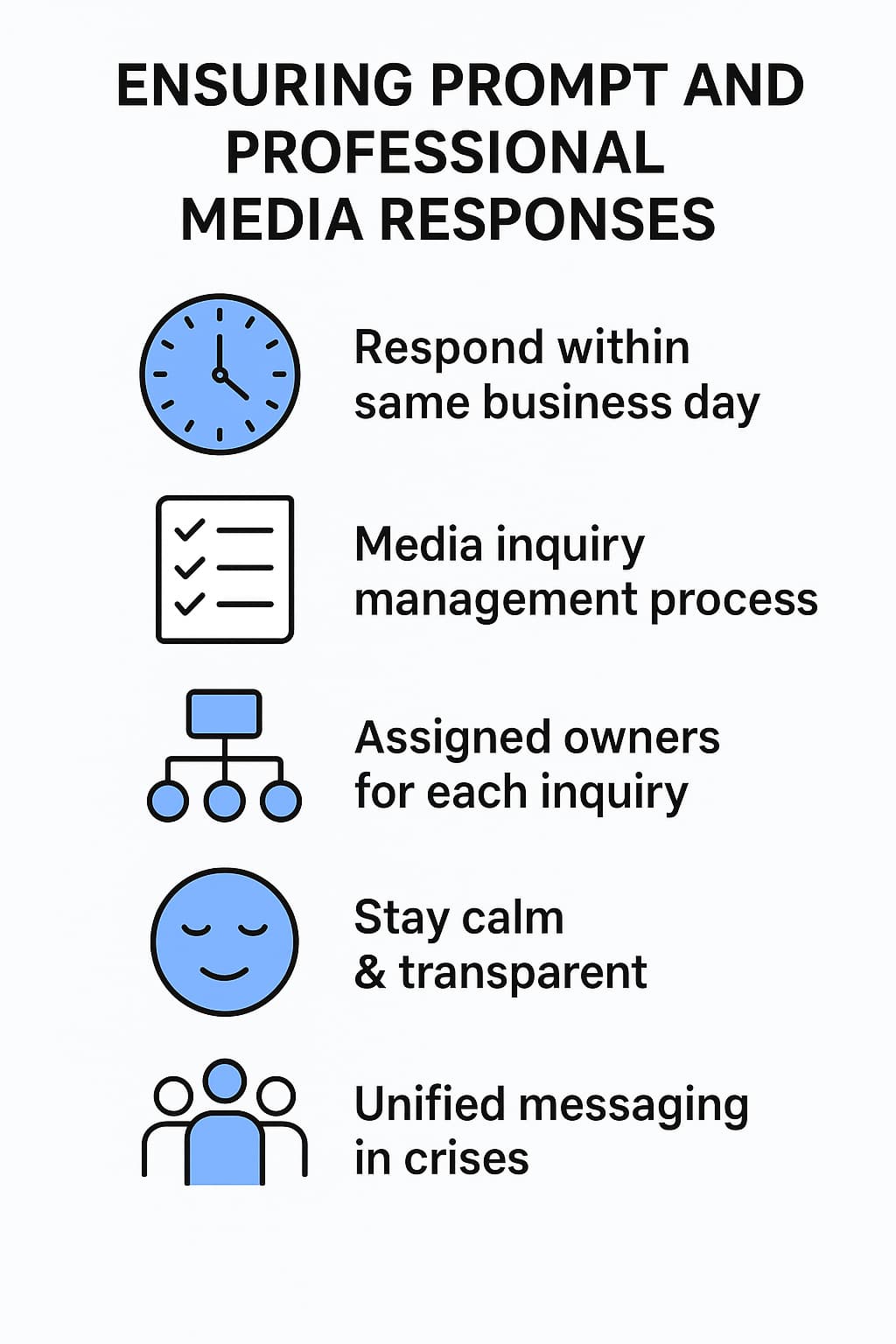
Speed and professionalism can make or break how we’re perceived.
Defining Timeliness as a Critical Response Attribute
We set a standard: respond to media inquiries within the same business day whenever possible. Delays can create suspicion or let rumors fill the void. Promptness shows respect and control, building media goodwill.
Implementing Media Inquiry Management Processes
A clear system tracks every inquiry from receipt to response. This avoids dropped balls or duplicated efforts. Accountability is assigned so each question has an owner who follows through , no “passing the buck.”
Managing Difficult Questions and Crisis Communication Values
Not every question is easy. We train to stay calm and transparent when faced with tough or sensitive inquiries. Sometimes it’s smarter to say, “We’ll get back to you,” than guess or speculate. In these moments, knowing how to respond to media inquiries makes all the difference.
Crisis situations demand coordination, we rely on crisis teams and unified messaging to present a consistent front. [2]
Optimizing Media Training Impact through Continuous Improvement
Training isn’t a one-time event. We keep sharpening our skills. Like athletes in the off-season, media teams need regular workouts to stay match-fit.
Assessing Media Training Effectiveness Metrics
Numbers tell stories that gut feelings can’t. Staff surveys show who’s ready for prime time and who needs more practice. Response times, message consistency scores, and post-interview assessments paint a clear picture of where we stand and what needs work.
Strong performance here means the team can better manage interview requests without stress.
Integrating Advanced Media Scenarios and Crisis Drills
Nobody likes surprises at 3 AM when news breaks. That’s why we run the tough scenarios, product recalls, workplace incidents, leadership changes. These drills push teams beyond their comfort zones, revealing weak spots before they matter in real life. The harder we sweat in training, the less we bleed in battle.
Encouraging Leadership Communication Development
C-suite folks can’t hide behind PR teams forever. They need specialized coaching because their words carry extra weight with reporters. We drill them on handling hostile questions, managing body language, and staying cool under the hot lights. Regular practice sessions keep their skills sharp and confidence high.
Maintaining Consistent Media Messaging Reinforcement
Messages get stale faster than day-old bread. What worked last quarter might miss the mark today. We run monthly message reviews, testing them against current events and market changes. This keeps our talking points fresh and relevant when reporters come calling.
Optimizing Media Training Impact through Continuous Improvement
Training isn’t a one-time event. We keep sharpening our skills. Like athletes in the off-season, media teams need regular workouts to stay match-fit.
Assessing Media Training Effectiveness Metrics
Numbers tell stories that gut feelings can’t. Staff surveys show who’s ready for prime time and who needs more practice. Response times, message consistency scores, and post-interview assessments paint a clear picture of where we stand and what needs work.
Integrating Advanced Media Scenarios and Crisis Drills
Nobody likes surprises at 3 AM when news breaks. That’s why we run the tough scenarios, product recalls, workplace incidents, leadership changes. These drills push teams beyond their comfort zones, revealing weak spots before they matter in real life. The harder we sweat in training, the less we bleed in battle.
Encouraging Leadership Communication Development
C-suite folks can’t hide behind PR teams forever. They need specialized coaching because their words carry extra weight with reporters. We drill them on handling hostile questions, managing body language, and staying cool under the hot lights. Regular practice sessions keep their skills sharp and confidence high.
Maintaining Consistent Media Messaging Reinforcement
Messages get stale faster than day-old bread. What worked last quarter might miss the mark today. We run monthly message reviews, testing them against current events and market changes. This keeps our talking points fresh and relevant when reporters come calling.
FAQ
How does media training build media skills and improve media handling?
Media training sharpens media skills by teaching staff how to respond clearly, stay calm, and manage tough questions. With practice in media handling, they learn to adapt under pressure, use strong media communication, and manage media inquiry management effectively.
This preparation builds confidence and credibility when facing reporters.
Why is media interview preparation and spokesperson training vital for media relations?
Media interview preparation and spokesperson training help staff deliver clear, consistent messages under pressure. These programs cover interview skills, media etiquette, and handling difficult questions while keeping media strategy on track.
Strong spokesperson training strengthens media relations and ensures professional, trustworthy media responses.
What role does crisis communication training play in managing media inquiries?
Crisis communication training prepares staff to respond when inquiries surge. It covers media crisis management, message control, and media responsiveness so teams can act fast and avoid errors.
Through scenario training, employees practice delivering consistent media messaging while protecting reputation in high-pressure moments.
How do media briefing and communication skills training support media spokesperson development?
Media briefing and communication skills training prepare staff to step into spokesperson roles. With a focus on message delivery, interview role-playing, and media presentation skills, staff gain confidence.
Training in media etiquette, interview techniques, and non-verbal communication helps develop strong, professional media spokespersons.
Conclusion
Media calls don’t have to feel like pop quizzes. Smart prep beats luck every time, just ask anyone who’s faced down a tough reporter. Good training isn’t about memorizing lines like some high school play.
It’s about getting the basics down cold: knowing who’s who in the media world, speaking clearly under pressure, and building real trust. Want your team ready for prime time? Start with solid training.
The results speak for themselves: better press coverage, stronger reputation, and staff who don’t sweat the spotlight.
The results speak for themselves: better press coverage, stronger reputation, and staff who don’t sweat the spotlight. For the next step in getting your message heard, check out NewswireJet, an affordable, powerful way to distribute your news and build brand visibility.
References
- https://umarcomm.umn.edu/blog/2025/04/28/what-expect-media-training
- https://www.acep.org/get-involved/becoming-a-spokesperson/effective-media-interview-techniques