

By
Soo Kim is a Newsweek reporter based in London, U.K. She covers various lifestyle stories, specializing in travel, health, home/interior design and property/real estate. Soo covered the COVID-19 pandemic extensively from 2020 to 2022, including several interviews with the chief medical advisor to the president, Dr. Anthony Fauci. Soo has reported on various major news events, including the Black Lives Matter movement, the U.S. Capitol riots, the war in Afghanistan, the U.S. and Canadian elections, and the 2020 Tokyo Olympics. Soo is also a South Korea expert, covering the latest K-dramas—including the breakout hit Squid Game, which she has covered extensively, including from Seoul, the South Korean capital—as well as Korean films, such as the Golden Globe and Oscar-nominated Past Lives, and K-pop news, to interviews with the biggest Korean actors, such as Lee Jung-jae from Squid Game and Star Wars, and Korean directors, such as Golden Globe and Oscar nominee Celine Song. Soo is the author of the book How to Live Korean, which is available in 11 languages, and co-author of the book Hello, South Korea: Meet the Country Behind Hallyu. Before Newsweek, Soo was a travel reporter and commissioning editor for the award-winning travel section of The Daily Telegraph (a leading U.K. national newspaper) for nearly a decade from 2010, reporting on the latest in the travel industry, from travel news, consumer travel and aviation issues to major new openings and emerging destinations. Soo is a graduate of Binghamton University in New York and the journalism school of City University in London, where she earned a Masters in international journalism. You can get in touch with Soo by emailing s.***@******ek.com . Follow her on Instagram at @miss.soo.kim or X, formerly Twitter, at @MissSooKim .Languages spoken: English and Korean
Life and Trends Reporter
????️ Voice is AI-generated. Inconsistencies may occur.
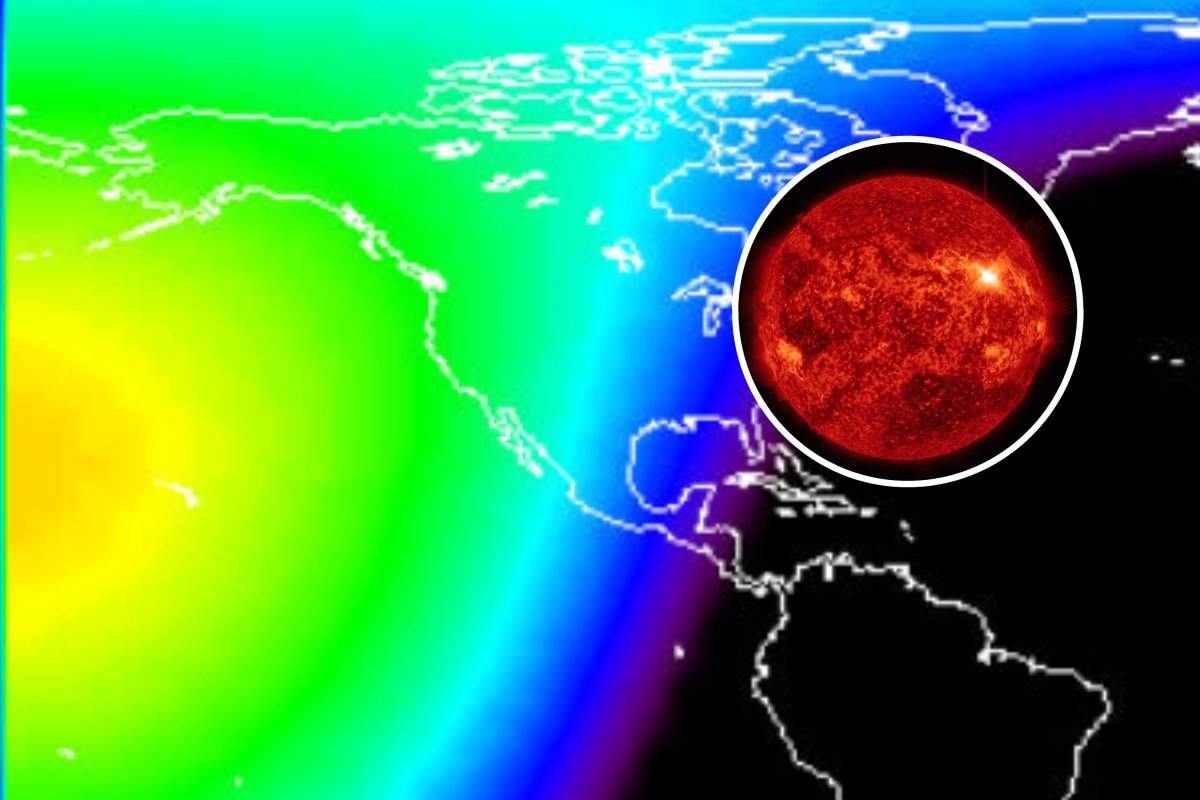
Large parts of the United States faced a radio blackout on Thursday following a strong solar flare from the sun.
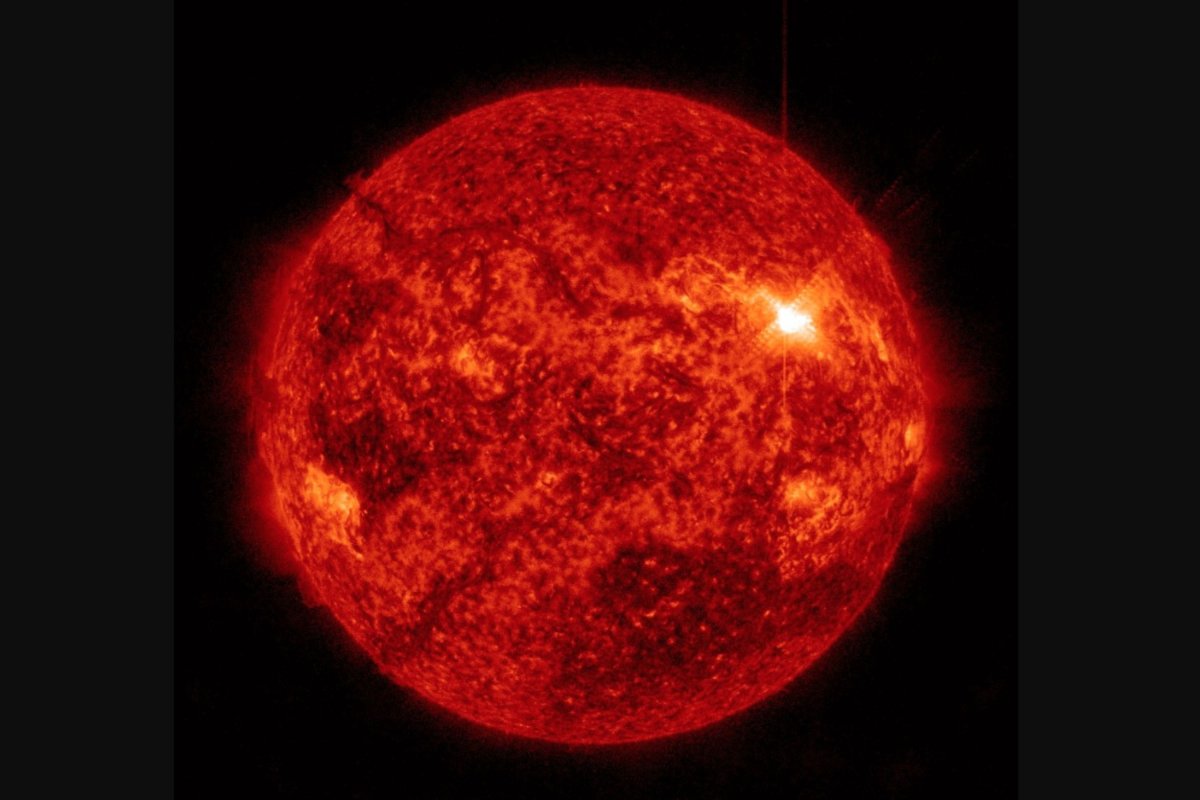
The “extreme ultraviolet flash” was captured by NASA‘s Solar Dynamics Observatory satellite. The solar flare, categorized as X-class in scale—the highest scale, was triggered by an active region of a sunspot on June 19 at 11:50 p.m. UTC.
Radiation from the X1.9 blast caused a shortwave radio blackout over the Pacific Ocean, leading to a loss of signal at frequencies below 25 Megahertz (MHz). Amateur radio operators, especially in Hawaii, may have noticed the signal loss.
Solar flares are intense bursts of radiation from the sun. The most powerful explosions in the solar system, they can can contain as much energy as a billion hydrogen bombs, according to NASA.
Solar flares are classified according to their intensity, with X being the highest on the scale. X-class solar flares can cause planet-wide radio blackouts and long-lasting radiation storms.
NOAA/SWPC/NASA
The latest solar flare follows an M-class one, the second-highest on the scale, that occurred days earlier on June 15. It caused a shortwave radio blackout across North America, with a loss of signal seen at frequencies below 20 Megahertz (MHz).
Unlike the M8.3 solar flare on Sunday, the solar flare on Thursday did not launch a Coronal Mass Ejection (CME)—a massive burst of plasma and magnetic field lines—into space.
However, the explosion has apparently destabilized a magnetic filament in the sun’s southern hemisphere.
This massive filament, which is erupting now, may produce a CME, which could lead to geomagnetic storms.
NASA / Solar Dynamics Observatory
“When a CME arrives at Earth, it can produce some of the biggest geomagnetic storms and thus, some of the brightest and most active auroras that extend furthest toward the equator,” explained NOAA. Geomagnetic storms caused by CMEs can lead to aurora borealis, also known as the northern lights.
The northern lights are formed from electrons colliding with the upper reaches of Earth’s atmosphere.
During these collisions, “the electrons transfer their energy to the atmosphere thus exciting the atoms and molecules to higher energy states” and “when they relax back down to lower energy states, they release their energy in the form of light,” explains the Space Weather Prediction Center.
Stronger solar cycles produce more solar storms with greater intensity, which drives geomagnetic activity.
“If the geomagnetic field is active, then the aurora will be brighter and further from the poles,” where the northern lights are typically most visible, says the Space Weather Prediction Center. This means that the aurora borealis may be viewed from lower latitudes than usual.
Last year, strong solar activity allowed northern lights enthusiasts to catch a rare viewing of the natural display in parts of the world where they’re normally not seen, such as in Japan.
Do you have a tip on a science story that Newsweek should be covering? Do you have a question about space? Let us know via sc*****@******ek.com.
Is This Article Trustworthy?

Newsweek is committed to journalism that is factual and fair
We value your input and encourage you to rate this article.
Newsweek is committed to journalism that is factual and fair
We value your input and encourage you to rate this article.
Top stories
About the writer
Soo Kim is a Newsweek reporter based in London, U.K. She covers various lifestyle stories, specializing in travel, health, home/interior design and property/real estate. Soo covered the COVID-19 pandemic extensively from 2020 to 2022, including several interviews with the chief medical advisor to the president, Dr. Anthony Fauci. Soo has reported on various major news events, including the Black Lives Matter movement, the U.S. Capitol riots, the war in Afghanistan, the U.S. and Canadian elections, and the 2020 Tokyo Olympics. Soo is also a South Korea expert, covering the latest K-dramas—including the breakout hit Squid Game, which she has covered extensively, including from Seoul, the South Korean capital—as well as Korean films, such as the Golden Globe and Oscar-nominated Past Lives, and K-pop news, to interviews with the biggest Korean actors, such as Lee Jung-jae from Squid Game and Star Wars, and Korean directors, such as Golden Globe and Oscar nominee Celine Song. Soo is the author of the book How to Live Korean, which is available in 11 languages, and co-author of the book Hello, South Korea: Meet the Country Behind Hallyu. Before Newsweek, Soo was a travel reporter and commissioning editor for the award-winning travel section of The Daily Telegraph (a leading U.K. national newspaper) for nearly a decade from 2010, reporting on the latest in the travel industry, from travel news, consumer travel and aviation issues to major new openings and emerging destinations. Soo is a graduate of Binghamton University in New York and the journalism school of City University in London, where she earned a Masters in international journalism. You can get in touch with Soo by emailing s.***@******ek.com . Follow her on Instagram at @miss.soo.kim or X, formerly Twitter, at @MissSooKim .Languages spoken: English and Korean
Soo Kim is a Newsweek reporter based in London, U.K. She covers various lifestyle stories, specializing in Read more
Soo Kim
Read More