

Business News
About 5 years ago, a group of Harvard medical students went to instructor Dorothy W. Tolchin, MD, with an idea: Train students to graduate with the skills, perspective, and humility to take good care of patients with disabilities of all types, including autism, which affects 1 in 36 children.
Together, they embarked on a project to integrate disability education within Harvard Medical School, Boston. Today, Harvard is in its fifth year of this embedded curriculum; Tolchin is the inaugural director of disability education at Harvard Medical School.
A key component of Harvard’s program is its partnership with Operation House Call (OHC) of The Arc of Massachusetts in Waltham, Massachusetts. OHC is a unique initiative that equips medical students to deliver compassionate, competent care to individuals with autism and intellectual and developmental disabilities. The program combines classroom learning with real-world experiences. It is currently implemented in all Massachusetts medical schools and is one of only a few like it in the United States.
Despite the need for specialized training, no accreditation standards currently mandate autism education in medical school curricula. A small survey published last year found that only 16% of medical students had received formal training in neurodivergence; 97% expressed a desire for more.
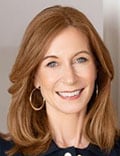
Too often, medical students graduate with little education and understanding of proper care for people with autism, explains Maura Sullivan, CEO of The Arc of Massachusetts; it’s a gap that contributes to medical access issues for patients with autism, an increase in health disparities, and more.
In this piece, Medscape Medical News explores the state of autism education, ongoing efforts to enhance training, and how medical students can advocate for change.
Business News The State of Autism Education in Medical Schools
“A little over half of schools have at least some elements of disability education, but it’s not necessarily autism education,” Tolchin said.
Sometimes, autism education is limited to one or two sessions; usually, it is focused on diagnosis and recognizing signs or symptoms, and there’s much less emphasis on the patient and family perspective, said Michael Zhu Chen, an MD-PhD student at Harvard Medical School.
“Students graduate with a general understanding of patient care but without the necessary skills to provide a comfortable clinical environment, ask questions, and engage people across the neurodiversity spectrum,” Tolchin said.
Traditional medical school education also tends to lack a curriculum aimed at the continuation of care. “In many cases, autism is diagnosed in childhood, but obviously, there are adults with autism. It’s not like they all of a sudden aren’t people that physicians are caring for anymore,” Chen said.
According to Tolchin, without set curriculum requirements in medical schools, schools tend to provide education when there is an available champion for advocacy and/or available resources.
Research in BMJ Open found that only 25% of primary healthcare providers reported high confidence in communicating with adult patients with autism or identifying and making necessary accommodations.
Business News The Repercussions of an Underprepared Physician Workforce
When physicians in training don’t receive adequate education about caring for patients with autism, there’s a wide range of consequences.
For one, there are access issues for patients. In a survey of 714 US physicians, only 40% felt equipped to treat patients with autism and intellectual and developmental disabilities. “Because physicians don’t feel competent, they are not willing to treat,” Sullivan said. “These attitudes can lead to fear or concerns around providing care for these patients.”
The more pernicious flip side to that is that physicians will take patients with autism but won’t be able to provide proper care — something that too often results in diagnostic overshadowing — a bias that exists when a provider attributes someone’s symptoms to a preexisting condition, in this case, autism. For example, if a patient with autism goes to the emergency room with pain, a doctor might attribute their pain to their autism rather than properly looking into an underlying issue. This can lead to misdiagnosis, underdiagnosis, or inadequate treatment.
Greater health disparities among patients with autism also stem from providers’ inability to effectively communicate with individuals who are nonspeaking or have different communication needs, Sullivan said. Tolchin said patients might not be involved in making decisions that they could reasonably make for themselves. “Assumptions can be made.”
All in all, there is a “missed opportunity” for medical schools to provide proper education, said Tolchin.
Business News A Nationwide Model
Entering medical school, Chen said he had some awareness of autism but that he “never really fully appreciated how it affects life in different ways and the role that physicians can have in supporting families and patients through that journey.”
OHC not only introduces students to autism and intellectual and developmental disabilities but also provides critical experiential learning, with visits to family homes, improving confidence among students, Sullivan said.
Typically, parent educators and patients with autism speak to medical students about their experiences inside and outside medical settings. “We center the people with autism themselves,” Tolchin said. “They explain what it is like to get healthcare, what is hard, and who their good clinicians are.”
Students learn about the physician’s role as an advocate — and how to meaningfully engage with others on a patient’s care team, such as a social worker, a speech pathologist, or parents. They also learn about specific accommodations that may be necessary for modifying a clinical exam or helping a patient adjust to a medical setting — something that can provoke anxiety.
Students visit the homes of patients with autism and receive feedback after visits.
“The home setting is so important,” Tolchin said. “Students can see people’s individual lives beyond just what they would read in a textbook or be taught on a slide.”
Chen said OHC helped him realize the power of language.
“It’s not just about the medications you prescribe or the diagnosis you give; it’s how you talk to patients and families,” he said. He recalls the mother of a family he visited recounting the story of her son’s diagnosis some 15 years earlier.
“She still remembered the exact words that the physician had used to deliver the news: ‘Oh, I’m so, so, so, sorry. Your child has autism,’” Chen said. “She felt extremely hurt and traumatized by the way the news was delivered.”
Lived experience training helps students gain an understanding of people across the autism spectrum, Sullivan said. “Sometimes you meet one person with autism, and you think you understand, but if you meet one person with autism, you’ve met one person.” She said, “Many medical school students come to me and say, ‘I’m so glad for this class because I had no idea how to treat a patient with autism’ or ‘I had never worked as a patient with autism.’”
Chen said that without his training, he’d feel out of his depth; “I probably wouldn’t provide the best care that I could,” he said. “Communication, for one, is a lesson that extends well beyond autism or disability. It is important for any area of medicine.”
Business News Continued Change
In recent years, there has been increased attention to autism education in medical schools, but too often, advancement occurs in silos. There is a need for a “standardized curriculum that is part of any graduate medical education, including residencies or fellowships, that includes specific training on intellectual and developmental disabilities and autism and specifically includes learning from those individuals with lived experience,” Sullivan said.
There are barriers to that.
“Medical school curricula are packed,” Tolchin said. “There are a lot of needs in our healthcare system and very thoughtful medical educators who recognize the need to teach a range of different topics within the curriculum. This is not the only one.”
Yet, she’s optimistic that standardization is coming. In its absence, maintaining clinical humility for all patients is key, Tolchin said.
“Make no assumptions about what your patients can or cannot do, what they can or cannot communicate, and start with the intention of understanding how your patients feel, what they need, and how you can engage them in their care. You’re not going to know everything about any individual’s specific autism experience, but you can learn by asking questions to inform your care.”
Medical students should also know that their voices matter.
“Students can play a very big role in driving change in their institutions,” Tolchin said. Sullivan said that she struggled to get OHC into one of the last medical schools in Massachusetts, noting that it was a student’s advocacy that made it happen.
“Now, that is one of our strongest programs — and it all started with a medical student,” she said.
Read More
Blythe Block