

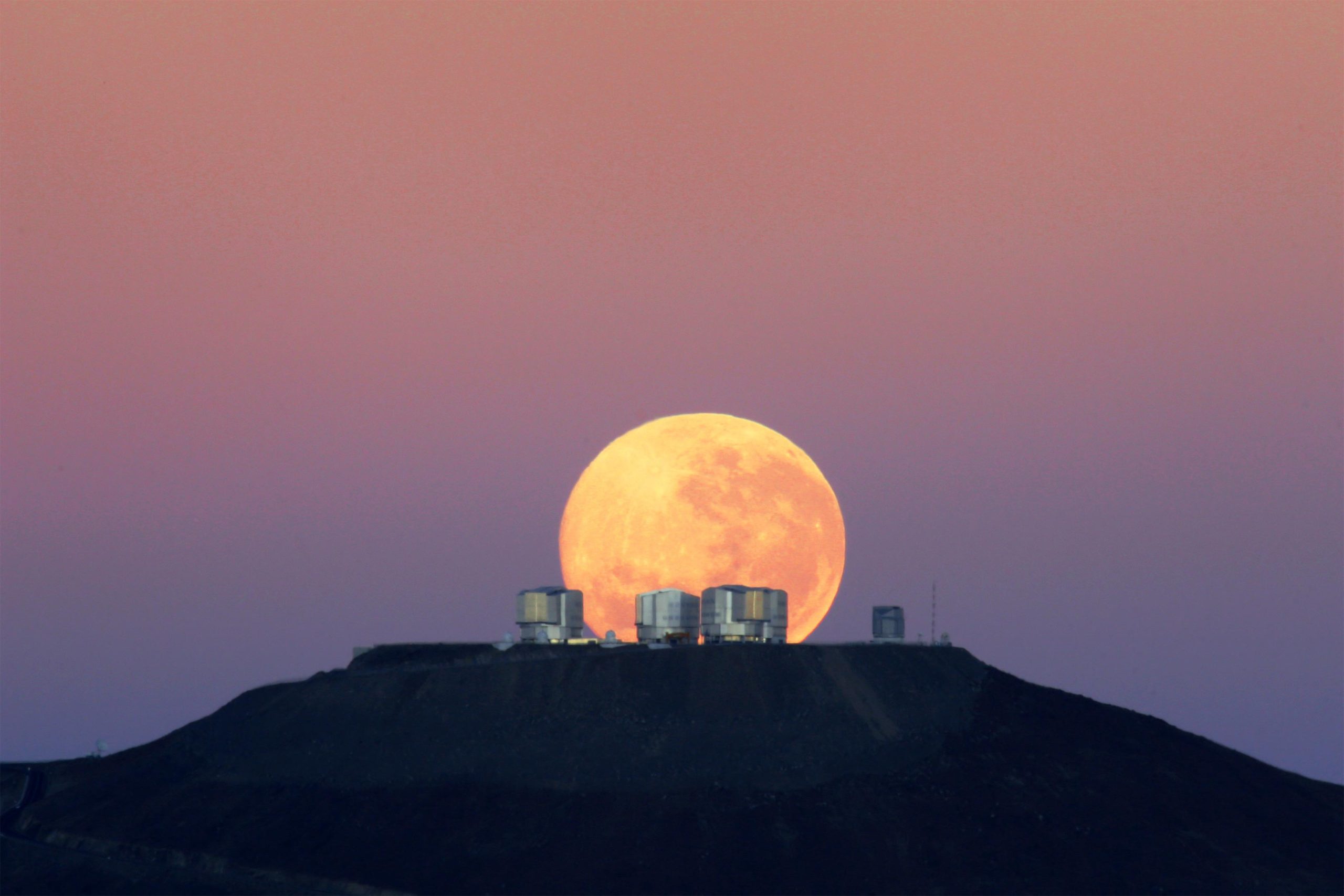
The Moon’s size on the horizon has puzzled humans for millennia. Despite ancient philosophers and modern scientists tackling the question, there’s still no consensus.
Theories range from optical illusions to brain tricks, but no single explanation has won out.
Ever noticed how the Moon seems HUGE when it’s near the horizon but smaller when it’s overhead? Trick of the eye or something more? Scientists have debated this for 2,000+ years, and we still don’t have a definitive answer! Credit:
One leading theory involves the Ponzo illusion, a classic optical trick. In everyday life, distant objects — like clouds, airplanes, and ships — appear smaller as they move toward the horizon. But the Moon doesn’t follow this pattern, creating a contradiction in our perception. To resolve it, our brains unconsciously “enlarge” the Moon, making it seem bigger than it really is.
This theory is compelling, but it’s not the only one. Scientists are still searching for definitive proof to explain this strange effect.
So, why does the Moon look larger on the horizon? We don’t have a final answer yet — but the mystery continues to fascinate scientists and skywatchers alike.
Explore Further: Unraveling the Moon Illusion: How It Plays Tricks on Your Eyes
NASA
Read More