

Business
Tuscany has become the first region in Italy to approve a medically assisted suicide law that provides patients with clear procedures and timelines.

“Today, we have achieved an important victory to prevent people from being kept in conditions of unbearable suffering against their will,” Marco Cappato, treasurer of the Luca Coscioni Association, told Medscape Medical News. He now hopes other regions will follow suit.
In the past two decades, many European countries have passed medically assisted suicide laws. Yet, the European Union does not have a unified stance on assisted dying, as end-of-life legislation falls under the jurisdiction of individual member states.
The legal landscape remains varied, and specifics of these laws, including eligibility criteria and procedural safeguards, vary widely by country and within a country, meaning that whether a person is granted the right to die might depend on where they live.
Business Tuscany’s Legislation
In 2019, the Italian Constitutional Court ruled that assisted suicide could be legal under four strict conditions — patients are suffering from irreversible disease, are in unbearable physical or psychological conditions, are making a fully conscious and voluntary choice, and are kept alive by life-sustaining treatments.
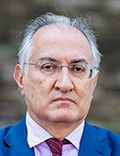
Despite the ruling, there has been no comprehensive national framework governing the practice, leaving local health authorities to act on a case-by-case basis through lengthy legal processes, said Mario Riccio, a retired anesthetist and current advisor of the Coscioni Association, speaking with Medscape Medical News. In fact, following the constitutional court ruling, only six cases of medically assisted suicide have taken place in Italy.
The new law passed in Tuscany on February 11, 2025, ensures that a medical and ethics commission reviews requests for assisted suicide within 30 days. Once eligibility is confirmed, a decision on approval and implementation must be made within 10 days. Within another 7 days, the regional healthcare service must provide the necessary technical, pharmacological, and medical support for the procedure while also allowing healthcare professionals to opt out.
The law, a popular initiative promoted by the Luca Coscioni Association, had been presented in all regions but had never before been approved.
Business Europe’s Patchwork of Policies
The European Union has no uniform stance on assisted dying, leaving end-of-life decisions to individual member states. This lack of standardization has created a patchwork of policies across the continent.
Some European countries, including the Netherlands, Belgium, and Luxembourg, have had assisted dying laws since the early 2000s. More recently, Germany, Austria, Portugal, and Spain have introduced legislation. However, many other nations remain hesitant or deeply divided on the issue.

“There is no pressure at all; not intention to regulate or to have some common standards in this domain,” Sandra Hotz, PhD, a civil law and health law professor at the University of Neuchâtel in Neuchâtel, Switzerland, told Medscape Medical News. “It’s not a sexy topic for politicians, who may find it easier to focus on other medical issues.”
Sarah Wootton, the chief executive of Dignity in Dying, England, agrees that assisted dying remains politically and ethically complex and points out that achieving uniform legislation in Europe is unlikely. “That’s not how laws are currently developed. If you take driving, for example, or ethical issues like IVF or abortion, they all tend to be determined at the national or regional level.”
Several factors contribute to this variation, including political, cultural, and religious influences. Spain, a predominantly Catholic country, has passed progressive assisted dying laws, showing that religious affiliation alone does not determine a nation’s stance. Political ideology also plays a role — Spain’s legislation coincided with a leftist government, whereas more conservative administrations often resist such measures.
Public engagement and discourse also shape policy differences. In some countries, like France, open debates have allowed for broad public discussion, while in others, the topic remains marginalized, Hotz explained.
Business A Shifting Attitude
Public and medical support for assisted dying is growing. Despite its controversial nature, many see it as an evolution of modern medicine that prioritizes patient autonomy.

Wootton explained: “The old ways of how we died are no longer workable. People’s end of life is much slower than it used to be, so their suffering can be much more protracted. And they want choices about that. They want to control it themselves.”
This shift is also reflected in the positions of medical organizations. While the World Medical Association remains firmly opposed to euthanasia and physician-assisted suicide, other professional bodies, such as the British Medical Association, the American Academy of Family Physicians, and the Canadian Medical Association, have adopted a neutral stance, recognizing the diverse views among their members.
“We are moving away from a ‘doctor knows best’ culture to a patient empowerment, shared decision-making culture where patients want to choose,” Wootton noted. “And I think an honesty and an openness about the implications of drugs, treatments, and what people want to refuse is becoming more important.”
One argument for legalizing assisted dying is that it introduces safeguards into a practice that already occurs in various ways, whether behind closed doors or in other jurisdictions, Wootton said.
In Britain, for example, one person every week travels to Switzerland for assisted dying, around 650 people take their own lives annually due to unbearable suffering, and an estimated 20 people suffer severely each day without adequate end-of-life options. “There is a real discontent about the status quo of end-of-life care,” she said.
There are also clear data showing that legalizing assisted dying does not significantly increase the number of people who choose it, Wootton explained. Recent data from the Netherlands show that medically assisted suicide plateaus at around 5% of all deaths; in Switzerland, this rate is 2%. Furthermore, many patients who receive a prescription for life-ending medication ultimately do not use it. “About a third of people who get the prescription drugs in Australia and America don’t use it. Just knowing it’s there as an option is enough,” Wootton said. “They don’t want to die; it’s not about death. They just want to make sure that they have control over their death as they have had control over their lives.”
“This debate has done nothing but grow in the past 20 years,” said Cappato. “We are inevitably moving toward greater freedom because the lengthening of the average life span and technological progress means our coexistence with disease increases, and people, by nature, want to decide for themselves.”
“Medicine maintains an outdated Hippocratic paternalistic view, a paradigmatic conception where the doctor decides for the patient,” Riccio said. “The modern doctor must accept the patient’s requests and, under certain conditions, help end the patient’s life. Asking to end your life, or asking for help to end your life, is a morally correct request that, in my opinion, a doctor cannot refuse.”
Cappato, Riccio, Hotz, and Wootton reported no relevant financial relationships.
Manuela Callari is a freelance science journalist specializing in human and planetary health. Her words have been published in The Medical Republic, Rare Disease Advisor, The Guardian, MIT Technology Review, and others.
Read More
Arden Paris