

Business
Tescha Hawley learned that hospital bills from her son’s birth had been sent to debt collectors only when she checked her credit score while attending a home-buying class. The new mom’s plans to buy a house stalled.
Hawley said she didn’t owe those thousands of dollars in debts. The federal government did.
Hawley, a citizen of the Gros Ventre Tribe, lives on the Fort Belknap Indian Reservation in Montana. The Indian Health Service is a federal agency that provides free health care to Native Americans, but its services are limited by a chronic shortage of funding and staff.
Hawley’s local Indian Health Service hospital wasn’t equipped to deliver babies. But she said staff there agreed that the agency would pay for her care at a privately owned hospital more than an hour away.
That arrangement came through the Purchased/Referred Care program, which pays for services Native Americans can’t get through an agency-funded clinic or hospital. Federal law stresses that patients approved for the program aren’t responsible for any of the costs.
But tribal leaders, health officials, and a new federal report say patients are routinely billed anyway as a result of backlogs or mistakes from the Indian Health Service, financial middlemen, hospitals, and clinics.
The financial consequences for patients can last years. Those sent to collections can face damaged credit scores, which can prevent them from securing loans or require them to pay higher interest rates.
The December report, by the federal Consumer Financial Protection Bureau, found these long-standing problems contribute to people in Native American-majority communities being nearly twice as likely to have medical debt in collections compared with the national average. And their amount of medical debt is significantly higher.
The report found the program is often late to pay bills. In some cases, hospitals or collection agencies hound tribal citizens for more money after bills are paid.
Hawley’s son was born in 2003. She had to wait another year to buy a home, as she struggled to pay off the debt. It took seven years for it to drop from her credit report.
“I don’t think a person ever recovers from debt,” Hawley said.
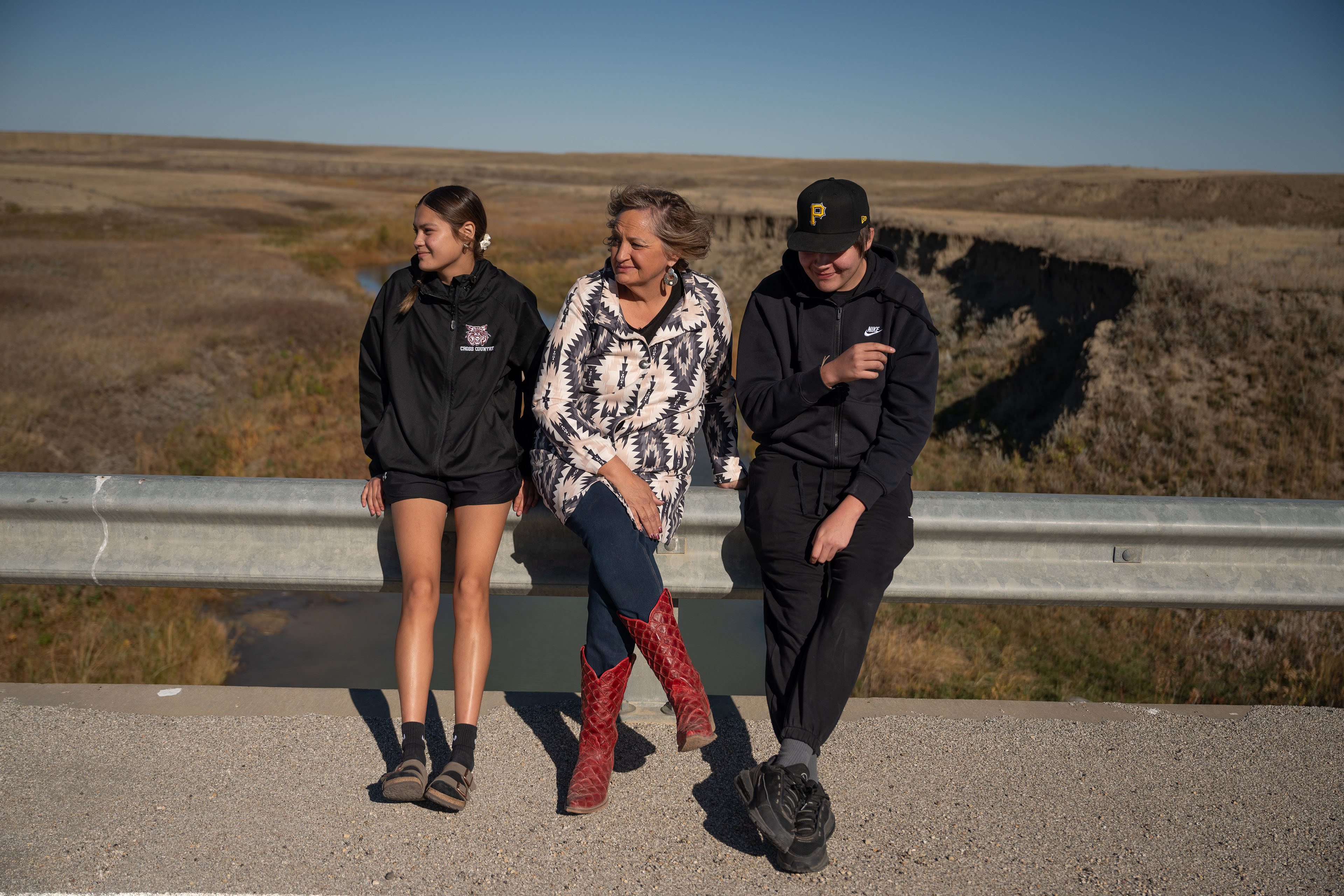
Hawley, a cancer survivor, still must navigate the referral program. In 2024 alone, she received two notices from clinics about overdue bills.
Frank White Clay, chairman of the Crow Tribe in Montana, testified about the impact of wrongful billing during a U.S. House committee hearing in April. He shared stories of veterans rejected for home loans, elders whose Social Security benefits were reduced, and students denied college loans and federal aid.
“Some of the most vulnerable people are being harassed daily by debt collectors,” White Clay said.
No one is immune from the risk. A high-ranking Indian Health Service official learned during her job’s background check that her credit report contained referred-care debt, the federal report found.
Native Americans face disproportionately high rates of poverty and disease, which researchers link to limited access to health care and the ongoing impact of racist federal policies.
White Clay is among many who say problems with the referred-care program are an example of the U.S. government violating treaties that promised to provide for the health and welfare of tribes in return for their land.
The chairman’s testimony came during a hearing on the Purchased and Referred Care Improvement Act, which would require the Indian Health Service to create a reimbursement process for patients who were wrongfully billed. Committee members approved the bill in November and sent it for consideration by the full House.
A second federal bill, the Protecting Native Americans’ Credit Act, would prevent debt like Hawley’s from affecting patients’ credit scores. The bipartisan bill hadn’t had a hearing by mid-December.
Email Sign-Up
Subscribe to KFF Health News’ free Morning Briefing.
The exact number of people wrongfully billed isn’t clear, but the Indian Health Service has acknowledged it has work to do.
The agency is developing a dashboard to help workers track referrals and to speed up bill processing, spokesperson Brendan White said. It’s also trying to hire more referred-care staff, to address vacancy rates of more than 30%.
Officials say problems with the program also stem from outside health providers that don’t follow the rules.
Melanie Egorin, an assistant secretary at the U.S. Department of Health and Human Services, said at the hearing that the proposed legislation doesn’t include consequences for “bad actors” — health facilities that repeatedly bill patients when they shouldn’t.
“The lack of enforcement is definitely a challenge,” she said.
But tribal leaders warned that penalties could backfire.
White Clay told lawmakers that some clinics already refuse to see patients if the Indian Health Service hasn’t paid for their previous appointments. He’s worried the threat of penalties would lead to more refusals.
If that happens, White Clay said, Crow tribal members who already travel hours to access specialty treatment would have to go even farther.
The Consumer Financial Protection Bureau report found clinics are already refusing to see any referred-care patients due to the program’s payment problems.
The bureau and the Indian Health Service also recently published a letter urging health care providers and debt collectors not to hold patients accountable for program-approved care.
White, the Indian Health Service spokesperson, said the agency recently updated the referred-care forms sent to outside hospitals and clinics to include billing instructions and to stress that patients aren’t liable for any out-of-pocket costs. And he said the staff can help patients get reimbursed if they have already paid for services that were supposed to be covered.
Joe Bryant, an Indian Health Service official who oversees efforts to improve the referral program, said patients can ask credit bureaus to remove debt from their reports if the agency should have covered their bills.
Leaders with the Confederated Tribes of the Colville Reservation in Washington state helped shape the proposed legislation after their citizens were repeatedly harmed by wrongful billing.
Tribal Chairman Jarred-Michael Erickson said problems began in 2017, when a regional Indian Health Service office took over the referred-care program from local staff.
It “created a domino effect of negative outcomes,” Erickson wrote in a letter to Congress.
He said some tribal members whose finances were damaged stopped using the Indian Health Service. Others avoided health care altogether.
Responsibility for the Colville Reservation program transferred back to local staff in 2022. Staffers found the billing process hadn’t been completed for thousands of cases, worth an estimated $24 million in medical care, Erickson told lawmakers.
Workers are making progress on the backlog and they have explained the rules to outside hospitals and clinics, Erickson said. But he said there are still cases of wrongful billing, such as a tribal member who was sent to collections after receiving a $17,000 bill for chemotherapy that the agency was supposed to pay for.
Erickson said the tribe is in the process of taking over its health care facilities instead of having the Indian Health Service run them. He and others who work in Native American health said tribally managed units — which are still funded by the federal agency — tend to have fewer problems with their referred-care programs.
For example, they have more oversight over staff and flexibility to create their own payment tracking systems.
But some Native Americans oppose tribal management because they feel it releases the federal government from its obligations.
Beyond wrongful billing, access to the referred-care program is limited because of underfunding from Congress. The $1 billion budget this year is $9 billion short of the need, according to a committee report by tribal health and government leaders.
Donald Warne, a physician and member of the Oglala Sioux Tribe in South Dakota, called the proposed legislation a “band-aid.” He said the ultimate solution is for Congress to fully fund the Indian Health Service, which would reduce the need for the referred-care program.
Back in Montana, Hawley said she braces for a fight each time she gets a bill that the referral program was supposed to cover.
“I’ve learned not to trust the process,” Hawley said.
Read More
Katheryn Houghton and Arielle Zionts