

Science & Nature
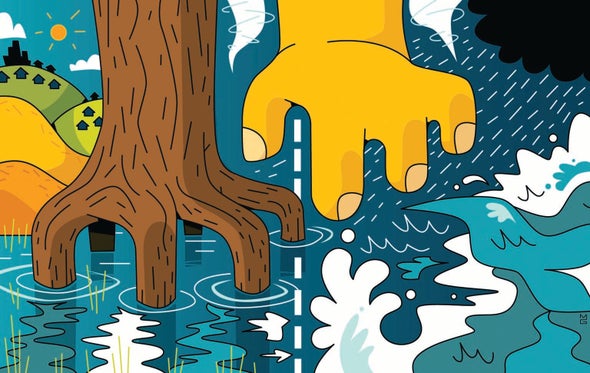
Climate change makes the undervaluation of ecosystem services more dangerous. Wetlands that mitigate flooding in a community during rare deluges will have far more economic value in 2050 when damaging storms arrive more frequently. The value of a preserved forest is unfathomably large when it prevents new pathogens from emerging and spinning out into a pandemic. Clearly, monetary valuation of nature is tricky to estimate and has practical limits. It’s also highly site-specific, with the protective value depending on the surrounding density of people, industries and infrastructure. It would be difficult to create a template that would help all types of municipalities crunch the math on natural assets.
It also seems crass to place a dollar amount on ecosystems that we’d rather view as priceless, existing for their own sake and valuable to humans in ways that transcend capitalism. This preciousness is ethically sound. But developers have long conflated pricelessness with worthlessness, allowing them to profit without paying for the consequences of destroying the environment. It’s impossible to avoid difficult trade-offs between development and conservation—we cannot ignore the affordable housing crisis in the U.S., for example. The case for preserving nature as infrastructure, however, aligns with what many urban planners are calling for as solutions: moving away from single-family zoning restrictions to allow for multifamily and mixed-use construction and communal spaces that reduce car dependency. Basically, less sprawl.
Economic value is never the only reason nature is worth preserving; it is simply a powerful, underused tool to help us make decisions about how to live more sustainably in a climate-changed world. If policy makers considered natural infrastructure in the language of economics, they might recognize just how deeply we rely on it.
This article was originally published with the title “Use Nature as Infrastructure” in Scientific American 328, 4, 8 (April 2023)
doi:10.1038/scientificamerican0423-8
ABOUT THE AUTHOR(S)
Read More
The Editors