
For new hardware companies, waiting is the hardest part

TechSpot is about to celebrate its 25th anniversary. TechSpot means tech analysis and advice you can trust.

In context: The biggest difference between building hardware and software is the amount of time it takes to get to first revenue. There are no easy ways to shorten this, but there are ways to adapt and ease the path to revenue growth.

We obviously have strong biases when it comes to the benefits of investing in hardware versus investing in software. And we have some strong opinions on the investment cases for each being much more similar than the common wisdom holds. Nonetheless, there are obvious differences between the two, and we want to explore those differences with the end goal of finding ways to de-risk hardware investing, or the least, finding accommodations to level out long-term outcomes.

Editor’s Note:
Guest author Jonathan Goldberg is the founder of D2D Advisory, a multi-functional consulting firm. Jonathan has developed growth strategies and alliances for companies in the mobile, networking, gaming, and software industries.

Unquestionably, one of the biggest benefits of starting a software company is how quickly a company can get to revenue. The proverbial two engineers in a dorm room can build a real product and get to revenue almost literally overnight.

The world of hardware, especially semis, is very different. In fact, if we had to name the single most important difference between the two it comes down to timing.

Building hardware just takes time. Design the product, re-think the design, build a prototype, fix the mistakes, redesign, build for manufacture, then enter intro production. There are just a lot more steps involved, and usually many of those steps are dependent on other companies further adding to the time.

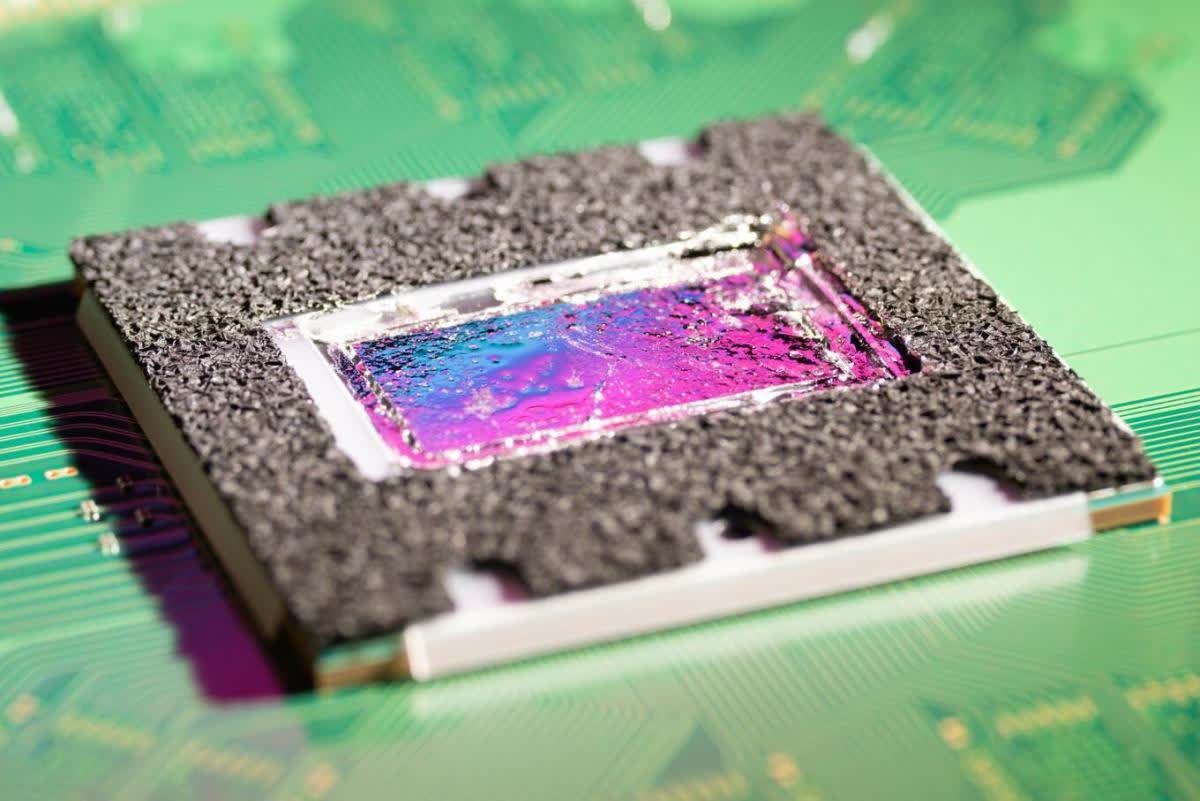
Take the example of a semiconductor. We recently worked with a team of 20. They designed their chip in just under six months. This was an incredibly seasoned team and so there were no doubts that their design would work. Then they had to spend a month plugging their data into TSMC’s software interface (a.k.a. the PDK). They sent their libraries and TSMC ‘taped-out’ their chip and three months later, they got first silicon back and had to go through a few more months of testing and packing.

All together about a year from napkin to first working sample. Note that over half the time was taken by outside parties. For those not familiar with semis design this sounds like an excruciatingly long time. Those familiar with semis design will be amazed at how quick this team moved. Seriously – 20 people in under six months! This was not a small chip either.
There are no easy ways around this. Software can be patched in real-time, but once hardware goes out the door there is no way to fix it.

So the question then becomes how to deal with this reality.

For one, it has become a little easier to build prototype chips. There are a growing number of “Free Tape Out” programs, with many trailing edge foundries offering cheap pricing for small runs. For larger, process-dependent chips, emulation on FPGAs works fairly well. This is not ideal as customers will not commit until they see working silicon, because they will want to run their own evaluations (and do not get us started on how long the whole EVT/PVT/DVT cycle can take). But these methods can at least demonstrate to investors and customers that the product has something to offer.

Another important adaptation will be to shift to a “solution” sale, in which companies sell some form of service on top of the chip. This can be a complete hardware module (with chips and a board) or increasingly it can mean software running on the chip. We have written on this subject in the past. It is difficult to achieve but has benefits.

The ideal would be for a chip company to design a standard product whose features can be enhanced via periodic software updates. This is firmly in the camp of “If you can’t beat them join them”, borrowing a page from software companies. This does not get to first revenue faster, but it does pave the way for incremental sales, easing the path to growth.

The obstacle to this path is that it really entails an entirely new business model, not just a new product. The semis industry is largely built on habits of product sales, but this model requires a “solution sale,” which most big chip companies are not equipped to provide.

None of this will shorten the time to revenue much, but it does provide a fairly solid adaptation. And not for nothing, gives everyone something to do while waiting for first silicon to come back from the foundry.

Read More
Gaylene Lupo

Latest

NBA’s Silver says Fever’s Clark has become ‘political football’ – ESPN

NBA's Silver says Fever's Clark has become 'political football'  ESPNAdam Silver calls Caitlin Clark a ‘political football,’ sidesteps suspension report  The New York TimesSources: Silver persuaded Engelbert to suspend Thomas after Clark incident  Sports Business JournalNBA Commissioner Adam Silver reportedly convinced WNBA Commissioner Cathy Engelbert to suspend Alyssa Thomas  Yahoo SportsNBA boss coerced Alyssa Thomas suspension...

2026 Fantasy Football Tight End Sleepers: Dalton Kincaid, Brenton Strange Lead Best Late-Round TE Targets

The elite fantasy football tight ends come off the board quickly, but that doesn’t mean you have to spend an early-round pick to find production. Every season, late-round tight ends outperform their draft position thanks to increased roles, improved offenses, or more volume. Whether you’re waiting until the final rounds to fill the position or

Penn State Officially Adds Freshman ‘Hidden Gem’ to 2026 Roster

Penn State's 2026 football roster appears complete, at least from a transfer-and-recruiting perspective. The team's 55 new players are officially on the roster, including everyone from the 15-player 2026 recruiting class. Penn State added the final two freshmen to its roster this week, including the defensive end to whom Matt Campbell referred as a "hidden

This smart knitted fabric can flip switches, count your steps, and even change shape

For most of us, knitting brings to mind sweaters, scarves, and perhaps an ambitious grandmother determined to make winter more fashionable. Researchers at Harvard University, however, have a far more futuristic vision. They’ve transformed ordinary knitted fabric into a programmable material capable of changing shape, acting as an electrical switch, sensing movement, and potentially forming

Newsletter

Don't miss

NBA’s Silver says Fever’s Clark has become ‘political football’ – ESPN

NBA's Silver says Fever's Clark has become 'political football'  ESPNAdam Silver calls Caitlin Clark a ‘political football,’ sidesteps suspension report  The New York TimesSources: Silver persuaded Engelbert to suspend Thomas after Clark incident  Sports Business JournalNBA Commissioner Adam Silver reportedly convinced WNBA Commissioner Cathy Engelbert to suspend Alyssa Thomas  Yahoo SportsNBA boss coerced Alyssa Thomas suspension...

2026 Fantasy Football Tight End Sleepers: Dalton Kincaid, Brenton Strange Lead Best Late-Round TE Targets

The elite fantasy football tight ends come off the board quickly, but that doesn’t mean you have to spend an early-round pick to find production. Every season, late-round tight ends outperform their draft position thanks to increased roles, improved offenses, or more volume. Whether you’re waiting until the final rounds to fill the position or

Penn State Officially Adds Freshman ‘Hidden Gem’ to 2026 Roster

Penn State's 2026 football roster appears complete, at least from a transfer-and-recruiting perspective. The team's 55 new players are officially on the roster, including everyone from the 15-player 2026 recruiting class. Penn State added the final two freshmen to its roster this week, including the defensive end to whom Matt Campbell referred as a "hidden

This smart knitted fabric can flip switches, count your steps, and even change shape

For most of us, knitting brings to mind sweaters, scarves, and perhaps an ambitious grandmother determined to make winter more fashionable. Researchers at Harvard University, however, have a far more futuristic vision. They’ve transformed ordinary knitted fabric into a programmable material capable of changing shape, acting as an electrical switch, sensing movement, and potentially forming

Palantir: Can anyone else do what it does?

Founded in 2003 with seed funding from the CIA’s venture arm, In-Q-Tel – a body whose explicit purpose is to bridge the gap between Silicon Valley and the US intelligence community – Palantir Technologies now holds contracts with the Metropolitan Police and runs the NHS Federated Data Platform (FDP), a system that touches the health

Grey Business processes $61 million as stablecoins dominate payments

Grey Business enables startups and SMEs to open US Dollar (USD) corporate accounts, send and receive international payments, convert currencies, and transact using stablecoins such as USDC and USDT...

Utah Marketers to Host Free Business Networking Event in Layton on June 24

The custom web design company is hosting free monthly networking events for Northern Utah business leaders, with the next event scheduled for June 24 from 4 to 6 p.m. Utah Marketers is hosting a free local business networking event on June 24 from 4 to 6 p.m. at the company’s Layton office. The event is

WellnessVibe Announces Business DNA Workshop in Delhi and Mumbai, where Ancient Sound Wisdom Meets Modern Business Strategy

WellnessVibe has officially announced the launch of its transformative Business DNA Workshop on 7th June 2026 in Delhi and 20th June 2026 in Mumbai. (1888PressRelease) June 03, 2026 - Delhi/Mumbai, India - WellnessVibe has officially announced the launch of its transformative Business DNA Workshop on 7th June 2026 in Delhi and 20th June 2026 in