

— OPINION —
Editor’s note: This article was first published by Harvard Public Health magazine and is reprinted here with permission.
By Jerold Mande
Federal food law is clear: It bans “any poisonous or deleterious substance which may render [a food] injurious to health.”
For decades, regulators have used that provision mostly to crack down on food contaminated with toxic chemicals or microbes such as Listeria and Salmonella that can make us acutely ill. It’s important to protect people from these harms, but let’s also put them in perspective: These regulated contaminants kill an estimated 1,400 Americans per year. By contrast, 1,600 Americans die every day from chronic food illness, such as obesity, diabetes, heart disease, and cancer.
In recent years, evidence has mounted that these chronic illnesses are caused by deleterious substances in ultra-processed foods. From heat-and-eat meals such as frozen pizza to sweetened breakfast cereals, ultra-processed foods are industrial formulations of ingredients from substances extracted from foods or synthesized in laboratories. They are also staples of our diets.
It is time for the U.S. Food and Drug Administration and the U.S. Department of Agriculture to use their authority under federal law to protect us from these highly processed foods. This would be a paradigm shift — but it is also common sense: FDA and USDA must make at least as much effort preventing chronic food illness as they do acute food illness.
About 678,000 Americans die each year from chronic food illness. That toll is higher than all our combat deaths in every war in American history—combined. That’s right: there are more deaths each year from our food than all the combat deaths from the Revolutionary War through the wars in Afghanistan and Iraq.
In addition to deaths, poor diet causes tremendous suffering. For instance, two-thirds of severe COVID cases resulting in hospitalization have been attributed to four diet-caused diseases: obesity, diabetes, hypertension, and heart failure. In other words, these hospitalizations could have been prevented if the patient didn’t have these diseases. All told, the economic cost of nutrition-related chronic diseases has been estimated at $16 trillion over the period from 2011 to 2020.
Mounting evidence suggests that ultra-processed foods are causing much of this harm.

In a recent study conducted by the National Institutes of Health to discover the cause of sharp increases in obesity in the U.S., volunteers were randomly assigned to either eat minimally processed foods or ultra-processed foods matched for daily nutrients like carbohydrates, sodium, fat, and sugar. Investigators thought weight gain would be the same in both groups, since nutrient composition was equivalent. They were wrong.
While on the ultra-processed diet, people ate an additional 500 calories per day and began to rapidly gain weight. When the same people were later assigned to eat the minimally processed diet, they lost weight.
This is an important finding, because it raises the possibility that it’s the additives and processing—not just the percentage of fat or sugar in a diet—that make us sick. More research is urgently needed.
Our regulatory agencies clearly have the legal authority to take on this threat to public health. Congress revealed its intent in a 1958 amendment that provides that no food additive shall be deemed safe if it is found to induce cancer, a chronic illness, when ingested by humans or animals. There is recent precedent for using our food safety laws to regulate chronic food illness. In 2015, the FDA banned artificial trans fats from food on the grounds that it caused heart disease, another chronic illness linked to diet.
The agencies should use this same authority to regulate the design of ultra-processed foods. Our food must continue to be delicious, affordable, and convenient—traits Americans appropriately demand—but can be eaten daily without making us sick.
Our laws make clear that action is required. What’s missing is leadership and funding.
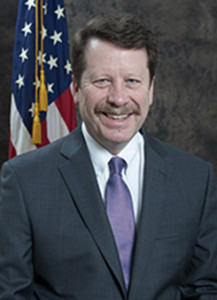
The leadership must come from Robert M. Califf, our FDA Commissioner, and José Emilio Esteban, the newly confirmed under secretary for food safety at USDA. Through appropriate regulation and enforcement, they must provide food companies with legal incentives to design foods that promote health and well-being — and these incentives ought to be equal to those the marketplace provides for taste, cost, and convenience.
As for funding, the President and Congress must provide the needed budget. The president should ask for at least $200 million to address chronic food illness in his Fiscal Year 2024 budget and Congress should appropriate it. It won’t be easy. In last year’s budget, the president asked for $135 million to cover USDA nutrition security, FDA nutrition regulation, and NIH nutrition research. He received $0.
In a recent event promoting his proposed redesign of FDA’s food program, Califf acknowledged that nutrition initiatives require more funding and said: “We need leaders who will be very persuasive with government.”
He needs to be that persuasive leader — making nutrition a priority and getting FDA’s food programs the resources they need to be effective.
There is precedent for FDA and USDA collaborating in a moment of food-related crisis. In 1993, the nation was hit with a deadly Shiga toxin-producing E. coli (STEC) outbreak from contaminated Jack in the Box hamburgers. At the time, there were eight cases per 100,000 population of these deadly infections. USDA declared these bacteria an adulterant and adopted FDA’s use of preventive controls. It then worked with the meat industry to provide the needed training and technical assistance to keep STEC out of our meat. Finally, USDA inspectors — who are a constant presence in meat-packing plants— reinforced these steps. Today, STEC cases are down to about 1 case per 100,000. Our food is safer now due to USDA’s stronger food safety laws, bigger budget, and effective collaboration with FDA.
Now is the time to apply that model to address the threat of chronic food illness. FDA and USDA must work together to design a 21st century food safety system to protect us not just from acute cases of food poisoning but also from the deadly toll of chronic exposure to ultra-processed food. Our lives literally depend on it.
About the author: Jerold Mande is an adjunct professor of nutrition at the Harvard T.H. Chan School of Public Health and former senior adviser to the FDA commissioner and deputy undersecretary at the U.S. Department of Agriculture. He is a co-founder of Nourish Science, a nongovernmental organization focused on solving the country’s nutrition crisis.
(To sign up for a free subscription to Food Safety News,click here)
Read More
Guest Opinion