

You are here: Home/ News/ Ethereum Founder Shares Insights On Crypto Payment Challenges: Need For Better UI
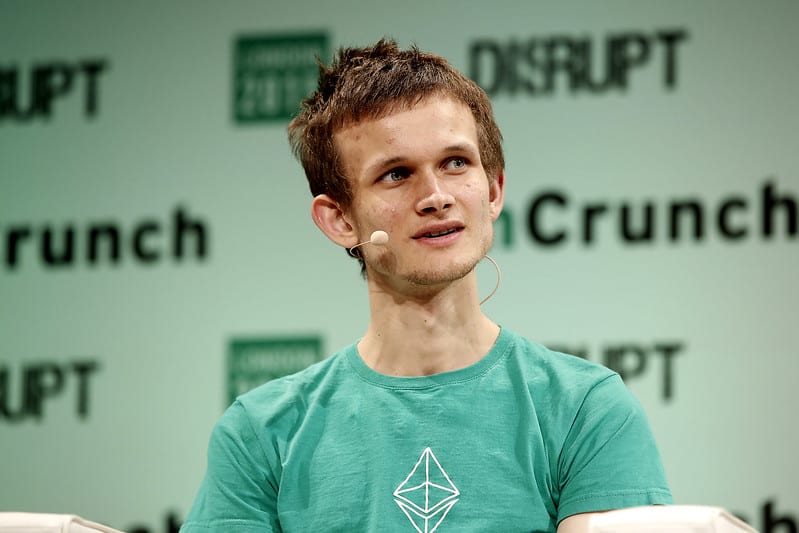
Ethereum founder Vitalik Buterin shared his experiences with cryptocurrency payments in a recent blog post, highlighting the need for a better user interface and the removal of centralized relays.
In 2013, Buterin attempted to pay for a sushi meal using Bitcoin at a San Francisco restaurant. The transaction did not go through, as his mobile internet was unreliable, leading him to walk 50 meters to use the Internet Archive’s Wi-Fi to send the payment.
Buterin noted that in-person payment systems should have NFC or customer QR code functionality to enable direct transaction data transfer to the merchant if internet reliability is an issue.
In 2021, Buterin encountered a transaction failure when he attempted to pay for tea in Argentina using Ethereum (ETH). The transaction was below the exchange’s deposit minimum, and his first attempt was not accepted.
He sent another ETH transaction, which was confirmed. A year later, Buterin’s first transaction failed because the default transaction sent only 21,000 gas, while the contract required more to process the transfer.
He also noted that the delay between transaction acceptance on-chain and service acknowledgment was sometimes long and unpredictable, leaving him worried about payment system glitches.
Buterin praised the EIP-1559 upgrade, which has helped improve transaction acceptance time, and the Merge upgrade, which has further stabilized block times. However, he highlighted that there are still outliers, and sending a transaction during a base fee spike could result in the transaction not being accepted.
Wallet user interfaces also lack clear alerts, leaving users unsure how to solve the problem. Buterin suggested that UX around transaction inclusion needs to be improved and praised the Brave wallet team for increasing max-base fee tolerance and exploring ways to make stuck transactions more visible in the UI.
Buterin also shared his experience with a wallet that used Shamir’s secret sharing for social recovery, where five friends were required to download a separate app and provide a confirmation code to create an encrypted connection from the user’s wallet to their app.
However, this approach ran into issues when Buterin’s friends lost their key shards, or the Firebase connection mechanism did not work. While the group eventually figured out how to fix the issue and recover the key, the wallet broke again months later.
Nevertheless, the Ethereum founder’s personal experiences highlight the challenges of cryptocurrency payments, including long delays and unreliable internet connections. He emphasized the need for a better UI and better forms of account abstraction to remove the need for centralized or federated relays and commoditize the relaying role.
Additionally, Buterin’s suggestions for improvement include in-person payment systems with NFC or QR code functionality, better UX around transaction inclusion, and smarter wallet recovery methods.
Related Reading | Bitcoin & Ethereum Traders Selling At Loss Could Signal Bottom Formation, Says Santiment
Read More
Mishal Ali