

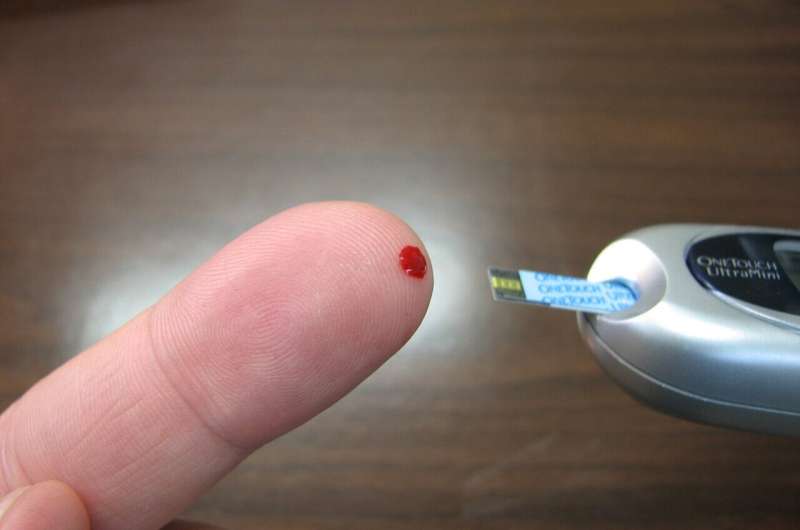
People living with a spouse seem to have a higher likelihood of being healthy in terms of maintaining lower blood sugar levels regardless of how harmonious or acrimonious their relationship is, suggests a study published online in the journal BMJ Open Diabetes Research & Care.
Researchers believe that having a spouse or cohabitating partner may be an important relationship and source of social support and/or strain for adults in mid to later life for their health.
Previous studies have suggested there are health benefits from marriage and/or cohabiting, particularly for older adults. There are also various studies that have concluded that type 2 diabetes risk is associated with a number of social health dimensions including social isolation, loneliness, living arrangements, social support, and social network size.
However, the effects of each specific social health dimension are complex, so a team of researchers from Luxembourg and Canada set out to investigate if there was an association between marital status and marital quality with average glycemic levels in older adults.
They used biomarker data from the English Longitudinal Study of Ageing (ELSA)—a population-based sample of adults aged 50 years and older and their partners, who live in England, from whom data are collected every second year, with biomarker data collected in every other wave.
The data used for the study was on 3,335 adults aged 50 to 89 years old without previously diagnosed diabetes over a period from 2004 to 2013.
The sample was people without pre-existing diabetes between the ages of 50 and 89 years in wave 2 (2004-05)—when biomarker data were first available in ELSA. Pre-existing diabetes was determined by self-reporting.
Participants were invited to have a nurse visit following the main interview in waves 2 (2004-05), 4 (2008-09) and 6 (2012-13) and blood samples were taken to measure their HbA1c (average glycemic or blood glucose) levels.
Respondents were also asked if they had a husband, wife, or partner with whom they lived and asked questions designed to measure the level of social strain and social support within the marital/cohabitating relationship.
Information on several factors was also gathered such as details about age, income, employment, smoking, being physically active, depression, body mass index (BMI), and having other social relationship types in their social network (child, other immediate family, friend).
The data showed that in wave 2 (2004-05), about three quarters (76%) of the respondents were married/cohabiting.
Analysis of the data over time showed that people who experienced marital transitions (eg. divorce) also experienced significant changes in their HbA1c levels and odds of pre-diabetes.
However, the quality of the relationship did not make a significant difference to the average levels of blood glucose, suggesting that having a supportive or strained relationship was less important than just having a relationship at all.
This was an observational study, and as such, can’t establish cause. Indeed, the study had some limitations such as the fact that there was a sizeable number of people who dropped out of the ELSA between waves with biomarker data. More than half of the wave 2 sample had no follow-up data so were excluded. There was also the possibility that those people in worse health were more likely to get divorced.
Nevertheless, the authors argued that their study’s strengths included the use of HbA1c as an outcome measure versus self-reported diagnoses—the former being a more accurate and precise measure when used in population-based surveys than diagnosed medical conditions, which are dependent on participants having accessed appropriate healthcare prior to study enrollment.
The researchers concluded: “Overall, our results suggested that marital/cohabitating relationships were inversely related to HbA1c levels regardless of dimensions of spousal support or strain. Likewise, these relationships appeared to have a protective effect against HbA1c levels above the pre-diabetes threshold.
“Increased support for older adults who are experiencing the loss of a marital/cohabitating relationship through divorce or bereavement, as well as the dismantling of negative stereotypes around romantic relationships in later life, may be starting points for addressing health risks, more specifically deteriorating glycemic regulation, associated with marital transitions in older adults.”
More information:
How sweet is your love? Disentangling the role of marital status and quality on average glycemic levels among adults 50 years and older in the English Longitudinal Study of Ageing, BMJ Open Diabetes Research & Care (2023). DOI: 10.1136/bmjdrc-2022-003080
Citation:
Being married may help people maintain lower blood sugar levels (2023, February 6)
retrieved 7 February 2023
from https://medicalxpress.com/news/2023-02-people-blood-sugar.html
This document is subject to copyright. Apart from any fair dealing for the purpose of private study or research, no
part may be reproduced without the written permission. The content is provided for information purposes only.
Read More
Nancie Menjivar