

Check out all the on-demand sessions from the Intelligent Security Summit here.
Today, decentralized finance (DeFi) is still something of a “wild west.” With many different players, each with their own claims and ambitions, there is no obvious law of the land.
Unfortunately, this has resulted in some users being dealt a bad hand after deciding to experiment with the ecosystem. Stories of scams and rug pulls are still common, and algorithmic protocols coming undone by negative market conditions disturb users’ trust. DeFi can seem unsafe and confusing for many users, even when projects and the teams behind them have the best of intentions.
It doesn’t help that regulators are, in many jurisdictions, dragging their feet on clear rules or enforcement for the sector. Although it took years for the first signs of legislation to emerge, the growth of DeFi has finally drawn the attention of lawmakers across the world. However, the jury is still out on how strict or flexible the laws will be.
The combination of risky services and an unregulated environment has understandably kept many suspicious of the crypto community. Both retail investors and institutions are wary of DeFi and don’t fully understand it. The question of the hour is, when and how will we get to a point where DeFi can be embraced by people other than Degens?
Event
Intelligent Security Summit On-Demand
Learn the critical role of AI & ML in cybersecurity and industry specific case studies. Watch on-demand sessions today.
One step that could be massive for appeasing regulators and would-be investors is the introduction of identity solutions. Various actors can be tracked within the DeFi space using these solutions. Crypto purists and privacy advocates may frown at the idea, but a solution that addresses regulators’ requirements, alleviates investors’ concerns and doesn’t infringe on individual rights is closer than most think.
Enter decentralized IDs
The very technology that DeFi is built upon also offers the solution to the current roadblock. That solution comes in the form of decentralized identities, or DIDs. By leveraging blockchains, smart contracts and non-fungible tokens (NFTs), DIDs can offer accurate information to lawmakers while preserving users’ sovereignty and privacy.
This is possible owing to a few different aspects of the crypto infrastructure, with NFTs delivering particular value. An NFT acts as an asset that can have any type of data encoded into it and is verifiably unique from all other assets, complete with its own history. Because of the underlying decentralized protocols, nobody can fake or alter an NFT.
For a true digital identity, more is understandably needed. There also needs to be accountability and certainty surrounding the ownership of DIDs. To this end, verification of one’s physical identity can be linked to one’s DID. There are multiple ways this could be done, including biometric data, explicitly verifiable real world documents, or similar confirmations. By linking all this information together in an NFT, an unfalsifiable profile can be created.
Power to the user
Privacy advocates may shun the idea for being very strict and encompassing. After all, an immutable record of a person’s data being recorded on a public blockchain forever doesn’t sound all that private. This is where the next benefit of DIDs come into play, in conjunction with zero-knowledge proof (ZKP) technology. Information can be verified once by an independent party and then used to confirm someone’s credentials using ZKP technology. That results in an individual being able to prove their access, records or history without necessarily revealing their name or other identifying information to the verifier.
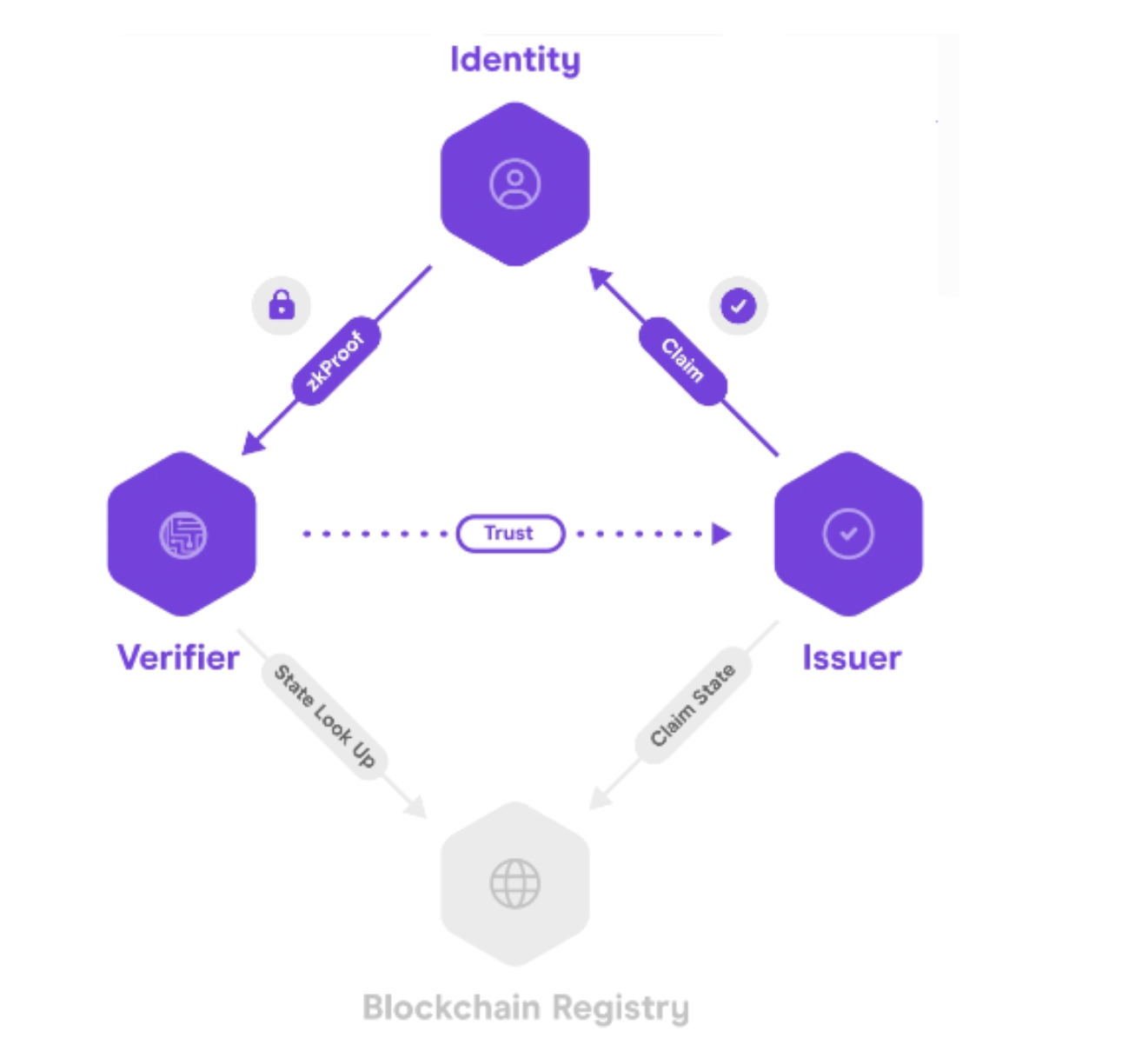
In this model, individuals would have complete control over their own data and may grant permissions to verifiers on what can be seen and when. IDs would no longer need to be an open book for businesses and governments to use as they please. While these goals are important to retaining individual rights, they also carry with them practical use cases.
Imagine someone being able to pick up a prescription without having to show the pharmacist anything and, instead, simply scanning a QR code on their phone. Their doctor had embedded the prescription requirements into their DID and it could even expire after the appropriate number of refills. Alternatively, imagine a bank customer applying for a loan without having to reveal the actual balance of their accounts. Instead, users could simply provide proof that confirms they have the predetermined minimum account value that qualifies them for the loan.
How this opens up the DeFi future
Bringing this back to DeFi, it becomes increasingly clear how DIDs can bring accountability and trust into this realm without undermining decentralization and privacy. These profiles can be utilized by customers as well as providers, creating knowable entities on decentralized platforms without actually revealing who the customer is. For example, DIDs with appropriate verifications may be required for accessing certain features or dApps, without the needed service needing to see the identity of the holder.
Speaking of credentials, DeFi services could also give a form of “badge” to DID profiles to indicate accomplishments, merits or behavior in general. These could be non-transferable tokens that indicate certain metrics and stay with that ID forever, also known as “soulbound tokens.” For example, if a given user tried to perform an attack on an exchange in the past, their DID could be sent a token that indicates malicious behavior for exchanges. On the other side of things, longstanding and reliable liquidity providers could be given a similar identifier, giving those IDs a VIP status even if they join new platforms.
DeFi services themselves can have their own DIDs that work in a similar way, instantly and irreversibly acting as a complete history and document of reputation. Once implemented, such a system would discourage bad behavior and result in meaningful ramifications for those who engage with it. All of this could be done without invasive surveillance or the complete knowledge of the holder.
Enabling trust
This approach could open the door for everyone, from individual investors to major corporations, to join the DeFi revolution. DIDs could be designed to always stay in line with legislation in a given jurisdiction, meeting the regulators halfway and preventing the regulations from being broken. Customers could trust their services and vice versa, making all forms of finance and commerce function much more smoothly and with a significant reduction in fraud. Best of all, average citizens could actually have control of all of their own information, protecting them from malicious activity.
What needs to be recognized is that this isn’t just a great theory; it’s already a reality. Decentralized protocols have been developed to allow for exactly these types of IDs and in some industries, they are already being used. Soon, others will start rolling out similar solutions for their customers, bringing greater security and peace of mind for everyone.
This is the last puzzle piece that has been holding back mass adoption in DeFi.
While it’s true that regulators’ actions will play their part in helping risk-averse investors take the plunge into this new realm, their actions alone will not be enough. That’s because accountability needs to be balanced with freedom. Decentralized Identification provides what is needed today and long into the future of DeFi, wherever this exciting new industry takes us.
Amit Chaudhary is head of DeFi Research at Polygon.
DataDecisionMakers
Welcome to the VentureBeat community!
DataDecisionMakers is where experts, including the technical people doing data work, can share data-related insights and innovation.
If you want to read about cutting-edge ideas and up-to-date information, best practices, and the future of data and data tech, join us at DataDecisionMakers.
You might even consider contributing an article of your own!
Read More
Amit Chaudhary, Polygon