

Raspberry Pi’s new camera is the DIY project I’ve been looking for

The Raspberry Pi Camera Module 3 on a green background


The Raspberry Pi Camera Module 3 (above) is larger than its predecessor and has autofocus and HDR.
(Image credit: Raspberry Pi)

I’ve been threatening to start a Raspberry Pi project since buying one of the little computers during the original lockdown. While those plans never came to fruition, Raspberry Pi’s new Camera Module 3 could just be the spark that relights my DIY camera fire.

Raspberry Pi has made camera modules before – in fact, the first one in 2013 was the company’s first official accessory. So why could its third module be the one to convince me to finish a project? Because it’s actually a modern digital camera, with autofocus and HDR powers. And it could be the heart of a personalized digicam that I’d actually use, rather than admire on a shelf.

The Camera Module 3 is based on Sony’s IMX708 sensor, which is the same as the one in the Oppo Find X2 smartphone. You won’t get that phone’s imaging processing pipeline, but this is modern hardware – and it’s the first official Raspberry Pi camera accessory to come with autofocus.

Yes, we’ve seen AF sensors before from third-party accessories like Arducam’s 64MP Autofocus Camera, but not for the impressively low price of the Camera Module 3. The standard one costs just $25 / £26, but you can also buy a wide-angle version (with a 102-degree field of view, compared to the standard one’s 66-degree FOV) for $35 / £36. The latter could be ideal for a homebrewed webcam.

The autofocus looks impressively snappy from the early demos (see below). This is because it uses phase-detection autofocus (PDAF), with contrast-detect AF (usually better for static subjects) offering a handy backup. It would’ve been pretty embarrassing for Panasonic if Raspberry Pi had beaten it to making a phase-detect AF camera. Fortunately, last week’s Panasonic Lumix S5II meant the camera giant got there just in time.

The Camera Module 3’s improvements aren’t just about autofocus – the overall image quality should be pretty solid and certainly better than those 90s digicams that have become bafflingly popular again. Not only does the IMX708 have a 12MP resolution (seemingly pixel-binned from 48MP), but it also has larger 1.40μm pixels than its predecessor. You can also shoot HD video using the entire sensor area, too.

Even shooting HDR (High Dynamic Range) images is possible if you’re prepared to accept a drop to a 3MP resolution. This is because, in challenging lighting, the Camera Module 3 will take simultaneous exposures with different exposure times, then apply tone mapping to get a better-exposed result.

So, that’s the brains of my camera project sorted. The Camera Module 3 is compatible with all Raspberry Pis other than the Pi 400 or original Pi Zero from 2016, which means I can repurpose my Pi 4 Model B – optimistically bought with a HyperPixel screen to be the centerpiece of my Sonos Album Art display – to build a fancy new digital camera. Now it’s time to work out the camera body…  

Return of the digicam
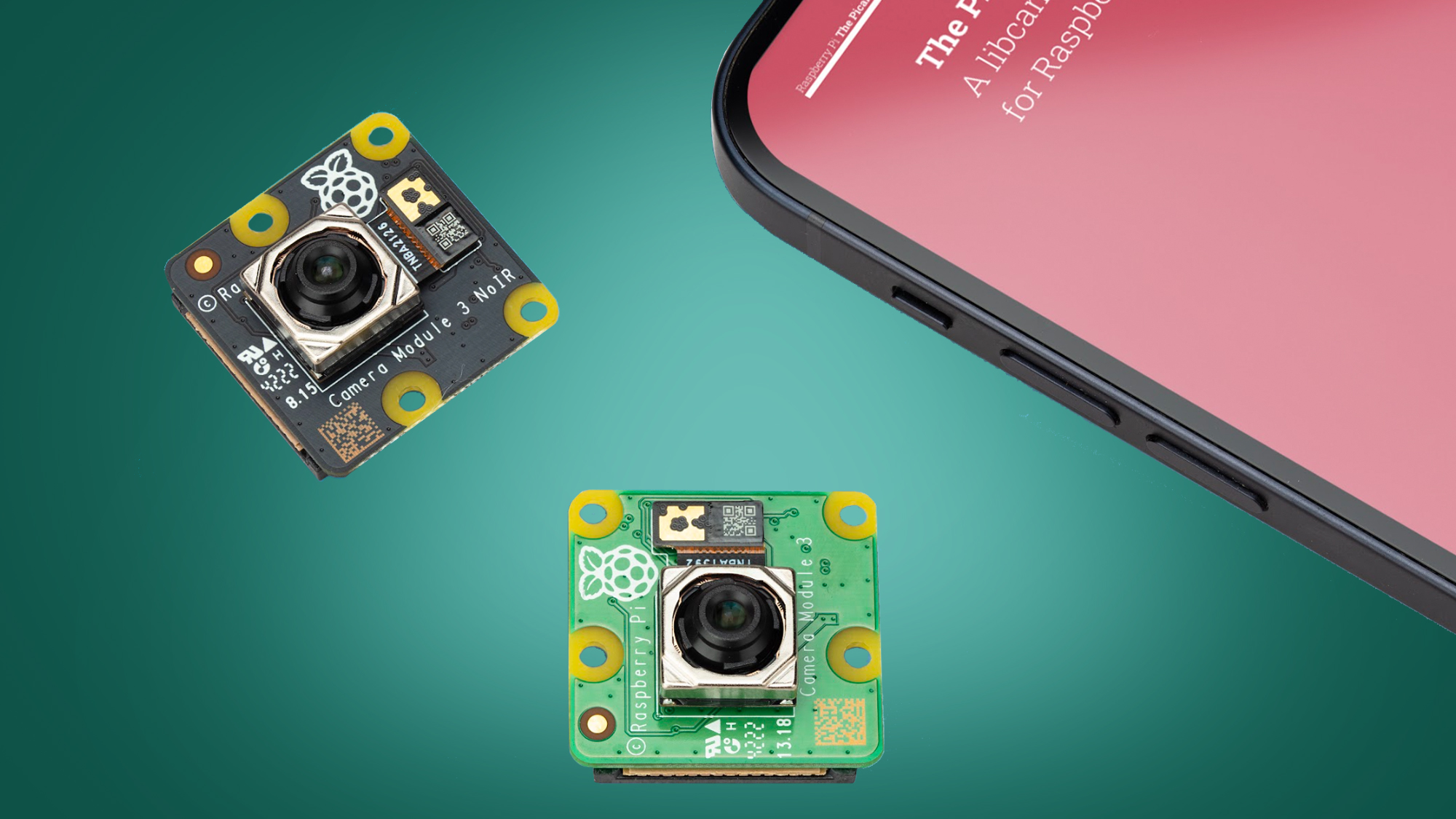
Two Raspberry Pi Camera Module 3s next to a tablet

(Image credit: Raspberry Pi)

The downside of the Camera Module 3’s increased sensor size (it’s a 1/2.43-inch chip versus the 1/4-inch sensor on its predecessor) is that a lot of current cases won’t be compatible with it. For example, it won’t work with the camera lid on the Raspberry Pi Zero Case.

Still, new cases are surely in the pipeline – I’d love to see an equivalent of the Pi HQ Camera Case (opens in new tab). And I could yet be tempted into the ultimate project; building a personalized camera around the Module 3. There are a few 3D printer-friendly designs out there, like the Pikon Camera (opens in new tab), and naturally, a YouTuber by the name of Jeff Geerling (opens in new tab) has already modified it to work with the new Module 3. 

That said, the project does involve 3D printing, soldering, and a boatload of patience that could be too much for me at this time of year. So I will likely hold off and wait for a pre-made case to arrive (perhaps a version of the Naturebytes Wildlife Camera Case (opens in new tab) for a wildlife cam), before I tackle the interface conundrum.
The Raspberry Pi High Quality Camera with new M12 mount on a green background

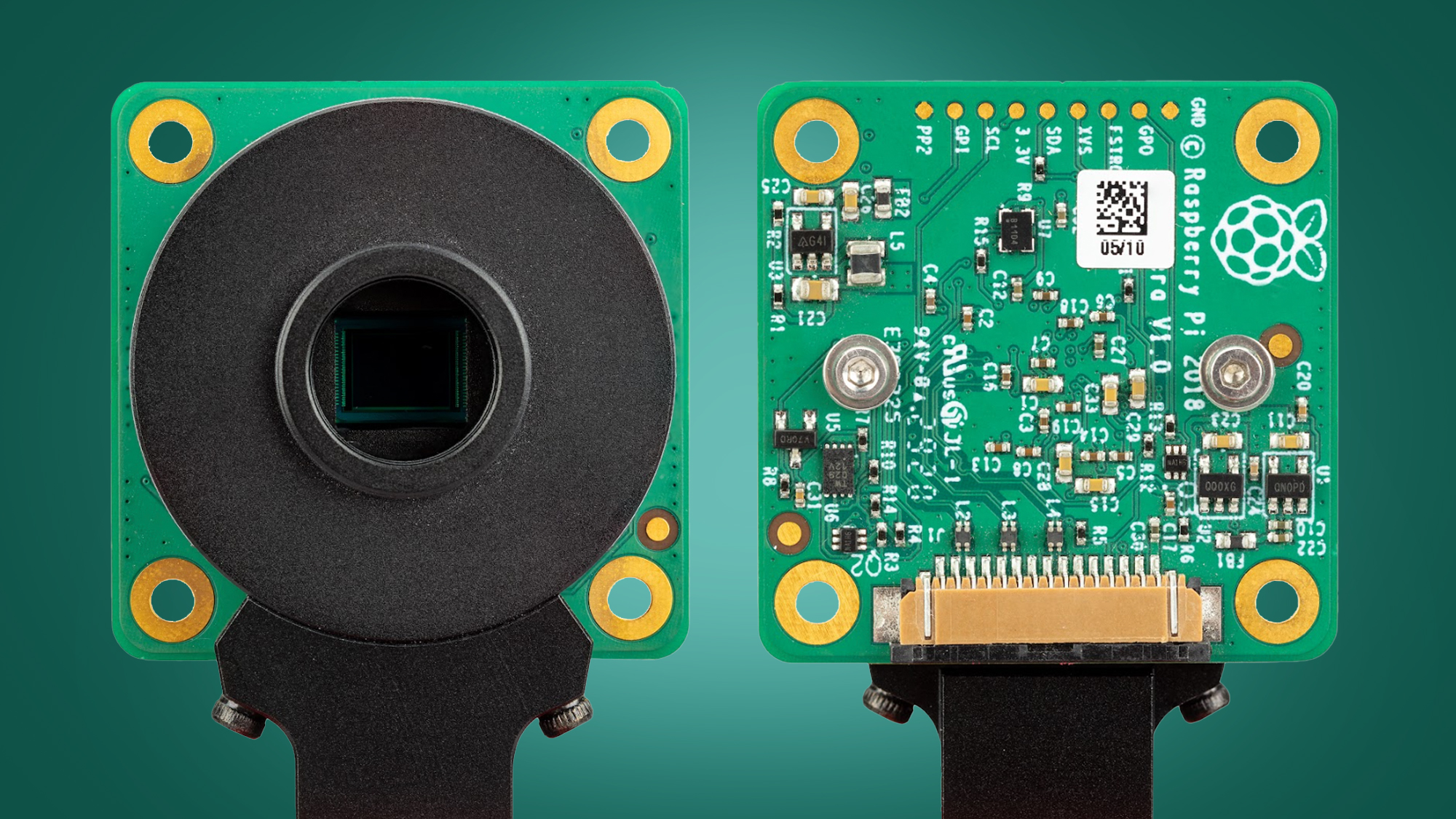
Raspberry Pi’s new High Quality Camera module (above) supports M12-mount lenses but lacks the new Camera Module 3’s new autofocus and HDR powers. (Image credit: Raspberry Pi)

There are a couple of ways to control the Camera Module 3, including the Picamera2 beta that comes as part of Raspberry Pi OS Bullseye. Its latest version delivers autofocus support, but there’ll no doubt be some tinkering (and flicking through Raspberry Pi’s Camera Software guide (opens in new tab)) to get the camera up and running.

For me, it’s the Module 3’s autofocus and HDR powers that give it the edge over Raspberry Pi’s other new announcement: the new High Quality Camera module. This now supports M12-mount lenses alongside the C-mount ones that worked natively with the previous version. 

Unfortunately, as much as building my own interchangeable lens camera appeals, that module is based on the same camera hardware as before, with no autofocus. So I’ll likely stick to the Camera Module 3 and leave the 3D printing for another day – if my previous Raspberry Pi projects have taught me anything, it’s to start small before getting carried away with big ideas.

Sign up to get breaking news, reviews, opinion, analysis and more, plus the hottest tech deals!

Mark is the Cameras Editor at TechRadar. Having worked in tech journalism for a ludicrous 17 years, Mark is now attempting to break the world record for the number of camera bags hoarded by one person. He was previously Cameras Editor at Trusted Reviews, Acting editor on Stuff.tv, as well as Features editor and Reviews editor on Stuff magazine. As a freelancer, he’s contributed to titles including The Sunday Times, FourFourTwo and Arena. And in a former life, he also won The Daily Telegraph’s Young Sportswriter of the Year. But that was before he discovered the strange joys of getting up at 4am for a photo shoot in London’s Square Mile. 

Read More
Buffy Buresh

Latest

10 Years Later, One of The Best Shonen Jump Series of All Time Is Still Awaiting a Sequel

Written and illustrated by Katsura Hoshino, D.Gray-man is one of the best series ever published in the Weekly Shonen Jump magazine. While the manga began serialization in 2004, it faced multiple hiatuses due to the creator’s poor health and never got the attention it deserved. In April 2018, the series moved to the quarterly magazine Jump SQ.

Exodus’ former studio head James Ohlen touches on why he left Archetype Entertainment: “I was running on fumes”

"It was hurting my health" Image credit: Archetype Entertainment Back in December of last year, despite being the head of the studio, James Ohlen left Archetype Entertainment, also leaving his role as producer on Exodus behind. It was a bit of a surprise, given that he co-founded the studio after having retired from BioWare in

“We will probably get some flack”: Subnautica 2 may feel polished for an early access game, but it was important for the team it...

No one wants another Moonbreaker Image credit: Krafton / Rock Paper Shotgun It's been more than a decade since the original Subnautica dove into early access. The deep sea survival game spent four years there as developer Unknown Worlds Entertainment added new features, biomes, and polished the whole thing up with the game's players. It

UK games industry fundamentally misunderstood, new report calls for unified research framework

UKIE and entertainment charity OKRE call for industry, government, and academia to collaborate on the framework to address identified research gaps Image credit: James Newcombe UKIE and entertainment charity OKRE have developed a framework to help the UK games industry maximise its economic and social value. The Building a Unified Framework for the UK Video

Newsletter

Don't miss

10 Years Later, One of The Best Shonen Jump Series of All Time Is Still Awaiting a Sequel

Written and illustrated by Katsura Hoshino, D.Gray-man is one of the best series ever published in the Weekly Shonen Jump magazine. While the manga began serialization in 2004, it faced multiple hiatuses due to the creator’s poor health and never got the attention it deserved. In April 2018, the series moved to the quarterly magazine Jump SQ.

Exodus’ former studio head James Ohlen touches on why he left Archetype Entertainment: “I was running on fumes”

"It was hurting my health" Image credit: Archetype Entertainment Back in December of last year, despite being the head of the studio, James Ohlen left Archetype Entertainment, also leaving his role as producer on Exodus behind. It was a bit of a surprise, given that he co-founded the studio after having retired from BioWare in

“We will probably get some flack”: Subnautica 2 may feel polished for an early access game, but it was important for the team it...

No one wants another Moonbreaker Image credit: Krafton / Rock Paper Shotgun It's been more than a decade since the original Subnautica dove into early access. The deep sea survival game spent four years there as developer Unknown Worlds Entertainment added new features, biomes, and polished the whole thing up with the game's players. It

UK games industry fundamentally misunderstood, new report calls for unified research framework

UKIE and entertainment charity OKRE call for industry, government, and academia to collaborate on the framework to address identified research gaps Image credit: James Newcombe UKIE and entertainment charity OKRE have developed a framework to help the UK games industry maximise its economic and social value. The Building a Unified Framework for the UK Video

Billie Eilish

Music ...

WD sees sustainability as key business driver in an ‘AI economy’

Hard drive company WD promoted long-term operations and sustainability executive Jackie Jung to become its first chief sustainability officer in February, as it steps up sales to companies building AI data centers. Her vision: Turn sustainability into a “brand” for WD, a strategy that reduces risk for the $6 billion company (formerly known as Western

5 Business Ideas Worth Starting in 2026

If there is one thing Nigerians understand well, it is how to spot opportunity inside hardship. In 2026, that mindset will matter more than ever. The economy is tough, competition is rising, and many people are looking for smarter ways to earn, build, and survive. But even in a difficult environment, some businesses still stand

Getting a business loan now comes with a frequent flyer upside

Australian fintech Prospa has partnered with Qantas Business Rewards, letting eligible SMEs earn up to 500,000 points per loan. What’s happening: Australian fintech lender Prospa has partnered with Qantas Business Rewards to allow eligible small and medium business owners to earn up to 500,000 Qantas Points per loan when taking out a Prospa Small Business